Budget-friendly October vegetables: what new wholesale data show
New UK wholesale data put swede, carrots, onions and cabbage among the lower-priced entries. Here is how to turn that signal into a useful seasonal shopping check.
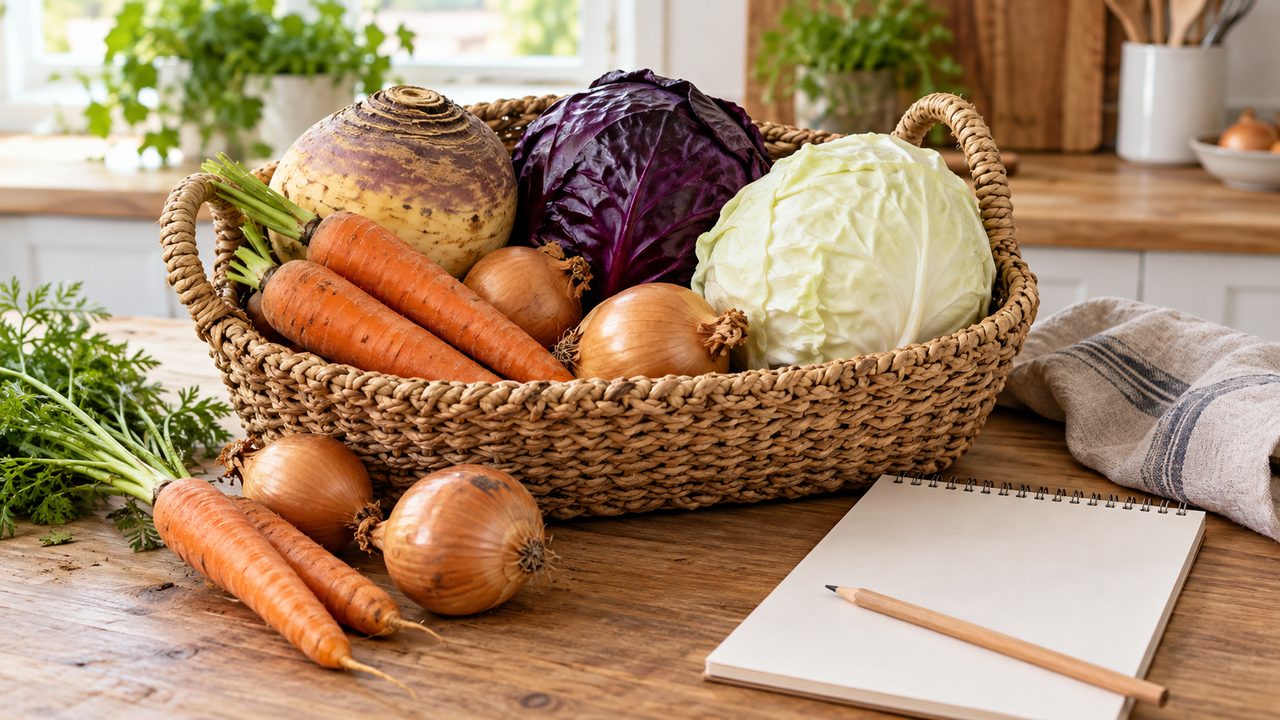
The UK agriculture department updated its fortnightly wholesale prices for home-grown fruit and vegetables on 12 October 2026. The lowest per-kilogram entries include swede at £0.29, topped and washed carrots at £0.62, brown onions at £0.63, red cabbage at £0.66 and white cabbage at £0.70. These are not German shop prices, but they are a useful signal for robust autumn ingredients that are currently plentiful and flexible.
What the figures actually measure
The Department for Environment, Food & Rural Affairs dataset records average UK wholesale market prices for selected home-grown horticultural produce. It has been updated fortnightly since late 2024. The values belong to an upstream market and include neither German VAT nor transport, retail margin, pack size or promotions.
Units also differ. Sweetcorn is listed at £0.30 per cob and Savoy cabbage at £0.72 per head on 12 October, while red and white cabbage are quoted per kilogram. A direct ranking across all rows would therefore be wrong. The dataset works as a seasonal indicator, not as a till receipt or currency conversion.
Five sturdy ingredients for several meals
Swede, carrots, onions, red cabbage and white cabbage suit meals that can be varied over several days. A tray of roasted vegetables can become soup the next day; braised cabbage works with potatoes, grains or pulses; onions form a base for sauce, stew and pan dishes.
Germany's Federal Centre for Nutrition says seasonal produce is often cheaper while also noting the role of harvest, origin and growing method. The UK figure should therefore not decide a purchase; the unit price on the German shelf should. Loose produce may be cheaper for a small household despite a higher-looking price per kilogram if it prevents waste.
Turning seasonal produce into a weekly plan
- Choose 2 main vegetables that appear in at least 3 meals.
- Compare the unit price per kilogram, not only red discount stickers.
- Plan delicate produce first and longer-storing cabbage, carrots or swede later.
- Combine vegetables with affordable staples and a protein source.
For example, carrots and onions can start as roasted vegetables, move partly into a lentil soup and finish in a pan dish. Cabbage can be served raw as a salad, later braised and finally finely sliced into soup. This way, the amount actually eaten matters alongside the purchase price.
Storage determines the real cost
Whole cabbages generally remain usable longer than pre-cut mixes. Store carrots without their tops in the vegetable drawer and onions somewhere dry and ventilated. Cover cut cabbage, keep it chilled and use it promptly. Appearance, smell and texture matter more than a rigid weekly plan.
Germany's consumer advice centre recommends shopping lists, stock checks and unit-price comparisons. XXL packs are not automatically cheaper when part of them becomes waste. Frozen or canned vegetables can therefore be the more economical complement, especially when only small quantities are needed.
What German households can learn from UK data
The specific £0.29–£0.70 range cannot be transferred to Germany. It does reveal a pattern: storable root and cabbage vegetables offer several budget cooking routes in October. In the shop, a flexible list using categories such as cabbage, roots and onions is more helpful than one fixed to exact varieties.
Kochzauber has ideas among its vegetable recipes and recipes by ingredient. If one variety is expensive or tired, switch within the same role: white instead of red cabbage, carrots instead of swede, or frozen produce instead of an oversized fresh pack.
Conclusion: a seasonal signal, not a price promise
The 12 October 2026 update highlights swede, carrots, onions and cabbage as potentially good-value autumn candidates. For shopping in Germany, the local unit price remains decisive. The largest saving comes from planning a few versatile ingredients across several meals and using them completely.
Sources
- Defra: UK wholesale price dataset, updated 12 October 2026
- Defra: machine-readable price series with values for 12 October 2026
- German Federal Centre for Nutrition: seasonal fruit and vegetable calendar
- German consumer advice centre: buying food cheaply with good planning
Author: Kochzauber editorial team. Updated: 13 October 2026. The UK wholesale values are seasonal indicators, not German consumer prices or a price forecast.