Heatwaves before flowering hit wheat especially hard: What the field study shows
A new field study shows that for wheat, both the severity and the timing of a heatwave matter. Why the findings still do not amount to a forecast for flour prices.
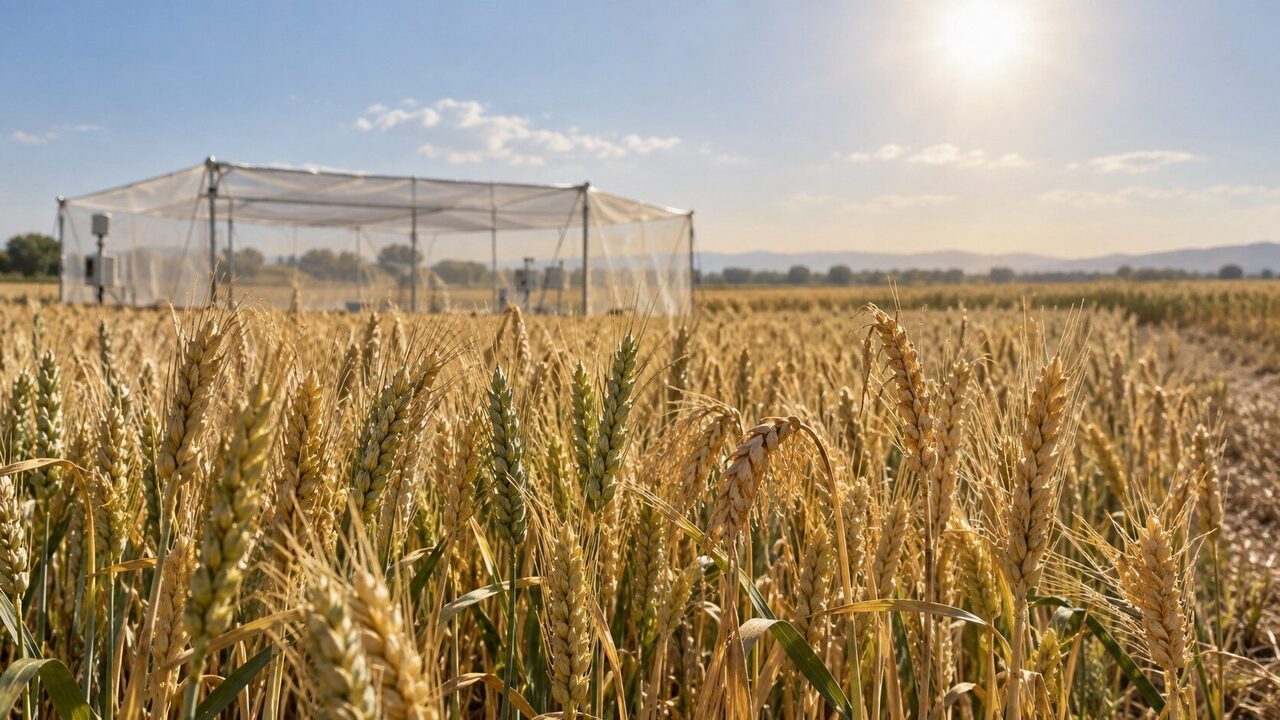
In short: a field study published on 18 September 2026 compared heat waves before and after the flowering of wheat and two successive heat phases. Heat before the flowering mainly reduced the number of grains, later heat mainly their weight. In relation to the respective heat load, the phase in which the grain number is determined was more sensitive. An early heat wave simultaneously weakens the additional damage of a later one in the experiment. This so-called priming effect does not mean, however, that heat is useful, nor that harvest or price of flour can be predicted from a single test.
Why the timing of heat matters
Wheat is produced in several stages of development. Before flowering, it is important to determine how many grains can be produced later. After flowering, the grains grown and filled up. The research team of the University of Lleida and the Centre AGROTECNIO-CERCA used two modern types of wheat in field experiments: before flowering, after flowering or successively in both phases.
In earlier heat, yields decreased mainly by a lower number of grains. After flowering, the loss was more pronounced at the average grain weight. The authors attribute the lower grain numbers mainly to more crops, not primarily to a worse flowering fertility.
Two varieties, two years no world market formula
The experiment involved two genotypes with different crop generation strategies and spanned two growing periods. Transparent field cells increased temperature for limited periods; stress was recorded as additional heat above control conditions. Both genotypes reacted similarly in the basic pattern.
This is a robust field finding, but not a representative examination of the world's wheat diversity. The area of cultivation, soil, water supply, variety, disease pressure and duration of heat affect the result. The tents also simulate real weather conditions only in a controlled manner. Especially important: the study examined plant physiology and yield, not baking quality, trade flows or prices.
The Priming Effect is not a shield.
The interaction was surprising in two successive heat waves. Plants that had already experienced heat before flowering reacted less strongly to another heat wave after flowering than would have been expected with a simple addition of both individual damage.
This should not be misunderstood as an advantage of earlier heat. The first heat wave had already reduced yields by fewer grains. Priming only reduced the additional damage of the subsequent load compared to the additive expectation. Whether the same mechanism carries with it other varieties, soils, water conditions and heat patterns needs further examination.
What the study adds to crop models
Many forecasts work with temperature sums, monthly averages, or individual stress phases. The new work shows why models should consider developmental stage, intensity, and repetition at the same time. A hot week is not equally important in every growth phase. Simply adding multiple events can overlook the biological adaptation response.
For agriculture and breeding, specific research questions arise: which varieties keep grain numbers stable before flowering? which agronomic measures postpone particularly sensitive stages from typical warm periods? and how can short-term acclimatization be imagined without minimizing the damage already caused?
Why this does not predict autumn bread prices
The price of flour and bread does not depend solely on the yield of a field; global and regional yields, qualities, stocks, energy, transport, mill costs, wages, contracts and trade policy are interacting.
For households, the practical approach remains simpler: when buying, compare the unit price, store only realistic quantities and store flour dry, tightly sealed, and protected from heat and stocks of pests. (Recipes for ingredients; Breakfast)
What was shown and what was not
- Displayed: Two types of wheat were shown to be more sensitive to heat before flowering than in grain filling, taking into account load intensity, during two years of cultivation.
- Displayed: Early heat decreased grain numbers, and later heat decreased grain weight.
- Not shown: that an early heat wave is generally beneficial or that wheat is reliably hardened against subsequent heat.
- Not shown: how the findings affect German yields, baking properties or consumer prices.
Conclusion: Growth stage matters more than a simple temperature figure
The new field study makes clear that heat in wheat is not a uniform burden. Before flowering, the later grain number is at stake, then the grain weight is higher. Repeated events can also overlap differently than a simple addition would suggest.
For better harvest forecasts, this time resolution is valuable, but it is not a price indicator for purchases. Whether bread or flour becomes more expensive can only be judged from actual harvests and the entire supply chain.
Sources and status
- Bicego, Savin and Slafer: Heat waves at pre-anthesis, post-anthesis, and sequentially across both stages on wheat yield under field conditions, Journal of Experimental Botany, published September 18, 2026.
- Society for Experimental Biology: Early heat waves hit wheat yields hardest but boost their resilience to subsequent heat waves, research report dated September 18, 2026.
- European Commission, Joint Research Centre: Agricultural monitoring, background on satellite and model-based crop monitoring in the EU.
- FAO: Grains market information and outlook, background on cereal markets, production and trade.
Author: Kochzauber editorial team. Information and update status: 21 September 2026. The article lists a field study and does not include a harvest or price forecast.