Grind chia or eat it whole? New lab study offers kitchen clues
A new digestion study compares whole and ground chia seeds and sprouts. Grinding released substantially more fatty acids and phenolics in the laboratory model.
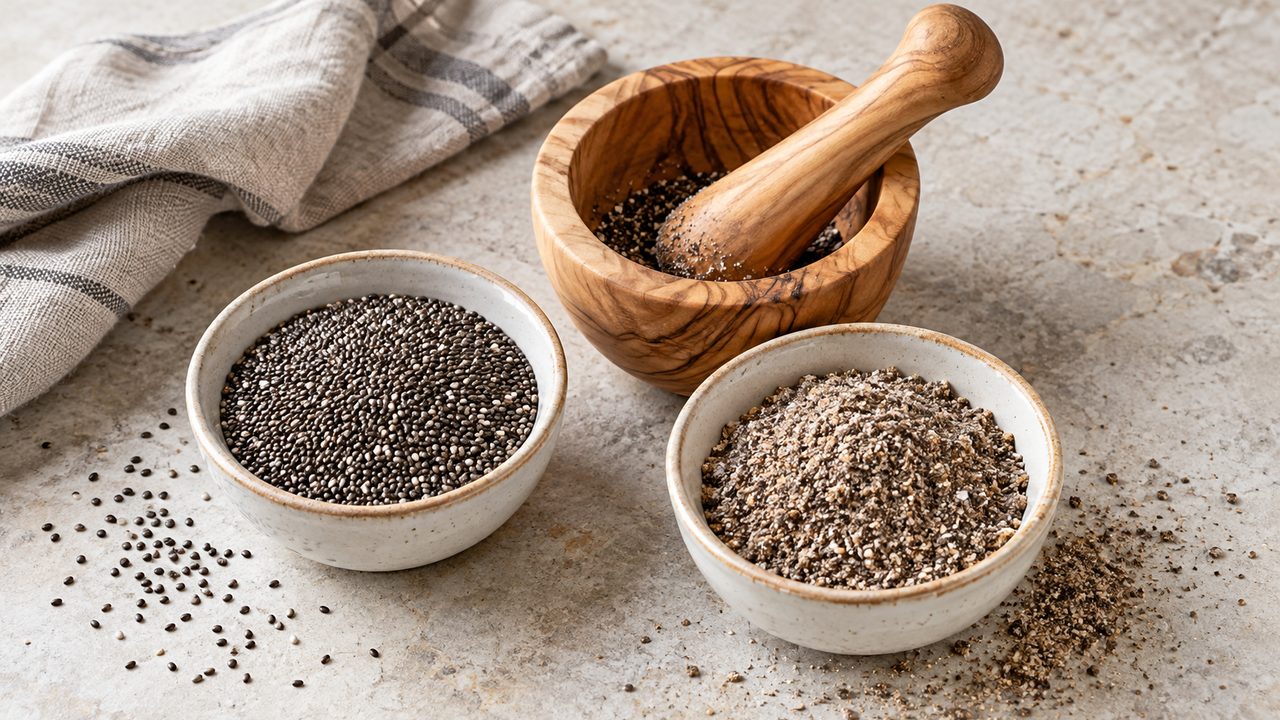
An open-access study published on 14 October 2026 compared whole and ground chia seeds with whole and ground chia sprouts after simulated gastrointestinal digestion. In this laboratory model, grinding mattered more than germination. The work measures what was released from the food matrix; it does not prove a superior health effect in people.
What the researchers compared
The team examined four samples: whole seeds, ground seeds, whole sprouts and ground sprouts. After standardised in-vitro digestion, they measured total phenolics, several laboratory indicators of antioxidant capacity and released fatty acids. Here, bioaccessibility means that a compound is available for possible absorption after simulated digestion.
That is not the same as bioavailability. The latter would require evidence of how much a human body actually absorbs and uses. This study had no participants, did not compare disease risks and did not test finished meals. A claim such as ‘ground is healthier’ would therefore go beyond the evidence.
The seed coat made a large difference in the model
After digestion, ground seeds contained 7.00 mg GAE/g of total phenolics, compared with 4.40 mg GAE/g in whole seeds. Calculated alpha-linolenic acid bioaccessibility was 0.27% for whole seeds and 15.00% for ground seeds. Ground sprouts also released more fatty acids than whole sprouts.
The likely explanation is mechanical: grinding opens the firm seed coat and increases the surface available to digestive enzymes. Germination alone did not raise total phenolic content in this experiment. It also reduced the initial alpha-linolenic acid content, probably because the developing sprout uses stored lipids.
What this means in the kitchen
- Grind with a purpose: small batches can be crushed shortly before use in porridge, yoghurt, smoothies or dough.
- Avoid excessive advance preparation: ground seeds have more exposed surface and should be kept dry, cool and tightly sealed.
- Whole seeds remain useful: they still provide texture and fibre; the study only explains differences in the release of selected compounds.
- Do not rank sprouts automatically higher: germination and grinding had different effects and are not interchangeable steps.
For everyday use, ground seeds fit well into breakfast recipes or dishes found under recipes by ingredient. A small mortar or clean spice grinder is enough; only food-grade products from a reliable source should be used.
An omega-3 figure is not proof of an effect
Chia contains alpha-linolenic acid, or ALA, a plant omega-3 fatty acid. Under the study conditions, more was released from ground samples. That does not guarantee absorption at the same level or establish a particular effect on blood pressure, body weight or inflammation.
The antioxidant-capacity measurements also came from chemical assays. Such values describe reactions in the laboratory, not an automatic benefit in the body. Robust dietary conclusions would require controlled human trials using realistic portions and longer follow-up.
Conclusion: breaking the seed is the practical lever
The new study provides a plausible kitchen clue: people who want to make selected fatty acids and phenolic compounds easier to release from chia can grind the seeds. The result applies to simulated digestion and cannot replace clinical evidence. In this experiment, germination offered no general advantage over mechanical grinding.
Sources
- Plant Foods for Human Nutrition: open-access original study, published 14 October 2026
- US National Institutes of Health: professional fact sheet on omega-3 fatty acids
- German Federal Centre for Nutrition: principles of correct food storage
Author: Kochzauber editorial team. Updated: 16 October 2026. This article interprets an in-vitro study and makes no health claim.