Two-stage fermentation enriches fava beans and rapeseed cake with lysine
Danish researchers used a two-stage fermentation on fava beans and rapeseed cake. Lysine rose 3.4-fold and 3.6-fold respectively. What the process can do – and what remains unresolved.
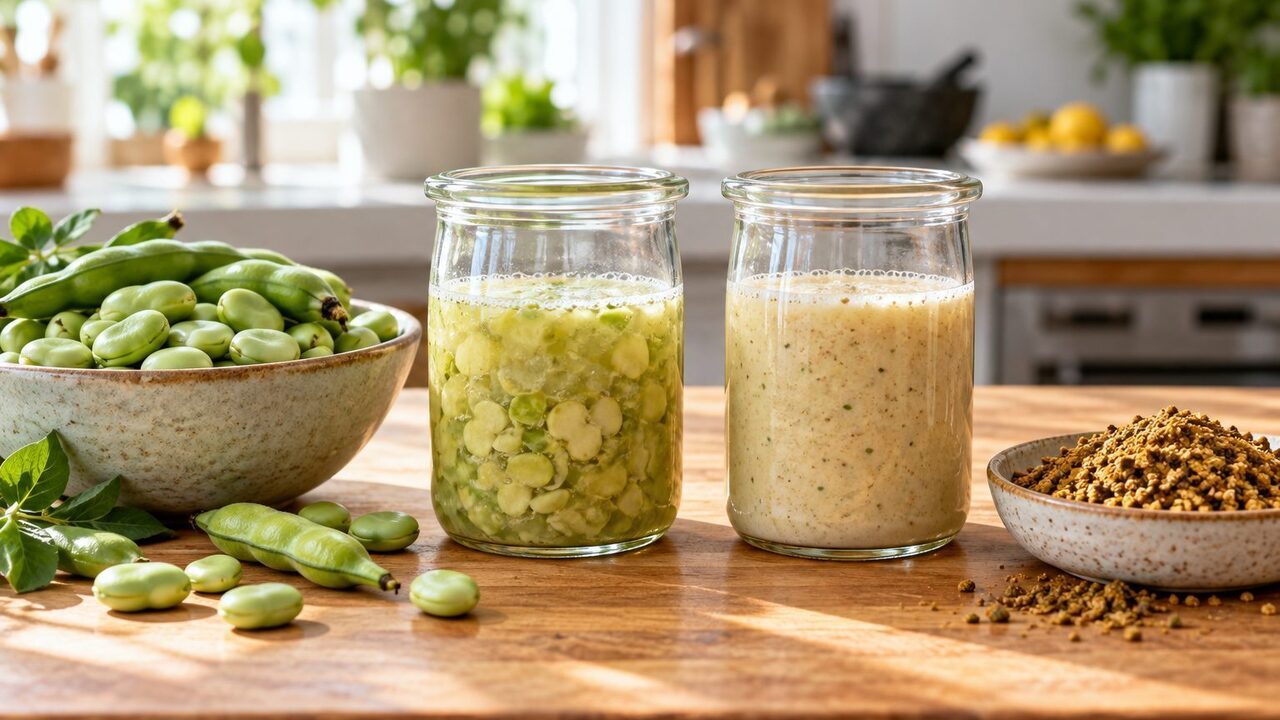
A Technical University of Denmark release dated 30 September 2026 highlights a new fermentation process for plant materials. In trials with fava beans and rapeseed cake, a sequence of two bacterial cultures substantially increased the essential amino acid lysine. The underlying peer-reviewed paper had already been published on 12 August 2026. The result is a technological proof of concept, not a market-ready food.
Why fava beans and rapeseed cake were studied
Fava beans provide substantial plant protein and can be grown in Europe. Rapeseed cake is the protein-rich material left after oil is pressed from rapeseed. Both could supplement foods or animal feed, but their amino acid profile does not fit every application without further processing.
The study focused on lysine. The human body cannot make this amino acid, so it must come from food. In some plant protein sources, its proportion relative to other amino acids can be limiting. The researchers therefore aimed not merely to increase total protein, but to adjust its composition deliberately.
How the two-stage fermentation works
The first stage used Bacillus subtilis subsp. natto. This bacterium breaks down plant proteins and releases nitrogen compounds. In the second stage, Corynebacterium glutamicum used these available building blocks to produce additional lysine.
The approach therefore combines two different metabolic tasks. The first culture makes material accessible, while the second shifts the amino acid profile. This is not a home-fermentation recipe: pure cultures, controlled conditions and analytical measurements are part of the experimental set-up.
The measured results
In the fava beans, lysine increased 3.4-fold and reached 37.5 g per kg of dry matter. In rapeseed cake it increased 3.6-fold to 29 g per kg of dry matter. These values apply to the fermented materials tested and cannot be transferred wholesale to other varieties, processes or finished products.
The scientific paper describes the process as a simple approach for adjusting amino acid composition. The current university release also makes clear that research is continuing: the next step is to extend the process to two more essential amino acids.
Why the amino acid profile matters
People need 9 essential amino acids from their diet. The quality of a protein source therefore depends not only on its total amount, but also on whether the necessary building blocks are available in suitable proportions. More lysine may make a material nutritionally more interesting, but it does not replace an assessment of the complete product.
That assessment includes digestibility, other amino acids, possible antinutritional compounds, taste, texture, hygiene and the amount actually consumed. A laboratory value alone does not establish a specific health effect or a recommendation for a particular population group.
Potential for food and feed
The process could make better use of regionally grown pulses and upgrade a side stream from rapeseed oil production. It therefore addresses two relevant questions: how can plant proteins be used more widely, and how can existing raw materials be used more completely?
Before broad application, scaling, process stability, food safety, sensory quality and economics must be examined. Legal requirements will also depend on the specific final product and production process. The study therefore demonstrates potential, not the market readiness of a particular product.
What this means in the kitchen today
The trial results do not yet change what is on the shelf. Fava beans, other pulses and foods made from them can already add variety. In an exclusively plant-based diet, combining different protein sources across the day is useful; individual questions belong with a qualified professional.
Do not try to ferment press cake or raw beans at home from a laboratory description. Use safe foods intended for consumption and follow their preparation instructions. Find background and ideas in our pulse recipes and recipes by ingredient.
Conclusion: promising process, not yet a finished product
Combining two bacterial cultures substantially raised lysine in the tested fava beans and rapeseed cake. It is particularly notable that the work addresses both a regional protein crop and a processing side stream. For consumers, this remains a research story for now: further studies must show whether safe, appealing and economical foods can result.
Sources and update
- DTU National Food Institute: release on two-stage fermentation of fava beans and rapeseed cake, published on 30 September 2026.
- Journal of Agricultural and Food Chemistry: peer-reviewed paper on the fermentation process, published on 12 August 2026.
- German Federal Centre for Nutrition: background on the cultivation and importance of pulses.
Author: Kochzauber editorial team. Information updated on 1 October 2026. This article explains research and is not individual nutrition advice or a guide to home fermentation. The cover is an editorial symbolic image.