Farm prices diverge: potatoes cost more, apples less
New Destatis data reveal sharp contrasts in agricultural producer prices. Here is what may reach shops — and what households should check before changing plans.
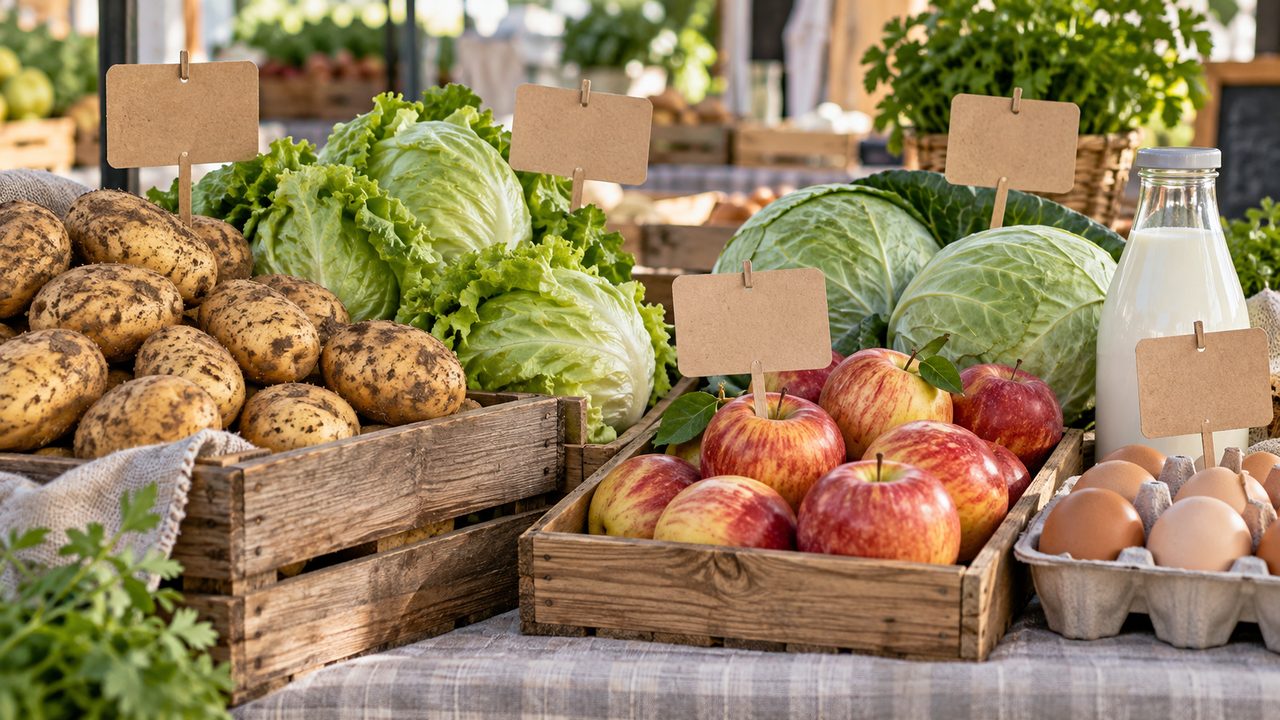
Germany's Federal Statistical Office reports an unusually divided picture for August 2026: agricultural producer prices overall were 7.0% below the same month a year earlier but 5.5% above July. Plant products rose 12.3% year on year, while animals and animal products fell 16.6%. For households, this is an early indicator, not a promise about the next till receipt.
Large movements in potatoes and vegetables
Ware potatoes stand out: at producer level they cost 61.5% more than in August 2025 and 93.0% more than in the previous month. Vegetables were 14.3% above the year-earlier level. Iceberg lettuce rose 72.4%, tomatoes 27.8% and cucumbers 15.4%.
At the same time, cauliflower was 14.7% and cabbage vegetables 6.4% cheaper than a year earlier. These contrasts rule out a blanket statement that “vegetables are getting more expensive”. Variety, harvest timing, origin, quality and the market stage all matter.
Fruit, milk and eggs move differently
Fruit was 20.4% cheaper at producer level than in August 2025, with dessert apples down 32.9%. Milk fell 23.9%, while eggs rose 7.9%. Such movements may become visible in retail with a delay, but not necessarily by the same amount.
Between farm and shelf sit processing, packaging, energy, logistics, storage, contracts, retail margins and VAT. The index measures agricultural selling prices excluding VAT at the first stage of the economy. It does not measure supermarket prices.
How to use the signal in practice
- Compare unit prices for potatoes, rice, pasta and other staple sides, not only pack prices.
- For vegetables, check cheaper options with the same cooking role, such as cabbage or cauliflower for traybakes and soups.
- Compare fresh apples with no-added-sugar purée and frozen fruit by the amount you can actually use.
- Do not stock up on dairy products or eggs solely because an upstream index has fallen or risen.
Germany's consumer advice centre recommends shopping lists, stock checks and unit-price comparisons. That remains more reliable than trying to predict shop prices for the next few weeks from one agricultural month.
Plan seasonally without overstretching the data
Flexible cooks can use current differences at the shelf: a cabbage dish instead of an expensive salad, apples instead of imported berries, or fewer potatoes combined with pulses. Kochzauber's autumn recipes and recipes by ingredient offer suitable starting points.
Local checking remains essential. Promotions can obscure the trend, organic and conventional produce may move differently, and a small pack can be better value despite a higher price per kilogram if less is wasted.
What the next bill can really tell you
The new dataset shows where price pressure starts or eases at the beginning of the supply chain. It cannot reliably forecast any individual retailer. To save money, build the basket around unit prices, shelf life and ingredients that work in several meals.
When potato prices move sharply, compare staple sides. When apples, cabbage or cauliflower are on offer, check whether the quantity fits the weekly plan. The lowest price is good value only when the food is eaten.
Conclusion: an early indicator, not a shopping list
The Destatis release of 14 October 2026 shows diverging producer prices: potatoes and several vegetables increased, while apples, milk and many animal products declined. That does not create an automatic shelf trend for consumers. Flexible recipes, unit-price checks and full use are the practical response.
Sources
- Destatis: agricultural producer prices in August 2026, published 14 October 2026
- Destatis GENESIS-Online: monthly table 61211-0003 for the agricultural price index
- German consumer advice centre: buying food cheaply with good planning
Author: Kochzauber editorial team. Updated: 14 October 2026. Producer prices are not consumer prices; this article does not make a price forecast.