Ciguatoxins in EU fish: new report finds sharp island differences
A new EFSA-supported project report found CTX-like signals in Canary Islands samples but none in the Balearic fish tested. What travellers should know.
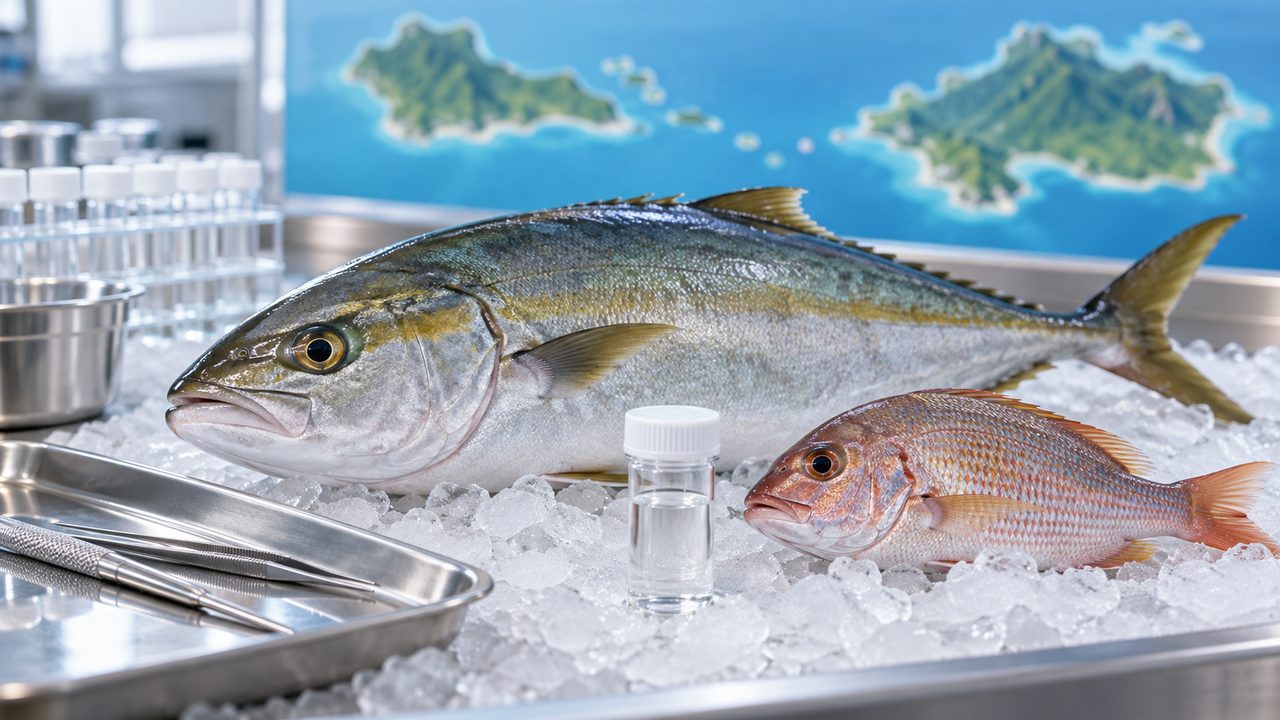
A report from the EFSA-supported EuroCigua II project, published on 14 October 2026, describes marked regional differences in ciguatoxins. Researchers examined 160 fish from the Canary Islands and 83 from the Balearic Islands. CTX-like signals increased in the Canaries between 2023 and 2024; every Balearic sample tested negative. This is targeted surveillance, not proof that fish from an entire region are uniformly safe or unsafe.
What the new report actually found
Several muscle and liver samples from the Canaries had CTX-like detections above the guidance level of 0.01 ng CTX1B equivalent/g. Seriola rivoliana, the black moray Muraena augusti and other species were specifically noted. The distribution varied considerably by location.
Long-term official monitoring from 2016 to 2024 also showed species-dependent patterns, with Seriola species accounting for the largest number of positive individuals. By contrast, none of the 83 Balearic samples tested positive. A negative series does not prove that no future catch or every fishing ground is risk-free.
Ciguatoxin cannot be detected in the kitchen
Ciguatoxins originate from certain microalgae and can accumulate in fish through the food chain. Contaminated animals need not look unusual, smell suspicious or taste spoiled. Reliable identification requires suitable laboratory analysis.
According to BfR and WHO, heating, frying, boiling, freezing or acid treatment does not reliably destroy these stable toxins. Good kitchen hygiene remains important, but it cannot remove ciguatoxin already present in fish. Effective protection therefore depends mainly on monitoring, traceability and reputable sourcing.
Practical steps for consumers and travellers
- Ask about catch area and species, particularly for large coastal predatory fish from tropical or subtropical waters.
- Buy through controlled supply chains and follow local warnings or consumption advice.
- Do not use organs, head or roe as a safety test; contamination can differ between tissues.
- If symptoms follow a fish meal, keep leftovers separately and seek medical assistance.
People who normally cook fish from assessed sources do not need to avoid it indiscriminately. Kochzauber provides ideas under fish recipes, while recipes by ingredient help with substitutions. The safety question is determined by origin and controls, not by the recipe.
Symptoms may involve several body systems
Ciguatera can cause gastrointestinal, neurological and cardiovascular symptoms. A particularly characteristic sign is altered temperature sensation, in which cold objects may feel burning or hot. Symptoms vary in severity and may appear after a delay.
Anyone who notices compatible symptoms after eating a suspicious marine fish should seek medical advice promptly and explicitly mention suspected ciguatera. Remaining fish may help the investigation. This article is not a diagnosis or individual medical advice.
Why this should not be read as a travel warning
The project aims to identify hotspots and relevant species for more targeted control. It is not a complete market sample covering every fish, season or island. Positive findings in the Canaries and negative samples in the Balearics describe the tested selection, not every later meal.
Its value lies in improved risk management: authorities can prioritise monitoring by species and catch area. Consumers benefit from functioning control chains and clear origin information, not from a blanket judgement about Spanish or Mediterranean fish.
Conclusion: controls protect; cooking methods do not
The new report confirms that ciguatoxin risks in European waters can vary by location and species. The Balearic fish tested negative, while several Canary samples had CTX-like signals above the guidance level. Because neither the senses nor cooking heat offers reliable protection, monitoring, origin and prompt medical assessment when poisoning is suspected remain essential.
Sources
- EFSA Supporting Publications: EuroCigua II report on the Canary and Balearic Islands, published 14 October 2026
- EFSA: overview of ciguatoxins and other marine biotoxins
- German Federal Institute for Risk Assessment: questions and answers on ciguatera
- World Health Organization: overview of natural toxins in food
Author: Kochzauber editorial team. Updated: 16 October 2026. This article interprets a surveillance report and is not medical advice.