Blueberry baby purée: pressure and heat produce no simple winner
A new study compares high-pressure processing with thermal pasteurisation in blueberry baby purée. Results for polyphenols and intestinal models are mixed.
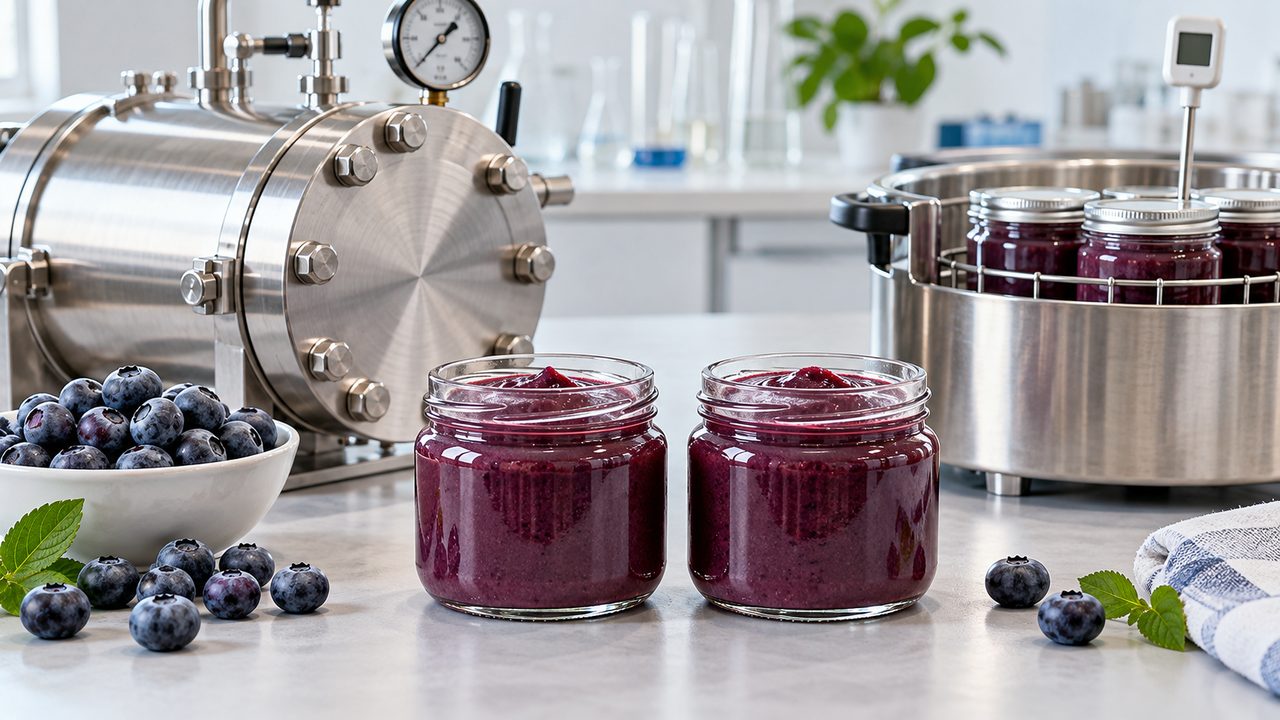
A study published on 11 October 2026 compared a blueberry baby purée after moderate-temperature high-pressure processing and conventional thermal pasteurisation. The pressure-treated purée showed higher bioaccessibility of phenolic compounds. Differences in antioxidant bioaccessibility and anthocyanin recovery, however, were not statistically significant. This makes the result a nuanced processing signal, not a recommendation for a particular brand or feeding method.
What the researchers compared
The team studied sensory properties, polyphenol stability during storage and release during simulated digestion. It also assessed responses in Caco-2 intestinal cells and a separate fermentation model using selected bacterial groups. Such models can reveal differences between production methods, but they do not reproduce a complete infant organism.
High-pressure processing uses very high hydrostatic pressure at a comparatively moderate temperature. Thermal pasteurisation uses heat to support microbial safety and shelf life. Both processes alter a food matrix; terms such as “cold processed” or “gentle” alone do not reveal which compound will remain or become bioaccessible.
Where pressure showed an advantage
After simulated digestion, bioaccessibility of the phenolic compounds examined was significantly higher in the pressure-treated purée. Bioaccessibility here means the share released from the matrix in the laboratory model and potentially available for absorption. It is not the same as an amount actually absorbed by the body.
That distinction matters: a higher laboratory value proves neither better development nor a health benefit for a child. Absorption, metabolism, portion size, the rest of the diet and individual tolerance were not examined as clinical outcomes in this single-purée experiment.
Why there is still no clear winner
For antioxidant bioaccessibility and anthocyanin recovery, the difference between pressure and heat was not statistically significant. Intracellular reactive oxygen species also did not differ significantly by process; they declined with incubation time in the cell model. Individual measures therefore do not all tell the same story.
Caco-2 cell viability depended on processing method and incubation time. This is a prompt for further research, not direct evidence of safety or benefit. Cell-culture conditions, concentrations and contact times differ fundamentally from eating an age-appropriate portion.
The microbiome model remained inconclusive
In the fermentation model, the effects of both purées on bacterial growth depended on bacterial group and time point. Lactobacillus had positive values for the activity index used after 24 and 48 hours. Under the test conditions, however, Bifidobacterium gained no selective growth advantage over Enterobacteriaceae.
Short-chain fatty acids remained below the detection threshold in both fermented purées and the inulin control. Calling the product broadly “prebiotic” would therefore go too far. The model shows responses under defined laboratory conditions, not a change in the infant gut microbiome.
What parents can check on the product
- Follow the maker's age range and preparation directions.
- Store unopened and opened food exactly as the label requires.
- Compare ingredients and added sugars rather than processing buzzwords.
- Seek professional advice for allergies, growth concerns or medical questions.
WHO and EFSA frame complementary foods as additions to milk from around 6 months, depending on developmental readiness and national advice. Safe storage, clean hands and utensils, and an age-appropriate texture have more immediate everyday relevance than one polyphenol result.
Conclusion: process choice remains a whole-product task
Pressure increased phenolic bioaccessibility in this study, but it was not a clear overall winner for antioxidant bioaccessibility, anthocyanins and several cell or fermentation outcomes. The work helps product developers examine measures separately. For households, labelling, hygiene, age suitability and dietary variety still matter. General blueberry ideas for older children and adults are available under breakfast and recipes by ingredient.
Sources
- Scientific Reports: high-pressure and thermal pasteurisation of blueberry baby purée, published 11 October 2026
- EFSA: foods for infants and other special groups
- World Health Organization: complementary feeding, safety and age-appropriate texture
Author: Kochzauber editorial team. Updated: 13 October 2026. The study uses laboratory, cell and fermentation models and does not replace individual feeding or medical advice.