Six Amazonian edible plants profiled: what the new study found
A new analysis reports fibre, carotenoids, vitamin C and plant compounds in six underused edible species. The data are promising, but not a recommendation to forage.
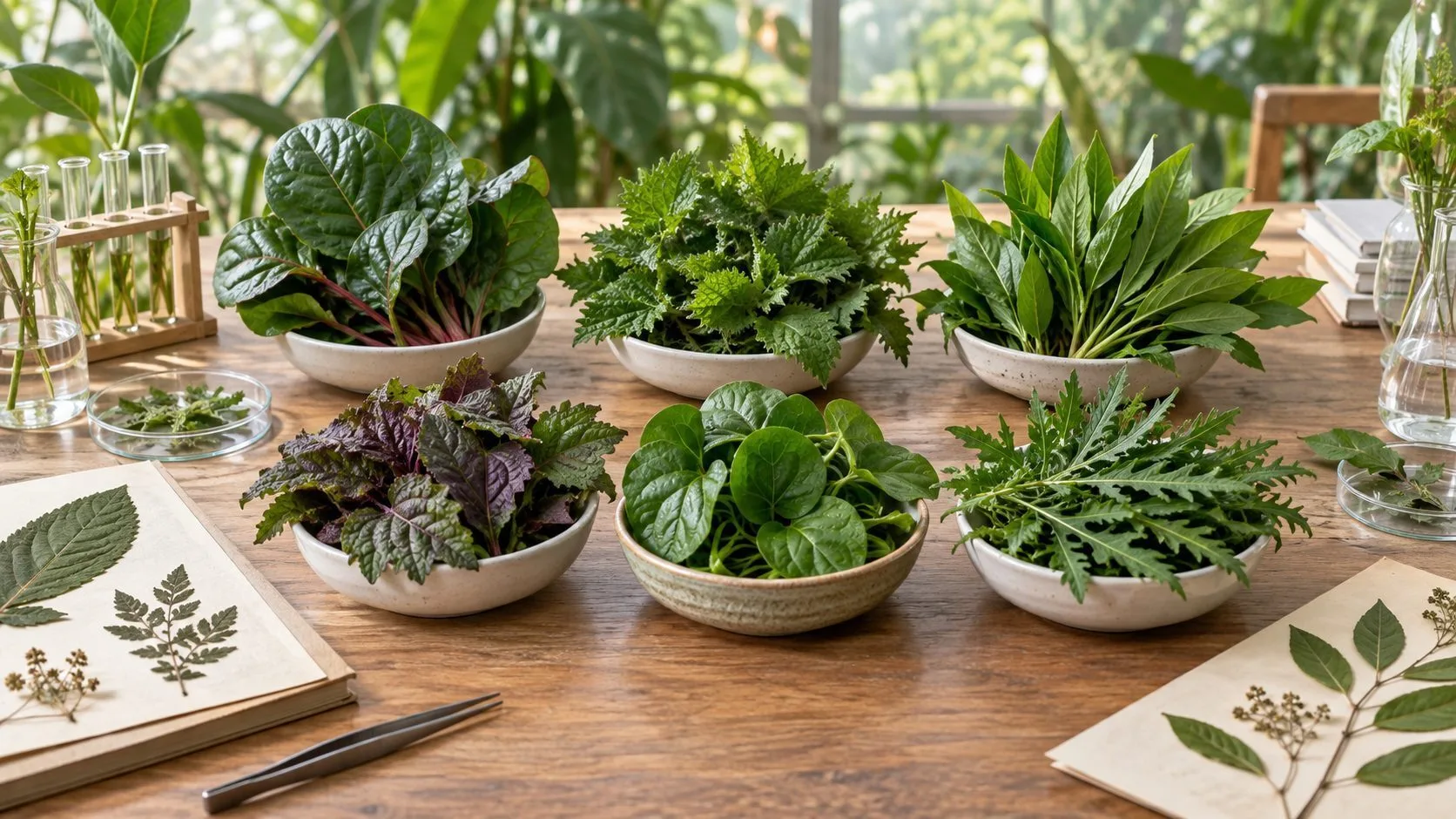
In short: A study published on 27 September 2026 examined 6 underused edible plants from the Brazilian Amazon. The researchers measured fibre, minerals, vitamin C, carotenoids and phenolic compounds, among other characteristics. The findings expand the evidence base for regional plant diversity. They neither demonstrate a health effect in humans nor mean that similar-looking wild plants should be gathered without expert identification.
The 6 species included
The team analysed Piper peltatum, Mansoa alliacea, Leuenbergeria bleo, Bidens bipinnata, Costus spiralis and Urera caracasana. In Brazil, little-known or regionally used edible species of this kind are often called PANCs. Samples came from a documented site in Manaus, were botanically identified and were deposited in a herbarium. That traceability matters because common names and leaf shape alone do not provide safe identification.
What the nutrient measurements found
All species contained (all-E)-lutein ranging from 2.72–5.65 mg per 100 g dry weight and (all-E)-beta-carotene from 1.67–3.28 mg per 100 g dry weight. Urera caracasana reached 101.43 mg vitamin C per 100 g fresh weight. Mansoa alliacea had the highest fibre content at 18.3 % of fresh weight; it also contained 6.19 % protein. These figures apply to the analysed samples and to the stated reference basis.
Why fresh and dry weight must not be mixed
A value per 100 g dry weight cannot be directly compared with one per 100 g of fresh vegetables. Water dilutes nutrients in fresh leaves, and moisture differs between species and batches. Site, season, maturity, preparation and storage may also change results. The study therefore provides a laboratory profile, not a universal nutrition label for every future product.
What the plant-compound tests really mean
Costus spiralis and Bidens bipinnata showed high antioxidant capacity in the ABTS, FRAP and ORAC laboratory assays used. Chlorogenic acid and rutin, respectively, were notable compounds. Chemical or cell-based results are not clinical outcomes. The authors identify missing in-vivo data, limited compound characterisation and biological testing of only some species as limitations.
Four rules for a measured interpretation
- Do not forage casually: use only clearly identified species and plant parts known to be suitable as food.
- Follow preparation knowledge: edibility may depend on the plant part and correct processing; Urera caracasana, for example, is eaten after cooking.
- Do not infer a cure: antioxidant laboratory values replace neither human trials nor medical treatment.
- Respect local knowledge: traditional expertise, cultivation, identification and sustainable harvest are part of using these plants.
What is new for food development
The study combines several analytical layers for 6 poorly studied species in one dataset. It may help select candidates for further research, safe cultivation or food ingredients. Before widely marketed products emerge, work is still needed on bioavailability, possible undesirable compounds, standardisation, processing stability, sensory acceptance and legal requirements.
A useful lesson for everyday cooking
The immediate message is not to buy unfamiliar Amazonian leaves. It is that edible plant diversity extends beyond standard retail ranges but requires reliable identification and good data. Everyday variety can come from familiar, safely traded leaves, herbs and pulses. Browse Kochzauber’s recipes by ingredient and breakfast recipes for practical ideas.
Conclusion: a valuable inventory with open questions
The new profile documents interesting differences in fibre, carotenoids, vitamin C, minerals and phenolic compounds. Its greatest value is the systematic description of food plants that have received little research attention. It does not support specific health promises, blanket consumption advice or uncontrolled foraging.
Sources and update
- European Food Research and Technology: Bioactivity and nutritional profiling of underexplored unconventional food plants with potential for applications as functional foods, original study, published 27 September 2026.
- FAO: Report highlights untapped potential of wild and neglected foods in diets, context on data collection and plant diversity.
- Embrapa Hortaliças: PANC – Hortaliças não convencionais, official publication collection on identification, cultivation and use.
Author: Kochzauber editorial team. Information updated on 28 September 2026. This article reports research data and is not foraging, treatment or individual dietary advice. The cover is an editorial symbolic image.