Yeast protein: new laboratory process sharply improves solubility
A current laboratory study combines alkali, high-pressure microfluidization and heat to make yeast protein more soluble. It opens technical options but is not yet a finished food.
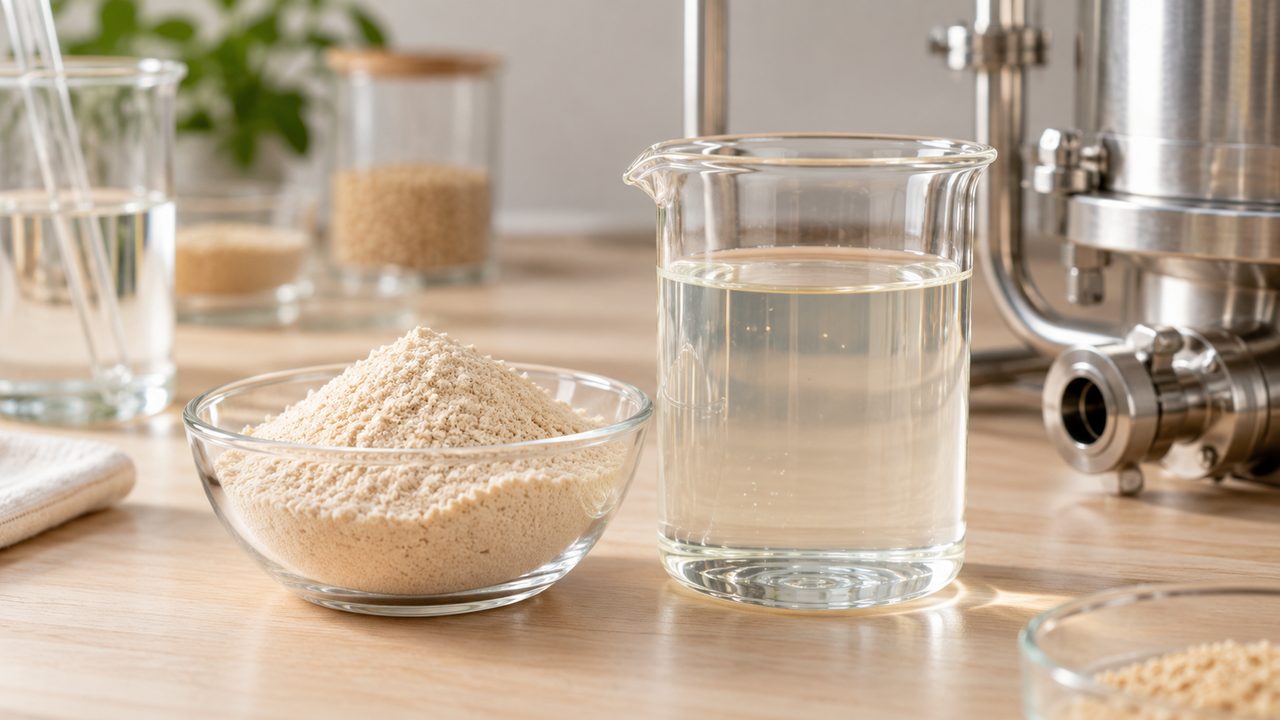
A laboratory study reported on 28 October 2026 shows how poorly soluble yeast protein can be technically modified. In the best tested sequence, solubility at neutral pH rose from 12.7 % to 88.5 %. The process combined strong alkaline treatment, high-pressure microfluidization and heat in sequence. The result concerns a protein sample in a laboratory, not the taste, tolerance or nutritional value of a finished product.
What the research team did
The researchers examined a commercial yeast protein preparation containing 82.4 % protein. They adjusted the suspension to pH 12, passed it once through a high-pressure microfluidizer at 100 MPa, heated it for 30 minutes at 90 °C and then neutralized it to pH 7. The starting material had 12.7 % solubility; alkaline treatment alone reached 38.4 %, while the full combination reached 88.5 %.
Sequence matters: alkali unfolds protein structures, intense shear breaks up aggregates, heat changes further bonds and neutralization tests whether the particles remain dispersed afterwards. This is an industrially oriented process under controlled conditions. It is neither a kitchen experiment nor an instruction to treat food with strongly alkaline solutions.
Why solubility matters in food
Proteins that disperse well are easier to incorporate into drinks, emulsions, sauces and other moist systems. Water- and oil-holding capacity also improved in the study. That may matter for texture and stability, but it does not show whether a later product will taste pleasant, remain stable for long storage or behave identically when heated in a recipe.
Yeast is a microbial, not a plant, protein source. It could broaden the range alongside pulses, cereals and animal ingredients. Technical solubility, however, proves neither better protein provision nor a health benefit. Overall composition, consumed amount, amino acids, digestibility and individual tolerance all matter nutritionally.
The study's limits
- The team tested a protein sample, not a market-ready drink or meal.
- There was no sensory assessment of taste, smell or mouthfeel.
- The trials used 100 MPa and one pass; comprehensive process optimization is still missing.
- Costs, energy demand, scale-up, food safety and the regulatory status of a specific product still require assessment.
What shoppers can take from it today
At the shop, the ingredients list and nutrition declaration remain more useful than future-facing promises. “Yeast protein” identifies a source, but not automatically the protein amount, salt content, additives or sensory quality. Whether a new ingredient needs EU authorization before sale also depends on its source organism, manufacturing process, intended use and history of consumption.
Special high-protein products are generally unnecessary for an affordable protein supply. The German Federal Centre for Nutrition recommends combining varied everyday protein sources sensibly. Practical ideas are available in the recipes by ingredient and recipes by meal. The new study is mainly relevant to the development of future formulations.
Conclusion: technical progress, not yet a product promise
The combined process made yeast protein much more soluble in the laboratory and improved functional properties. The work therefore offers a plausible toolkit for microbial protein ingredients. Product development, independent testing and, where necessary, regulatory assessment must still establish whether this can become safe, palatable, affordable and legally compliant food.
Sources
- Current Research in Food Science: primary study of the combined yeast-protein process
- European Commission: Novel Food status catalogue and regulatory context
- German Federal Centre for Nutrition: protein needs and everyday sources
Author: Kochzauber editorial team. Updated: 29 October 2026. This article interprets a laboratory study and does not recommend any particular yeast-protein product.