Xuta kernels as protein: what the new EFSA review means
EFSA has reassessed roasted and ground kernels from an edible Jatropha variety. Traditional use and protein potential are notable, but variety, processing and authorization remain decisive.
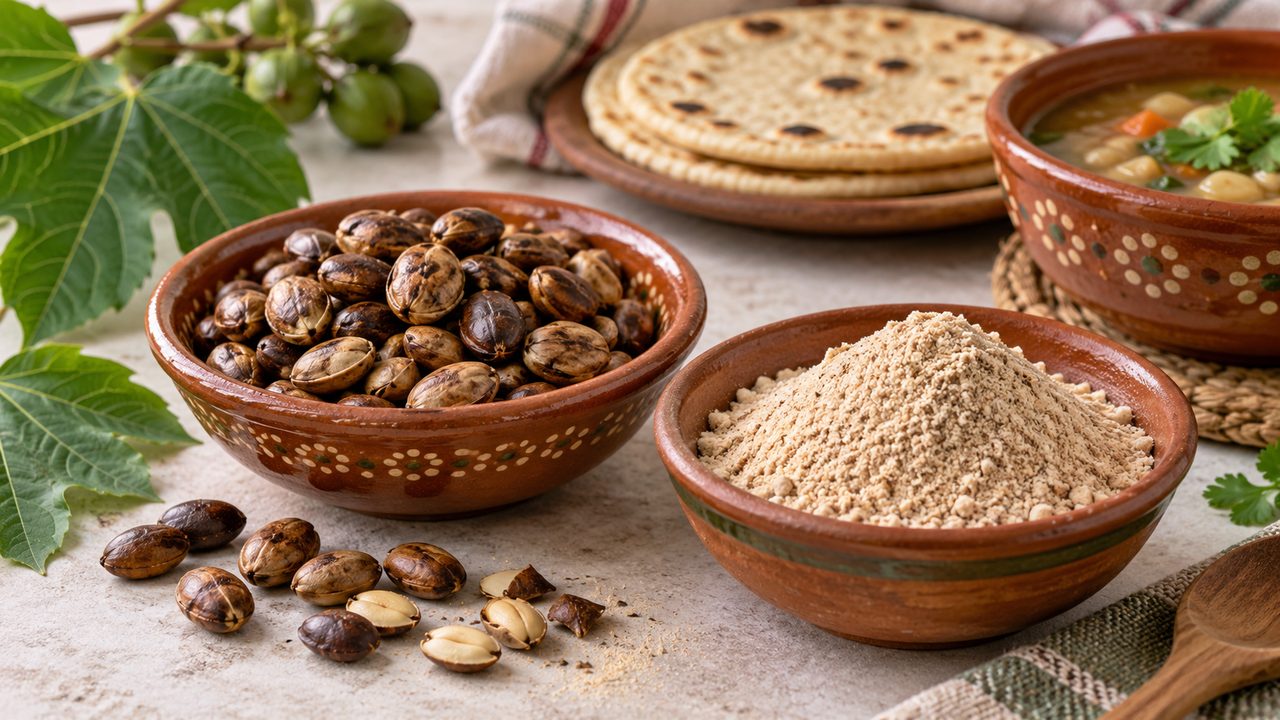
On 28 October 2026, EFSA published a new opinion on roasted and ground Xuta kernels. It expressly concerns an edible variety of Jatropha curcas L. whose kernels have been consumed in Mexico for more than 25 years. The traditional food is intended as an ingredient in grain-based products and soups. Publication is a safety assessment, not a blanket invitation to collect, process or sell arbitrary Jatropha seeds.
Why Xuta was assessed again
Xuta was already the subject of an EFSA report in 2022. The authority then raised safety objections because information on intended uses and use levels was insufficient for a robust exposure assessment. Uncertainty also remained about possible traces of phorbol esters. The 2026 opinion assesses the updated dossier through the route for traditional food from a third country.
The distinction matters: traditional use documents a history of consumption but does not replace checks on identity, composition, production, contaminants and proposed amounts. EFSA supplies scientific advice. The responsible EU bodies subsequently decide on marketing and any specific conditions.
Rich in protein, but not interchangeable with every Jatropha
The applicant's summary states 24–30 % crude protein, 56–61 % fat and 6–10 % crude fibre for roasted and ground Xuta kernels. This composition makes the material technically interesting for savoury grain products or soups. It demonstrates neither a health benefit nor that a future product would be nutritionally better than pulses, nuts or seeds.
Many non-edible Jatropha forms can contain problematic phorbol esters and resemble the edible variety. Confirmed plant origin, batch analysis and a controlled process are therefore part of the safety concept. Roasting or household heat is not a reliable way to make unidentified seeds safe on one's own.
What must be settled before use
- Only the precisely described edible variety and assessed manufacturing process could qualify.
- Specifications and testing must control mix-ups and relevant phorbol-ester residues.
- Uses and maximum levels must match any conditions that are eventually authorized.
- Allergenicity, labelling, taste, price and supply chain still require product-specific evaluation.
What it means in the kitchen today
For now, Xuta mainly shows how regional food traditions may become new ingredients for the European market. Anyone seeking affordable plant protein need not wait for a future specialist ingredient. Lentils, beans, peas, oats, nuts and seeds are established, widely available and better understood in everyday cooking.
Ideas for existing protein sources are available in recipes by ingredient and recipes by meal. If a Xuta product arrives later, its precise legal name, ingredient list, preparation instructions and compliance with EU conditions will matter more than advertising words such as traditional or high-protein.
Conclusion: an interesting source with a narrow identity
The new EFSA opinion advances the assessment of Xuta kernels and describes a potential new plant ingredient more clearly. Its value, however, depends on the unequivocal edible variety, controlled processing and binding authorization conditions. Extending the finding to other Jatropha seeds would be factually wrong and risky.
Sources
- EFSA Journal: new opinion on roasted and ground Xuta kernels
- EFSA 2022: earlier notification and safety objections
- EFSA: route and requirements for novel and traditional foods
Author: Kochzauber editorial team. Updated: 30 October 2026. This article describes a regulatory assessment and is not advice to eat or collect Jatropha seeds.