Pesticide residues in wheat flour: new test is targeted, not universal
A new GC-MS method aims to detect selected pesticides in wheat flour more simply. The study validates a laboratory procedure and does not show that flour is unsafe.
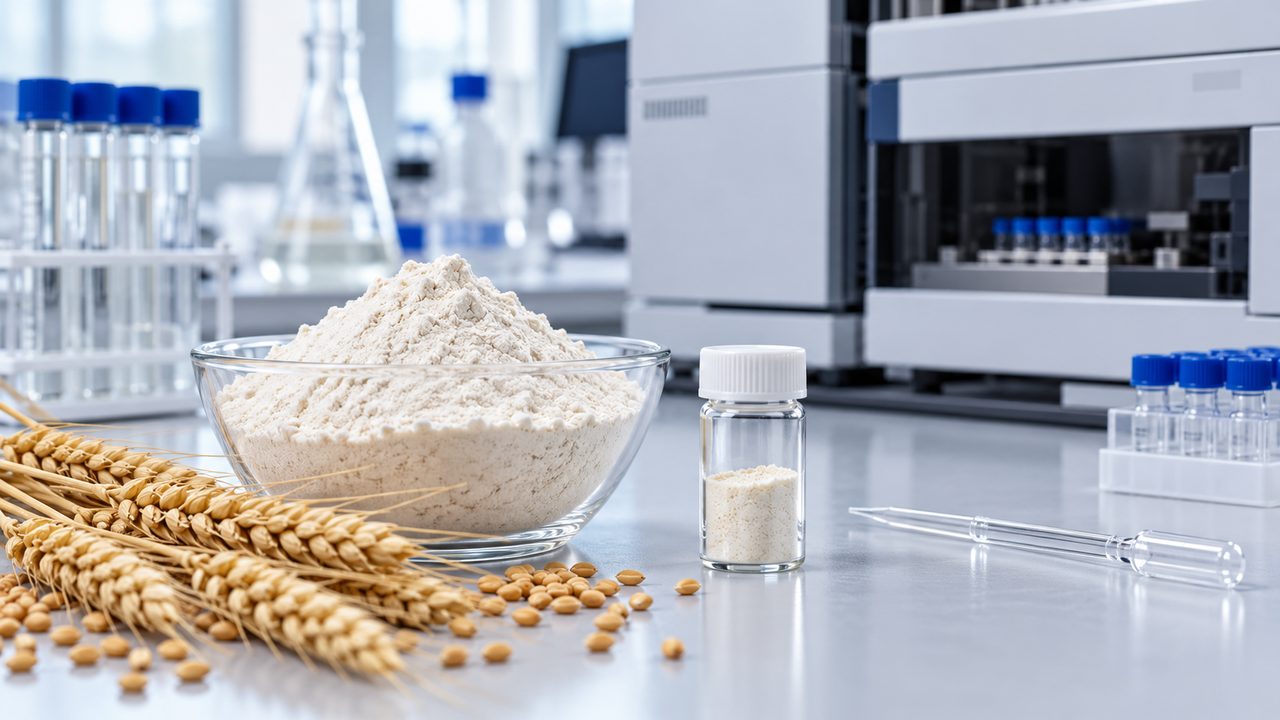
A study published on 17 October 2026 describes a simplified GC-MS procedure for selected pesticide residues in wheat flour. Nine compounds were investigated instrumentally, but the method could be validated reliably for only a narrower subset in the flour matrix. The essential context is that the paper develops a measurement tool. It is not a market survey and does not show that retail flour is generally contaminated.
What the laboratory actually tested
The researchers combined direct acetone extraction with gas chromatography and ion-trap mass spectrometry. The nine target compounds were separated in a standard mixture within 26 min. Acetone, methanol, dichloromethane and ethyl acetate were compared as extraction solvents for flour.
Acetone produced the most useful results for six compounds. In the complete flour-matrix procedure, however, only four of those six reliably met the selected validation criteria. Process efficiency or variability remained problematic for dimethoate and chlorpyrifos.
Sensitive does not automatically mean legally decisive
Depending on compound and acquisition mode, instrumental detection limits ranged from 0.02 to 1.0 ng/ml and quantification limits from 0.08 to 3.3 ng/ml. In the validated flour matrix, quantification limits were higher at 0.1 to 5 µg/kg. Matrix effects therefore change practical performance.
A signal alone is insufficient for official enforcement. Method, measurement uncertainty, sampling, residue definition, processing and the current maximum residue level must be assessed together. The EU database offers guidance; the relevant EU legal acts remain authoritative.
Why the diazinon figures are not a market sample
The study estimated diazinon at 0.4 and 1.0 µg/kg in two flour samples. Both values were below the lowest experimentally tested fortification level. The authors therefore treated them explicitly as exploratory and drew no conclusion about legal compliance.
For context, they cited a maximum residue level of 0.01 mg/kg for wheat and used a factor of 1 illustratively because no validated processing factor was available. This calculation is neither a measured milling factor nor a legal determination for wheat flour.
What consumers can take from the study
- Do not infer general flour contamination from a method-development study.
- Do not confuse a maximum residue level with a universal toxicity threshold.
- For recalls or warnings, check the product name, batch and responsible authority.
- Buy a varied diet and store flour dry, cool and tightly closed.
Kochzauber's recipes by ingredient and recipes by meal help find suitable dishes. Storage does not remove chemical residues, but it does prevent moisture, pest infestation and quality loss.
Conclusion: a useful component with clear limits
The test could give laboratories with ion-trap GC-MS a targeted and comparatively simple screening option. Its strength is not maximum analyte coverage but a lean procedure for selected compounds. Broader surveillance and legally robust decisions require complementary methods, quality controls and official risk assessment.
Sources
- Molecules: original GC-MS procedure study, published 17 October 2026
- European Commission: EU database for active substances and maximum residue levels
- EFSA: latest EU data on pesticide residues in food
Author: Kochzauber editorial team. Updated: 18 October 2026. A method study cannot replace official controls or an assessment of individual products.