US food prices in 2026: what the new outlook teaches shoppers
The new USDA outlook shows sharply different paths for vegetables, fruit, eggs and beef. It is not a German price list, but it offers a useful lesson in flexible meal planning.
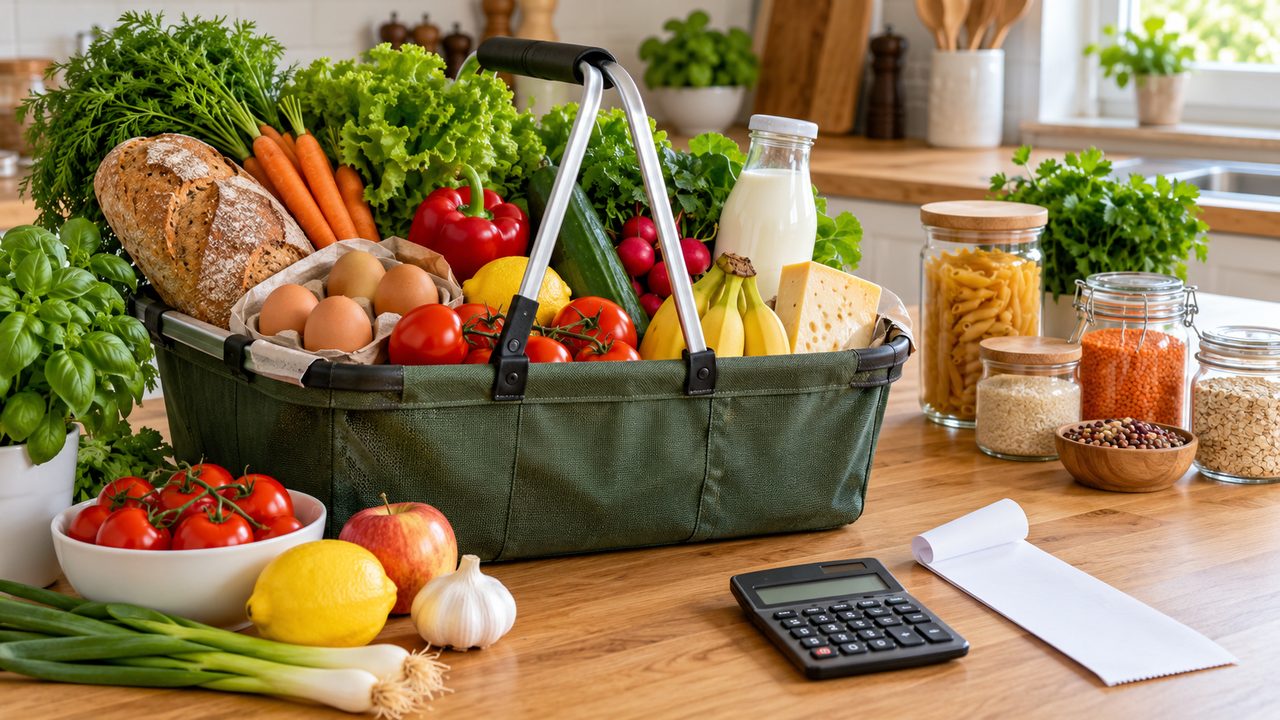
The US Department of Agriculture’s Food Price Outlook, updated on 23 October 2026, shows how far food-price paths can diverge: the agency expects food bought for home use to rise by an average 2.3% in 2026, while fresh vegetables at 5.8% and beef and veal at 8.7% sit much higher. These figures apply to the United States, not Germany. The method still offers a useful lesson: household budgets become more resilient when meals do not depend on one costly ingredient.
What the October outlook reports
In September 2026, total US food prices were 2.5% higher than a year earlier. Food at home was 1.8% more expensive and food away from home 3.5%. From August to September, fresh fruit rose 2.0% and eggs 1.0%, while beef and veal fell 1.3%. A monthly movement and an annual forecast measure different things and should not be mixed.
For all of 2026, the USDA service forecasts food prices to rise 2.8%, with a forecast interval from 2.6 to 3.1%. For 2027, the midpoint is 1.7%, but the interval ranges from -2.5 to 6.2%. That wide range matters: one point estimate is not a shopping guarantee.
Why individual categories matter more
The average hides contrasts. Egg prices are forecast to fall 29.3% in 2026 from 2025, while fresh fruit rises 2.9% and fresh vegetables 5.8%. Sugar and sweets are forecast at 6.5%, and non-alcoholic drinks at 4.4%. Households do not buy the average basket; what matters is which categories regularly appear in their own meal plan.
US farm prices also cannot be transferred directly to German retail shelves. Exchange rates, taxes, supply contracts, trade, energy and national harvests intervene. The report is therefore a case study in price dynamics, not a prediction of the next German grocery receipt.
A flexible shopping plan in 4 steps
- List 5 regular meals before shopping and choose an alternative for the costliest main ingredient in each one.
- Compare unit prices per kilogram or litre; pack size and a discount alone reveal little.
- Combine seasonal vegetables, pulses, eggs or dairy according to the actual local price.
- After 2 weeks, check which substitutions saved money without creating new leftovers.
Turning that into everyday value in Germany
A tray bake can work with pumpkin, carrots, cabbage or potatoes; a stew with lentils, beans or peas. Kochzauber’s recipes by ingredient help use what is already available. Its recipes by meal make it easier to plan a week in which leftovers move deliberately into another dish.
When logging prices, always compare the same unit and similar quality. A low price per kilogram does not help if half spoils. A slightly dearer ingredient may also make sense if it supports several meals and is fully used. The price of the portion actually eaten is what counts.
Conclusion: treat forecasts as signals, not shopping lists
The new USDA outlook mainly shows that categories move differently and forecasts contain uncertainty. It does not create a US price forecast for German households, but it does support a robust strategy: check unit prices, plan interchangeable ingredients, use seasonal produce and buy only quantities that will genuinely be eaten.
Sources
- USDA Economic Research Service: Food Price Outlook, updated findings of 23 October 2026
- US Bureau of Labor Statistics: Consumer Price Index and data basis
- German consumer advice service: rising food prices, causes and shopping guidance
Author: Kochzauber editorial team. Updated: 25 October 2026. The US data are not a forecast for Germany; all percentages refer to the official US outlook.