Ultraprocessed food in children: what the new brain study actually shows
A new US study links a higher share of ultraprocessed food with stronger responses to food images. The small observational study does not prove cause or individual weight gain.
A study published in JAMA Network Open on 23 October 2026 followed 46 children of healthy weight and found that a higher share of energy from ultraprocessed food was associated with a stronger response to appetising food images in part of the brain’s reward system. That neural response was in turn associated with an increase in body-fat percentage over 1 year. This is an interesting clue to a possible mechanism, but it does not prove that individual products caused the changes.
How the study was designed
Researchers recorded diet through repeated 24-hour recalls and classified foods with the NOVA system. They then used functional magnetic resonance imaging to examine striatal responses while children viewed food and non-food images. All 46 analysed children were of healthy weight at baseline and were scanned in a standardised state after receiving glucose.
About 67% of daily energy among US children comes from ultraprocessed food on average; that population figure does not automatically describe the small study group. The study connected diet reports, one brain scan and changes in body measurements over 1 year. The higher processing share itself did not significantly predict changes in BMI or body-fat percentage.
What was found – and what remains open
A higher ultraprocessed-food share was associated with a stronger response in the dorsal, but not ventral, striatum. A stronger dorsal response was later associated with a higher body-fat percentage. The authors discuss habit and motivation processes as one possible explanation, but the measurement cannot establish the direction of the link.
Children with inherently stronger responses to food cues might choose these products more often. Environment, advertising, sleep, activity or socioeconomic conditions may also matter. The study was observational, small and used only one brain scan. The accompanying JAMA commentary warns that estimates with 46 participants may be unstable or exaggerated and calls for larger replications.
A practical approach in 4 points
- Do not ban individual packages; look at the overall eating pattern across several days.
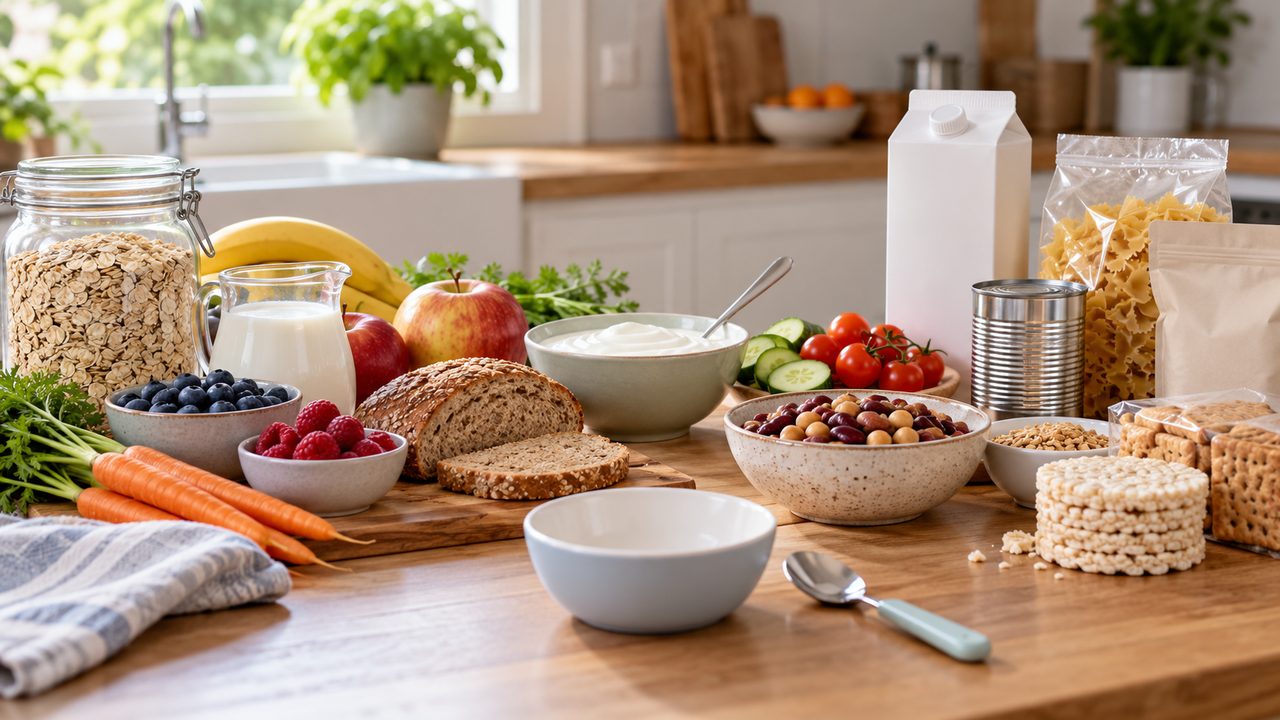
- Offer simple staples regularly: fruit, vegetables, oats, potatoes, pulses, bread, plain yogurt or suitable alternatives.
- For prepared products, check ingredients, serving size and nutrition without assuming that a short list automatically means healthy.
- Keep meals predictable and free from pressure; the study supports neither blame nor weight monitoring at the table.
Why processing alone is not the whole answer
NOVA groups very different products together, including sweetened drinks, snacks, breakfast products and packaged bread. A specific choice also depends on sugar, salt, fibre, energy, portion and the product’s place in the wider diet. A category label cannot replace an assessment of actual composition.
For practical variety, Kochzauber’s recipes by ingredient help combine staples already at home. Its recipes by meal make simple breakfasts, snacks and main meals easier to plan. The aim is a more dependable range of choices, not culinary perfection.
Conclusion: a research lead, not a diagnosis
The study connects diet data, brain responses and later changes in body fat in a new way. With 46 participants, an observational design and only one scan, it cannot justify a causal claim. A varied pattern rich in minimally processed staples remains sensible; the data provide no reason to fear one individual product.
Sources
- JAMA Network Open: study of ultraprocessed food, striatal response and adiposity in children, 23 October 2026
- JAMA Network Open: accompanying commentary on interpreting the observational evidence, 23 October 2026
- USC Keck School of Medicine: study summary, design and limitations
Author: Kochzauber editorial team. Updated: 25 October 2026. This article interprets a small observational study and does not replace individual medical or dietetic advice.