UK food prices up 1.3%, but the trend is not uniform
New ONS data show stable UK food inflation alongside opposing product movements. Here is what households can take from the figures for a sober shopping check.
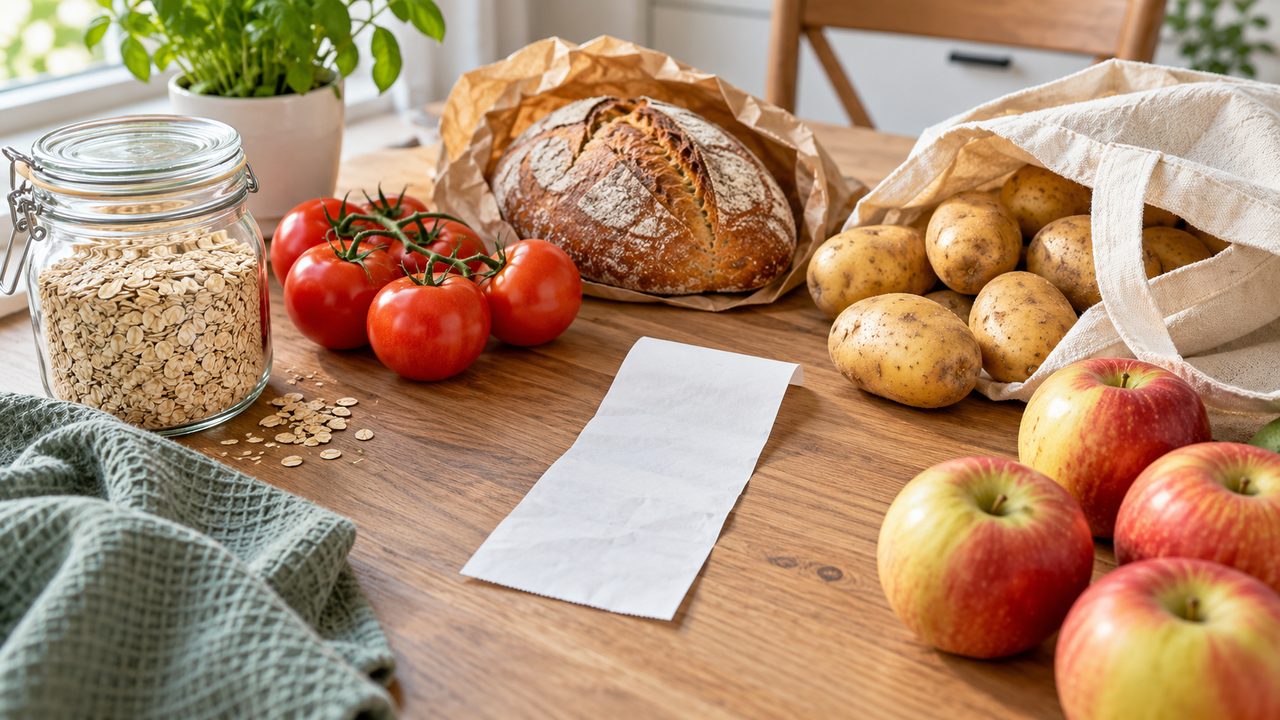
Prices for food and non-alcoholic drinks in the United Kingdom were 1.3% higher in September 2026 than a year earlier. They fell by 0.2% from August. The Office for National Statistics reported the figures on 21 October 2026. The calm headline masks different movements between product groups and is not a price report for German supermarkets.
What the official figure actually measures
The annual rate was unchanged for the third consecutive month. According to the ONS, all 11 detailed classes in food and non-alcoholic drinks had little effect on the change in the headline rate. Breakfast bakery products, cakes and sweet pies, tomatoes and potato crisps had upward effects; beef, chocolate assortments and fizzy drinks had downward effects.
These contributions indicate direction within the UK basket, not a uniform price change for every product. The statistics combine many retailers, pack sizes and quality levels. A class contribution therefore yields neither a specific shelf price nor a reliable forecast for the next shop.
Why comparisons with Germany have limits
The ONS measures UK consumer prices. Taxes, retail structures, currency, promotions and baskets differ from Germany. The figures are useful as a current market example, but they cannot be transferred to German till receipts.
A low or stable inflation rate also does not mean food has become cheap again. It describes change against an earlier price base. An already elevated price level can remain even when the rate falls or stops rising.
Four steps for your own shopping check
- Compare unit prices per kilogram or litre, not only prominent pack prices.
- Compare own-label, branded and promotional packs only when quantity and composition are equivalent.
- Plan seasonal vegetables and existing supplies first, before promotions determine the menu.
- Stock only amounts that can be stored safely and used in time.
Kochzauber's recipes by ingredient help use food already on hand first. Its recipes by meal make it easier to build a weekly plan that uses costly ingredients deliberately and carries leftovers into more than one dish.
What the data do not justify
The release is not a signal to stockpile and does not prove that a particular item will become more expensive or cheaper. In particular, the named upward and downward effects are not percentage price changes for individual products; they are contributions to the movement of the overall index.
The current local unit price therefore remains decisive for households. A short list of frequently purchased products may be more useful than a headline rate: recording prices over several shops helps identify genuine offers and avoid false bargains.
Conclusion
The new UK data show moderate, recently stable food inflation with opposing product movements. Their practical value is not a forecast for Germany but a lesson in interpretation: put aggregate indices in context, compare individual prices and plan around actual needs.
Sources
- Office for National Statistics: UK consumer price inflation, 21 October 2026
- Office for National Statistics: release page with data and tables
- German consumer advice centre: rising food prices, facts, causes and shopping tips
Author: Kochzauber editorial team. Updated: 23 October 2026. UK index data are not a forecast for German shelf prices.