Sorghum instead of maize? Study remaps Europe’s feed grain
A new modelling study sees wider opportunities for sorghum in Europe under climate change. Its findings mainly concern animal feed—not immediate supermarket prices.
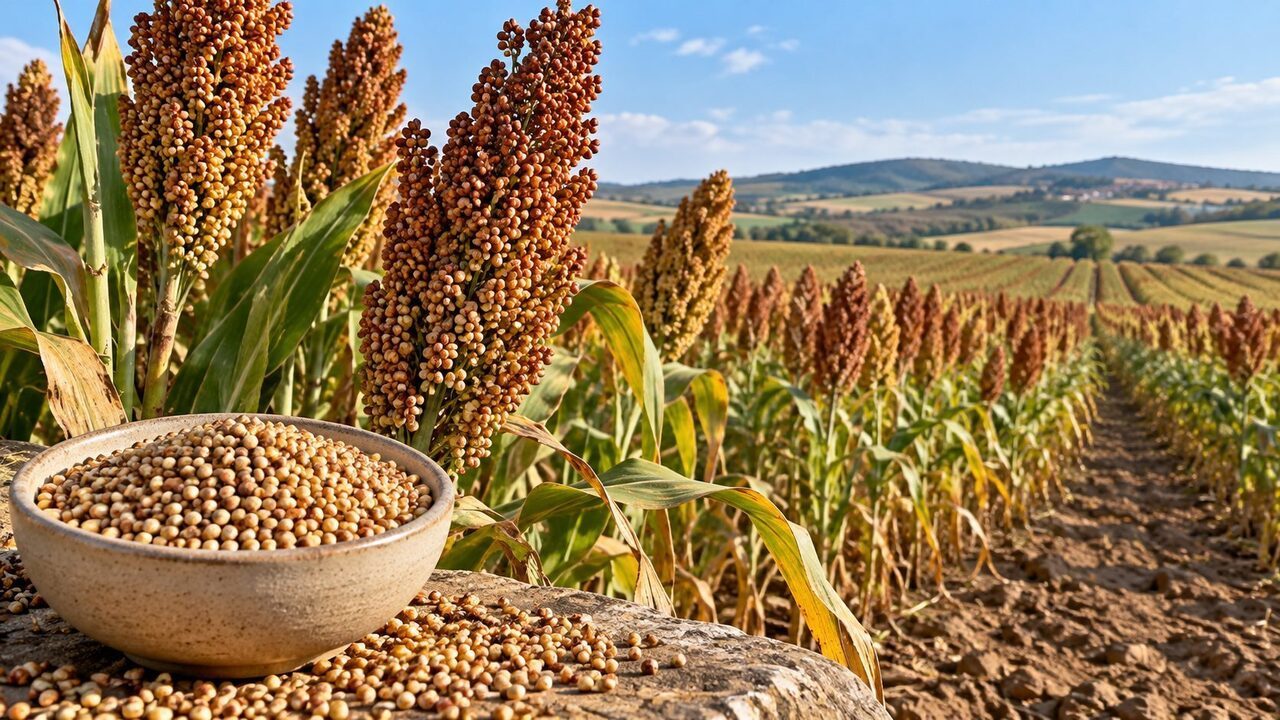
On 6 October 2026, INRAE presented a new modelling study published in Earth’s Future. Sorghum could help European farming diversify under heat and scarcer water. The work primarily examines yields and animal feed, however—not consumer prices or specific nutritional effects.
How the researchers built the model
The team trained a model on 11,644 historical yield observations from France, Italy, Spain and the United States covering 2000–2020. It then combined the model with 5 climate models and a total of 20 future scenarios for the middle and end of the century.
Sorghum currently occupies only about 0.1% of European cropland. The study therefore asks not what happens under unchanged cultivation, but which areas might provide climatically suitable and relatively stable yields if production expanded substantially.
More potential in the north, a slight decline in the south
The modelled European average rises from about 3 t/ha today to 3.4–3.8 t/ha during 2050–2100. That average hides marked differences: northern regions could gain, while parts of southern Europe may see slightly lower yields.
Areas with high and stable yields would grow from 22% of European cropland to 29–34% by the end of the century, according to the model. This is a projection based on climate, land-use and rotation assumptions, not a harvest guarantee for an individual farm.
Reading the 90% scenario correctly
If sorghum were grown on suitable land in 1 out of 3 years, it could replace around 90% of the maize currently used as animal feed in the model. That is a large-scale scenario, not a policy recommendation. Seed, cold stress, soils, farms, markets and competing crops remain crucial for implementation.
More feed supply does not automatically produce cheaper food either. Processing, energy, wages, trade and demand sit between field and shop. The study calculates neither meat nor dairy prices and does not demonstrate short-term relief for household budgets.
What this means in the kitchen
- Sorghum is both a feed and food grain, but this study assesses neither recipes nor nutritional advantages.
- Anyone buying grain or flour should follow preparation and suitability information for that specific product.
- Price promises based on long-term yield models are not credible; current shop prices remain decisive.
- Affordable cooking still depends on flexible staples, seasonal produce and using leftovers completely.
The research has a direct everyday value as context: a more climate-resilient feed grain may diversify supply chains over time, but it replaces neither regional field trials nor household choices at the supermarket.
Conclusion: a serious option, not a price promise
Sorghum emerges from the models as a meaningful complement to maize, especially where heat and water scarcity increase. Practice must show whether this becomes stable harvests and cheaper products. Plan meals through our ingredient guide and meal ideas.
Sources
- Earth’s Future: peer-reviewed sorghum modelling paper
- INRAE: research release dated 6 October 2026
- French sustainability ministry: official irrigation data
Author: Kochzauber editorial team. Updated: 7 October 2026. Model projections are not yield or price guarantees.