Street food near schools: surroundings were a strong risk factor in new study
A Bangladesh study found E. coli and Salmonella much more often in snacks from higher-risk school areas. Its figures are local, but its hygiene questions are broadly relevant.
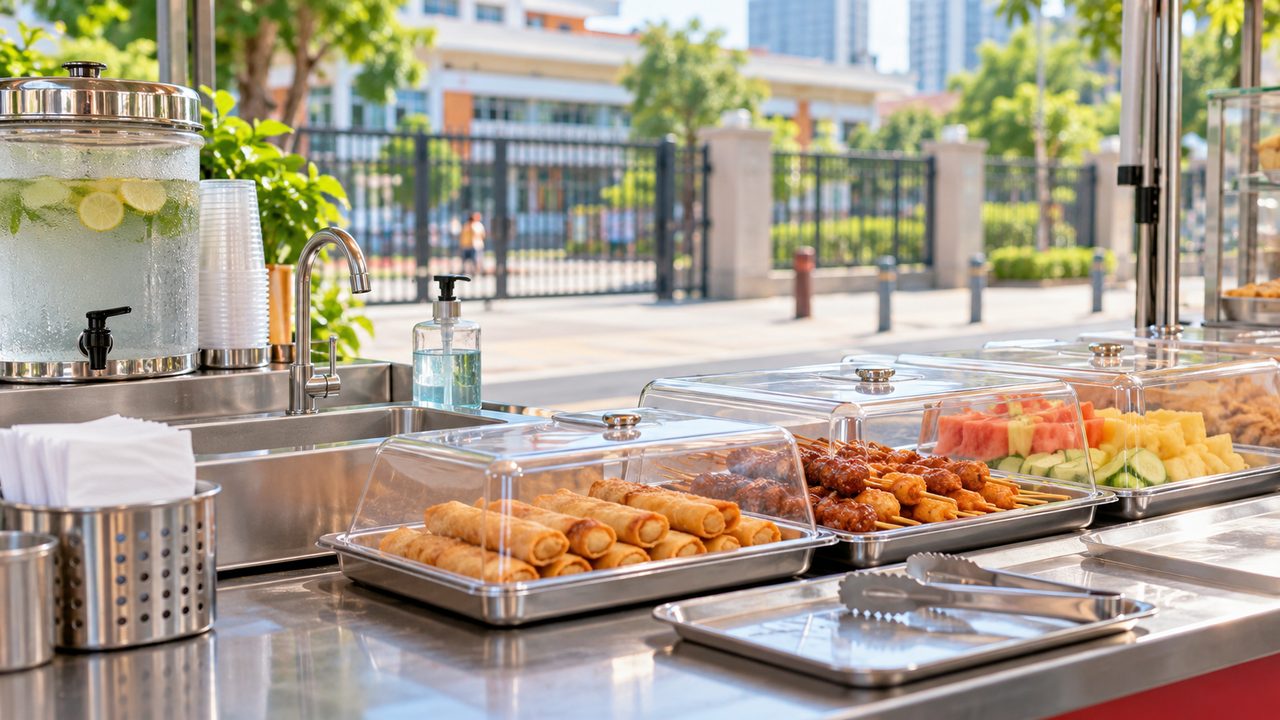
A study published on 17 October 2026 examined 210 ready-to-eat food samples from vendors within 200 m of 30 elementary schools in an urban area of Bangladesh. There were 105 samples each from areas with higher and lower environmental risk. E. coli and Salmonella were detected much more often in the higher-risk surroundings.
How the risk zones were defined
Higher-risk schools were within 500 m of possible contamination sources such as wastewater, animal markets, slaughter activities or poorly managed waste. Comparison areas were at least 1.5 km from such sources. Samples were collected from November 2025 to February 2026.
Culture methods and PCR confirmed the bacteria. Antibiotic susceptibility was tested with the Kirby-Bauer method. The design can demonstrate associations, but it cannot prove which individual route carried organisms onto a particular food.
The differences were substantial
Overall, 89 of 210 samples, or 42.4%, contained at least one target organism. E. coli was found in 41 samples, or 19.5%, and Salmonella in 57 samples, or 27.1%. Some samples therefore contained both target groups.
In high-risk areas, detection was 34.3% versus 4.8% for E. coli, 41.0% versus 13.3% for Salmonella, and 66.7% versus 18.1% for at least one target. After statistical adjustment, the higher-risk surroundings remained strongly associated with contamination.
Antimicrobial resistance adds concern
All tested isolates were resistant to amoxicillin. Multidrug resistance was more frequent among Salmonella than E. coli. This does not mean that every person who eats the food becomes ill, but it shows why food, environmental and resistance surveillance should be considered together.
The study is limited to one urban area in Bangladesh. Climate, infrastructure, dishes, vending practice and control systems differ greatly between countries. Its percentages therefore cannot be transferred to German school routes, markets or individual vendors.
A practical look at ready-to-eat food
- Prefer vendors that cover food and use clean tongs or gloves.
- Choose hot food that is genuinely hot and cold food that remains chilled.
- Notice the water source, handwashing facilities and separation of money from food.
- Avoid food with an unusual smell, long display time or visible dirt.
For preparing food at home, Kochzauber's recipes by meal and recipes by ingredient offer ideas. WHO and the German Federal Institute for Risk Assessment recommend clean hands and surfaces, separating raw and cooked food, thorough heating and safe temperatures.
Conclusion: hygiene starts beyond the food counter
The study connects contamination with the wider school environment, not only with a single preparation step. Wastewater, waste, animal contact, water quality, refrigeration and school health belong in the same system. A visual check helps consumers but cannot replace testing for invisible organisms.
Sources
- Scientific Reports: original Bangladesh study, published 17 October 2026
- World Health Organization: five keys to safer food
- German Federal Institute for Risk Assessment: kitchen hygiene, heating and chilling
- European Commission: EU framework for food hygiene
Author: Kochzauber editorial team. Updated: 18 October 2026. These local data cannot be read as contamination rates for other countries or individual vendors.