Lead from recycled aluminium pots: what a new study found
A study in Bangladesh found lead in rice and khichuri cooked in artisanal pots made from aluminium scrap. The result does not apply to all aluminium cookware.
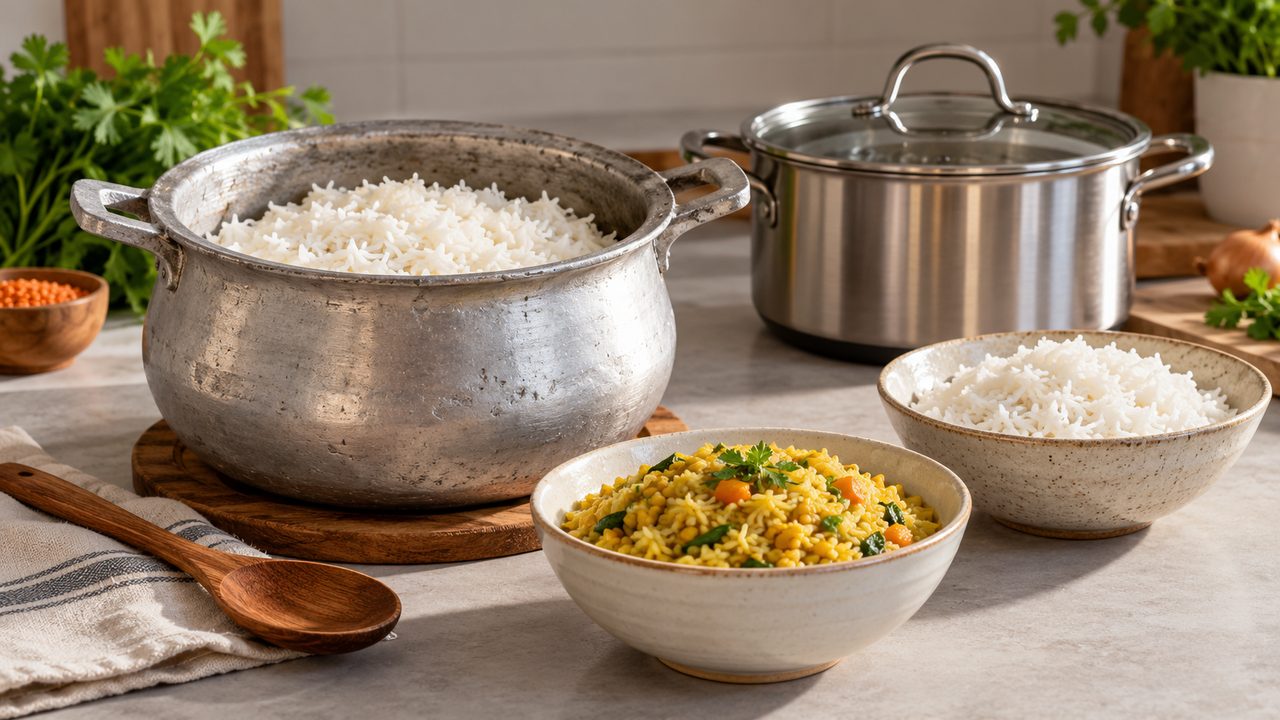
A study published on 25 October 2026 examined artisanal cooking pots made from aluminium scrap in Bangladesh. During the first use of new pots, mean lead contents were 305 µg/kg in rice and 420 µg/kg in khichuri. A test using 4% acetic acid complemented the cooking experiments. The results concern the tested pots and must not be generalised to all aluminium cookware.
How the researchers tested the pots
The team examined both new and previously used artisanal pots. An acidic test solution was intended to simulate liquid acidic foods; rice and khichuri were also cooked under more realistic conditions. This separated what a standardised extraction test can show from what actually reached two prepared foods.
Lead release depended on acidity, usage history and mechanical stress. New pots released especially high amounts at first. Abrasive scrubbing released about 5 times as much lead during the first use and nearly 3 times as much during the second use as the corresponding use without scrubbing. This points to a contaminated surface layer that can be worn away comparatively easily.
Why the benchmark needs careful reading
The study compares its measurements with 10 µg/kg, the action level used by the US food authority for lead in foods intended for babies and young children. It is not a general European limit for rice cooked in pots. The comparison indicates scale, but it does not replace a product-specific legal assessment.
The World Health Organization stresses that there is no known safe level of lead exposure and that children are particularly vulnerable. At the same time, the study measured neither blood lead levels nor disease. It identifies a possible exposure source, not a diagnosis in individual households.
What cannot be generalised
Artisanal pots made from unsorted scrap can contain different alloys and contaminants from industrial cookware manufactured to a defined specification. Coatings, origin, quality control and condition also differ. The finding therefore does not mean that aluminium is inherently unsafe.
Germany’s Federal Institute for Risk Assessment notes that the decisive question for metal items is which elements actually migrate into food. The EU lacks harmonised release limits for many uncoated metal articles; safe food-contact materials and toxicological assessment remain essential. Appearance and a magnet test alone cannot reliably identify an alloy.
A practical cookware check
- Choose cookware from a traceable source and look for food-contact suitability and care instructions.
- Do not assume that unknown artisanal scrap pots, especially for children’s food, become safe simply by boiling them out.
- Stop using vessels that are badly damaged, corroded or leave unusual marks, and contact the competent food-control authority where there is a substantiated concern.
- Choose suitable everyday dishes through the recipes by ingredient and recipes by meal.
Conclusion: origin and material control matter
The new work identifies a relevant lead source in the particular artisanal aluminium pots cast from scrap that were tested. New surfaces and abrasive scrubbing increased release. The lesson is not a blanket ban on aluminium, but a sober material check: traceable manufacture, an intact surface, appropriate use and expert testing where there is cause for concern.
Sources
- Journal of Exposure Science & Environmental Epidemiology: study of lead from artisanal aluminium pots, DOI 10.1038/s41370-026-00988-y
- World Health Organization: fact sheet on lead poisoning and health risks
- German Federal Institute for Risk Assessment: migration of elements from metal kitchen utensils
Author: Kochzauber editorial team. Updated: 27 October 2026. This article interprets a study from Bangladesh and does not replace testing of a particular cooking vessel.