Pumpkin seed protein in coffee: new emulsion improves body but remains a prototype
A new laboratory study develops a stable coffee emulsion from phosphorylated pumpkin seed protein. Sensory results and separation show promise and clear limits.
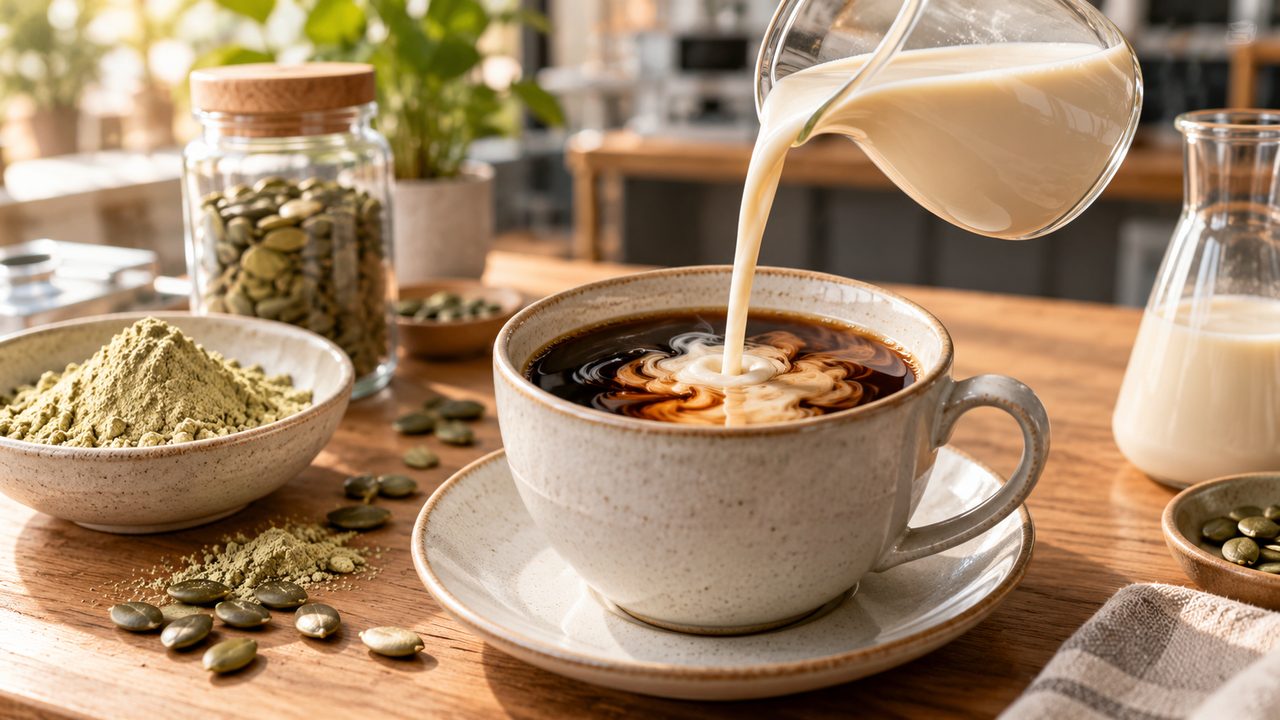
A study published online on 18 October 2026 chemically phosphorylated pumpkin seed protein and used it to make Pickering emulsions for a potential plant-based coffee creamer. The work examines structure, droplet size, stability and sensory properties in coffee. It is a laboratory prototype, not a retail product.
Two phosphates changed the protein and interface
The researchers treated pumpkin seed protein with sodium tripolyphosphate and sodium trimetaphosphate. This altered conformation, surface charge, particle size and wettability. The analysis found no major degradation of the protein subunits.
Mixed-phosphate treatments generally produced finer droplets and better resistance to accelerated separation than single treatments. A 4:1 ratio of sodium tripolyphosphate to sodium trimetaphosphate combined small droplets with favourable interfacial adsorption. More sodium trimetaphosphate did not consistently improve overall performance.
In coffee, more emulsion was not automatically better
As the emulsion proportion rose, phase separation, colour and flavour were affected more strongly. At a 1:9 emulsion-to-coffee ratio, the panel rated body and smoothness positively while coffee aroma remained. In that specific balance, the experimental formula outperformed the commercial creamer used for comparison.
The abstract does not report a large consumer group, long-term storage, repeated hot-holding or different coffee styles. A sensory snapshot and accelerated stability tests cannot establish shelf life, everyday acceptance or performance in every cup.
Plant-based and clean label are different questions
Pumpkin seeds are a plant protein source, but the function studied here resulted from deliberate chemical modification. Whether a future product would be perceived as simple or clean label depends on processing, naming, authorisation and the full ingredient list. Naturalness is not a single scientific legal category.
In the EU, additives may be used only for authorised purposes and under defined conditions. The study does not establish that this exact formula can be marketed in Europe. Allergens, nutrition, production cost, flavour during storage and industrial scaling would also require assessment before launch.
What coffee drinkers can check today
- Read the ingredient list and consider protein source, oil, sugar, stabilisers and phosphates separately.
- Compare nutrition per 100 ml, particularly sugars, saturates and protein.
- If digestion is sensitive, try a small amount; laboratory stability says nothing about individual tolerance.
- Do not treat plant-based as automatically nutrient-rich, allergen-free or environmentally preferable.
For something to serve alongside coffee, Kochzauber offers recipes by ingredient and recipes by meal. At the shop, the specific declaration is more reliable than green packaging or a broad plant claim.
Conclusion: technically interesting, not a finished creamer
The study shows that modified pumpkin seed protein can form a stable, sensorially workable coffee emulsion. The link between a plant protein ingredient, interfacial function and mouthfeel is especially interesting. A market-ready product would still need broad consumer tests, robust shelf-life data, regulatory assessment and transparent formulation and processing information.
Sources
- Journal of Agricultural and Food Chemistry: original study, online 18 October 2026
- European Commission: rules and authorisation for food additives
- European Commission: mandatory food information for consumers
Author: Kochzauber editorial team. Updated: 19 October 2026. This article reviews a laboratory prototype and does not assess market authorisation or individual tolerance.