PPWR and PFAS: new EU guide explains duties for small food businesses
A new EU guide explains which packaging records small food businesses have needed since 12 August 2026 and when exemptions may apply.
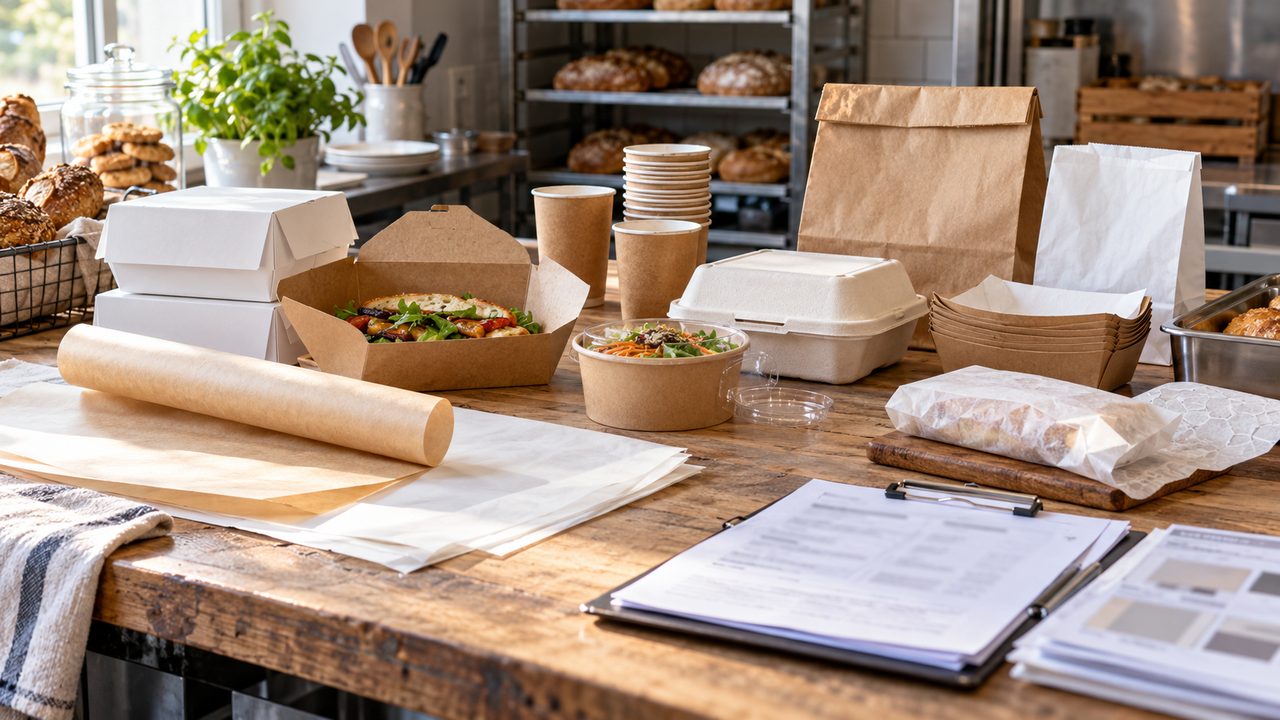
On 19 October 2026, the European Commission published a new guide to the Packaging and Packaging Waste Regulation, or PPWR, for small businesses. The key point for bakeries, delicatessens, delivery services and other food operators is that the Regulation has applied since 12 August 2026 but is being phased in. The guide separates duties that apply now from later requirements.
The immediate focus is conformity and traceability
Businesses treated as manufacturers or importers under the PPWR currently need to draw up a declaration of conformity for packaging. The guide says it initially covers requirements for substances of concern: the pre-existing limits for lead, cadmium, mercury and hexavalent chromium, plus the new PFAS limits for food-contact packaging.
A business that has packaging designed or manufactured under its own name or trademark may be the legal manufacturer even if another company physically makes the tray, bag or box. That supplier must provide the data and technical documentation needed for the declaration. Packaging must also be traceable to its manufacturer and declaration.
An own brand can trigger manufacturer status
The guide generally treats a small business as the manufacturer when it places packaging or a packaged product on the market under its own name or trademark. Adding its brand sticker to generic packaging may be enough. A shipping sticker alone is not branding. Using plain generic transport boxes without adding a brand does not by itself make the user their manufacturer.
An importer places packaging or packaged goods from a non-EU country on the EU market for the first time. Producer is a different PPWR role, mainly linked to extended producer responsibility in the Member State where packaging is expected to become waste. One business may hold several roles.
PFAS-free is not a substitute for robust records
Since 12 August 2026, food-contact packaging containing PFAS at or above the concentration limits in Article 5 of the PPWR may not newly be placed on the EU market. The new guide requires a documented supply chain for conformity. A broad marketing statement such as “PFAS-free” replaces neither technical evidence nor the legal assessment of the specific material.
Likewise, “paper”, “compostable” or “natural” alone says nothing about PFAS, barrier coatings or suitability for hot, fatty or acidic food. Food businesses should align the intended contact, temperature and duration with their supplier. The publication is practical guidance; the legislation remains authoritative.
A practical four-point check for small businesses
- Clarify and record the separate roles of manufacturer, importer and producer.
- Link each pack to its specification, supplier, batch or type identifier and declaration of conformity.
- For food contact, obtain explicit confirmation on PFAS and heavy-metal requirements instead of collecting marketing terms alone.
- Do not destroy stock automatically: packaging already produced without the new markings may, according to the guide, be made traceable through accompanying or digital information.
Micro-enterprises with fewer than 10 employees and annual turnover below EUR 2 million may qualify for conditional exemptions, for example where the physical packaging manufacturer is established in the EU. This is not a blanket waiver. Further rules on recyclability, recycled content, minimisation, labelling, single-use bans and reuse will be phased in, many from 2030 or later.
What consumers can take from the guide
The document targets businesses but also offers an important consumer lesson: a material name or green design does not prove that packaging is PFAS-free. Compliance records and official market surveillance carry more weight. People wishing to reduce packaging can plan meals with Kochzauber's recipes by ingredient and shop to need using recipes by meal.
Conclusion: the new guide presents the PPWR not as a simple marketing checklist but as a documentation process. Small food businesses should organise roles, supplier evidence and traceability now. PFAS limits already apply, while many circular-economy duties arrive later.
Sources
- European Commission: PPWR guide for small businesses, 19 October 2026
- EUR-Lex: Regulation (EU) 2025/40 on packaging and packaging waste
- European Commission: PPWR implementation and timeline
Author: Kochzauber editorial team. Updated: 20 October 2026. This is an editorial overview, not individual legal advice.