Potato and fava bean protein: firm structure, but still too bitter
A new extrusion study tests potato protein as a gluten-free structuring aid for fava bean protein. The network is firm, but bitterness and aftertaste remain clear obstacles.
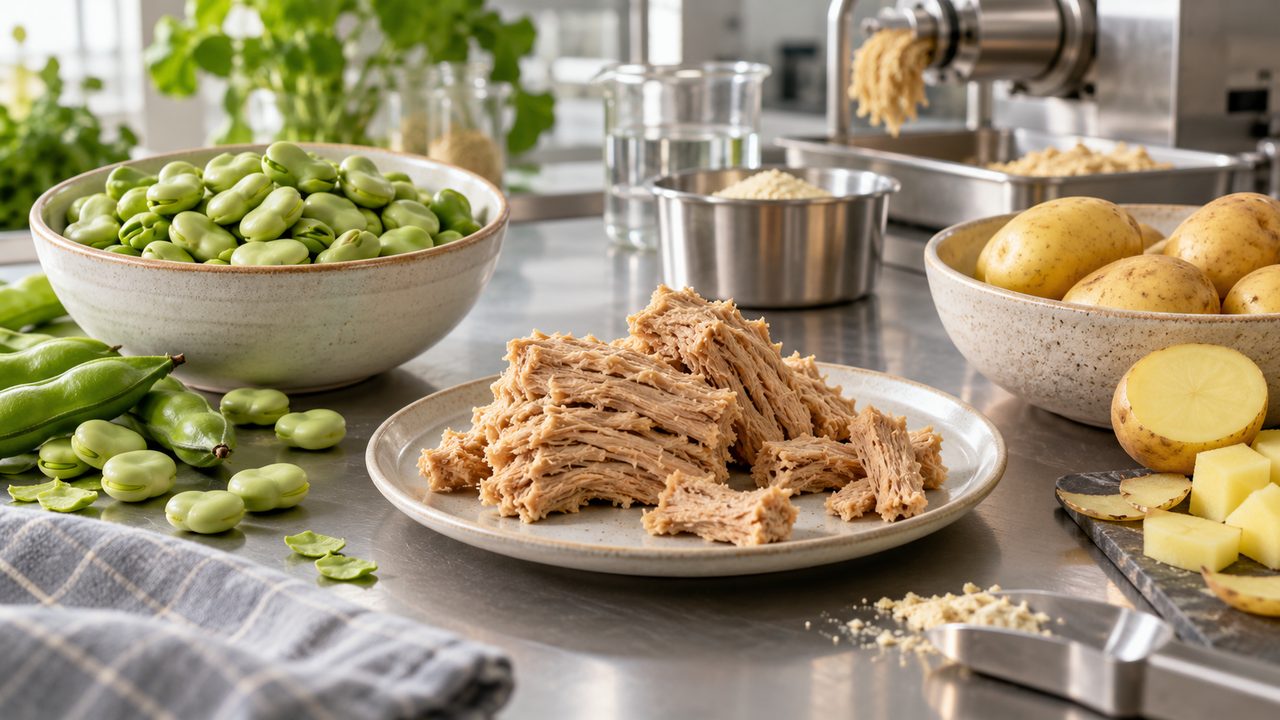
A study presented on 23 October 2026 tested potato protein isolate as a gluten-free structuring aid for fava bean protein in meat alternatives. The blend of 75% fava bean and 25% potato protein formed a robust network during high-moisture extrusion. However, it was more bitter and astringent than the wheat-gluten version and left a stronger aftertaste.
What the extruder comparison covered
The researchers extruded pure fava bean protein and blends containing wheat gluten or potato protein under comparable conditions. Heat, pressure and mechanical forces unfold and connect the proteins to create a fibre-like structure. The team assessed texture, microstructure, protein bonds, oil-holding capacity and an electronic taste signal, among other properties.
Potato protein produced a harder, strongly connected material. Oil-holding capacity reached 211.8%, while wheat gluten produced a softer and more elastic sample. Disulfide-linked protein fractions were 31–33% in both blends, compared with 21.8% in the pure fava bean extrudate. These figures describe laboratory samples, not a finished food.
Why the combination is interesting
Wheat gluten is often used because it can give plant-based meat alternatives elasticity and bite. A potato-protein structuring aid could enable recipes that avoid gluten-containing cereals. Fava beans can also grow in cooler regions and broaden the raw-material range beyond soya and peas.
Gluten-free is nevertheless a regulated label and cannot be inferred from a research recipe alone. In the EU, gluten-containing cereals must be emphasised as allergens, and defined conditions apply to the claim “gluten-free”. Production, cross-contact, testing and labelling of any future product would need separate assessment.
Flavour remains the unresolved task
The electronic sensing system detected more bitterness, astringency and lingering aftertaste in the potato-protein blend. This was not a complete consumer trial of a market-ready product. Further research must show whether seasoning, fermentation, pretreatment or different processing conditions can solve the sensory obstacle.
A firm fibrous structure alone guarantees neither acceptance nor nutritional value, price or digestibility. The study primarily provides a technological proof of feasibility. It does not demonstrate that potato–fava products would be healthier, more climate-friendly or better tolerated by everyone.
What future shoppers can check
- Use the ingredients list to see whether whole foods, concentrates or isolates are used.
- For coeliac disease or allergies, rely only on the specific allergen and gluten labelling of the product.
- Read protein, salt, fat and serving size together in the nutrition information.
- Do not confuse terms such as plant-based, regional or new with an automatic health advantage.
Conclusion: a useful structurer, not yet a finished product
Under the tested conditions, potato protein can structure fava bean protein without wheat gluten. The experiment also shows why food development involves more than texture: bitterness and aftertaste need solutions, while safety and labelling require product-specific checks. For practical plant-based cooking today, Kochzauber’s recipes by ingredient and recipes by meal offer less heavily processed starting points.
Sources
- Food Hydrocolloids: high-moisture extrusion of fava bean and potato protein, volume 181, 2026
- Heriot-Watt University: study announcement on potato protein in meat alternatives, 23 October 2026
- European Commission: rules for gluten-free food information
Author: Kochzauber editorial team. Updated: 24 October 2026. The study concerns experimental extrudates and does not support conclusions about a specific retail product or individual tolerance.