Nutri-Score, nutrition panel or ingredients list? New study shows what parents use
A new German survey compares the Nutri-Score, nutrition information panel and ingredients list. What 978 parents reported, where the evidence stops and how the three formats can work together when shopping.
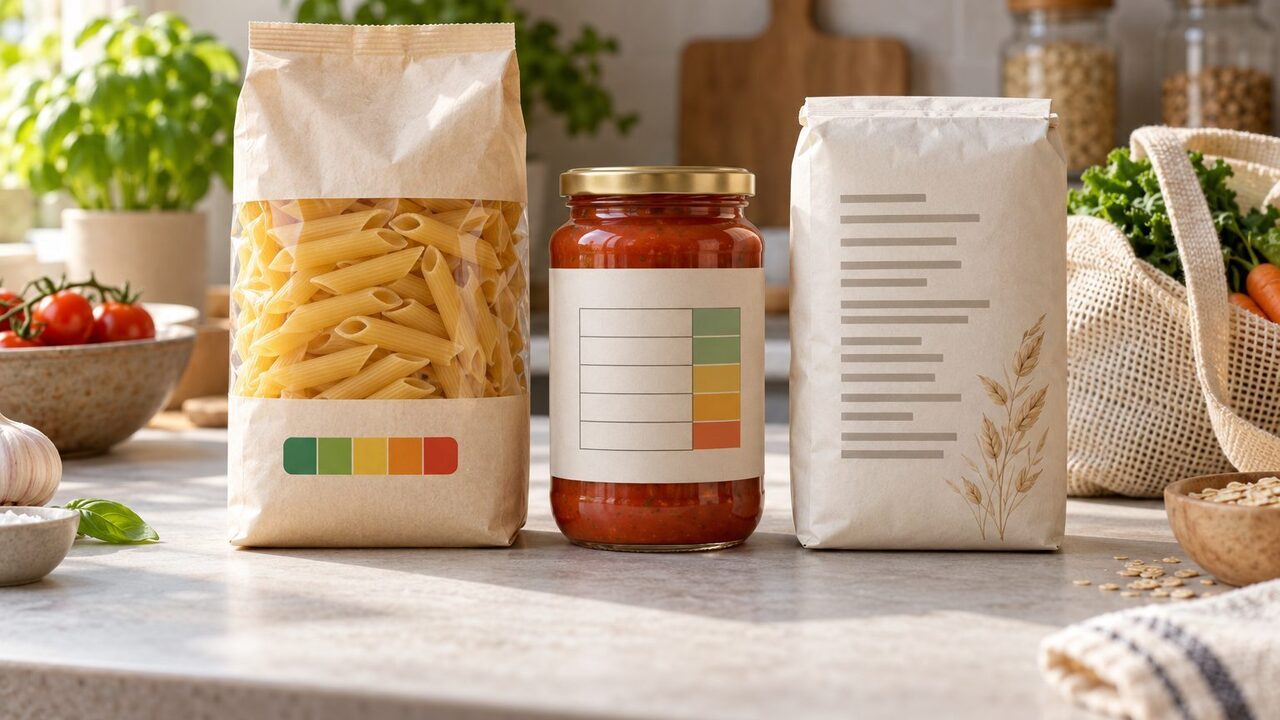
A German cross-sectional study published on 29 September 2026 compares how parents say they understand and use the Nutri-Score, nutrition information panel and ingredients list. The 978 respondents reported broad use of all three formats. The findings support looking at packaging in combination, but they measure neither objective knowledge nor actual purchases.
What the study examined
Eligible participants were adults in Germany who lived with children under 18 and were responsible for at least 50% of their household food shopping. The online survey ran from 20 February to 4 March 2024. Quotas approximated the income and municipality-size distribution of family households; this was not a random sample of the whole population.
84.8% said they understood at least roughly what the Nutri-Score was about, 83.7% said the same for the nutrition panel and 80.5% for the ingredients list. 73.7% reported understanding all three. The word “subjective” matters: the researchers did not use knowledge questions to test whether every response was factually correct.
Use and comprehensibility are not the same
70.3% reported using the Nutri-Score, 74.2% the nutrition panel and 70.6% the ingredients list. 58.8% said they used all three. These are self-reports, not observations of shopping baskets.
The Nutri-Score received the strongest ratings for visibility at 86.3% and design clarity at 87.1%. At the same time, 76.0% agreed that they understood the information provided by the nutrition panel. A highly visible summary and detailed quantity data therefore perform different jobs.
How to read the three layers together
- Nutri-Score: compare similar products within the same category instead of treating it as a verdict on an entire diet.
- Nutrition panel: compare values per 100 g or 100 ml and, where relevant, focus on sugars, saturates, salt and energy.
- Ingredients list: check what the product contains; ingredients are generally listed in descending order by weight.
- Allergens: if you have an allergy, do not rely on colour or marketing claims; use the mandatory allergen information and your individual medical advice.
The EU Food Information to Consumers Regulation defines mandatory information for prepacked foods. The Nutri-Score is a voluntary additional label. None of these formats completely replaces the others.
What an ingredients list says about clean label – and what it does not
A short ingredients list may suit a particular purchase, but it is not an official quality seal. Terms such as “natural”, “no additives” or “clean label” do not automatically answer questions about nutrients, allergens, processing or portion size.
Look at specific information rather than length alone: which main ingredients come first, which allergens are emphasised and whether the nutrition panel fits the intended use. A product may have few ingredients and still contain plenty of salt or sugar; conversely, several ingredients may each have a clear technological function.
Why information overload matters
In the study, greater perceived overload from nutrition information was associated with lower self-reported understanding of all three formats. Lack of interest was the most common reason for non-use, while lack of time was the least common.
A fixed routine is more useful in everyday life than trying to analyse every package completely. Choose one or two relevant criteria first, compare like with like and, for allergies or special requirements, read all mandatory information.
Limits of the results
The survey covered parents with shopping responsibility and was conducted online. The sample included a comparatively high share of people with higher education; only 2.6% had a non-German nationality. The findings cannot therefore be transferred unchanged to every household.
Because data collection took place in 2024, the 2026 publication does not describe a change in the past few weeks. It provides a newly published scientific comparison of the three formats. The cross-sectional design cannot show that a label by itself causes healthier purchases.
Conclusion: compare first, then inspect the detail
The study shows that many surveyed parents use several labelling formats side by side. A practical three-step check is to shortlist similar products with the Nutri-Score, compare quantities in the nutrition panel and read the ingredients list for composition and allergens. Continue planning with our recipes by ingredient and recipes by meal.
Sources and update
- Simmet et al., BMC Public Health: German cross-sectional study of the Nutri-Score, nutrition information panel and ingredients list, published on 29 September 2026.
- European Union: Regulation (EU) No 1169/2011 on the provision of food information to consumers.
- German Federal Ministry of Agriculture, Food and Regional Identity: overview of uniform EU food labelling.
Author: Kochzauber editorial team. Information updated on 1 October 2026. The shopping guidance is editorial orientation, not individual nutrition or allergy advice. The cover is an editorial symbolic image.