Do not wrap food in newspaper: new study measures trace elements
A new investigation in Dhaka found several trace elements in ordinary printed paper. Its key limitation matters: the paper was measured, not the actual transfer into food.
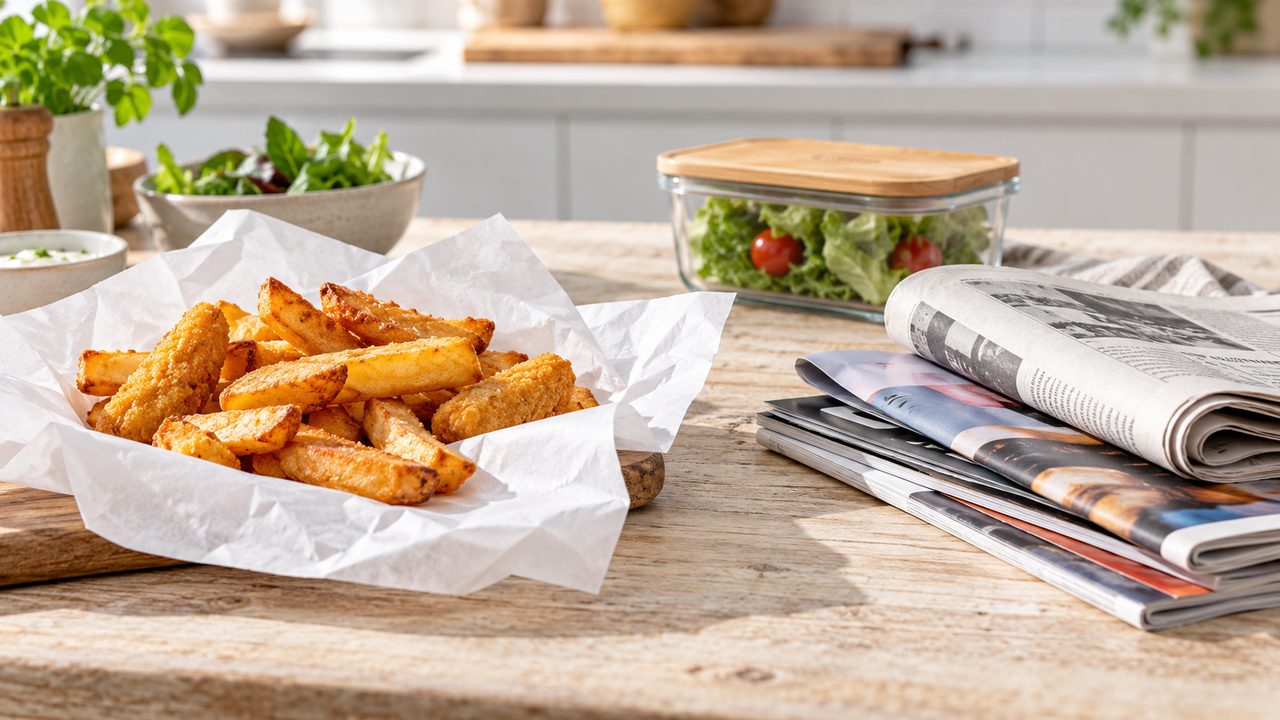
A study published on 24 October 2026 analysed 38 paper samples from Dhaka for 7 trace elements. The researchers examined lightly and heavily printed newspaper areas, photographs, magazine paper and book pages. Arsenic, lead, cadmium and chromium in the material frequently exceeded the comparison limits selected by the authors. However, they measured total content in paper, not actual migration into a particular food.
What was examined
Samples were collected from local vendors in March 2025 and analysed using ICP-MS. Copper and manganese reached as much as 61.9 ppm and 31.7 ppm respectively in individual categories. Heavily printed newspaper areas showed stronger arsenic and lead signatures in the dataset, photo areas showed copper, and magazine paper showed nickel.
The team used total concentrations to model exposure. Those calculations produced higher risk estimates for children than for adults. The figures are not a measured health effect and do not show how much actually transfers from paper into a specific serving. Without migration tests and chemical speciation, they may overestimate risk; the authors explicitly acknowledge that uncertainty.
Why newspaper is not food-grade paper
Ordinary newspapers, book pages and magazines are not manufactured for contact with food. Printing inks, paper fibres and possible recycled content are selected for another purpose. Heat, moisture, fat, contact time and the type of food influence whether and how substances may transfer.
Food-contact materials in the EU are governed by a general safety framework: they must not release constituents in amounts that endanger health or unacceptably change food. Purpose-made bakery bags or wrapping papers therefore cannot be treated as equivalent to arbitrary printed paper. The new study does not establish a general defect in all paper food packaging.
A practical packaging check
- Do not place hot, moist or fatty food directly on newspapers, magazines, book pages or printed office paper.
- Use only containers and papers clearly intended for food contact and for the relevant temperature range.
- Choose glass, stainless steel or suitable reusable boxes at home; find appropriate dishes through the recipes by meal.
- Transfer dry staples to clean food containers and use them in time with ideas from the recipes by ingredient.
Food paper is not automatically trouble-free either
Paper may be coated to resist grease and moisture. Depending on the product, waxes, silicones, plastics or other processing aids may be used. Printing inks and substances from recycled fibres can also matter. Suitability, intended use and an effective barrier count more than a paper appearance.
People buying takeaway food do not need to remove properly used food packaging as a precaution. An obviously unsuitable material, direct contact with the printed side or serious damage can be raised with the seller. At home, the rule is simple and sound: newspaper is for reading, while food belongs in materials made for that purpose.
Conclusion: clear precaution without an alarm number
The study provides new data on ordinary printed papers from Dhaka and supports the advice not to improvise with them as food packaging. It does not measure real migration into meals and cannot describe every paper product. Its practical value lies in choosing the correct material, not in turning modelled figures into a health diagnosis.
Sources
- Food Safety and Risk: study of trace elements in paper-based food wrapping in Bangladesh, 24 October 2026
- European Commission: food-contact materials and the EU safety framework
- German Federal Institute for Risk Assessment: health assessment of printing inks
- German consumer advice service: paper and board in contact with food
Author: Kochzauber editorial team. Updated: 26 October 2026. The study measured total content in paper; without migration and speciation data, no specific intake from food has been established.