Mycelium and anthocyanins: new biopolymer film signals freshness by colour
A new materials study joins collagen, fungal mycelium and plant pigments in a strong, colour-responsive film. Important tests remain before food-packaging use.
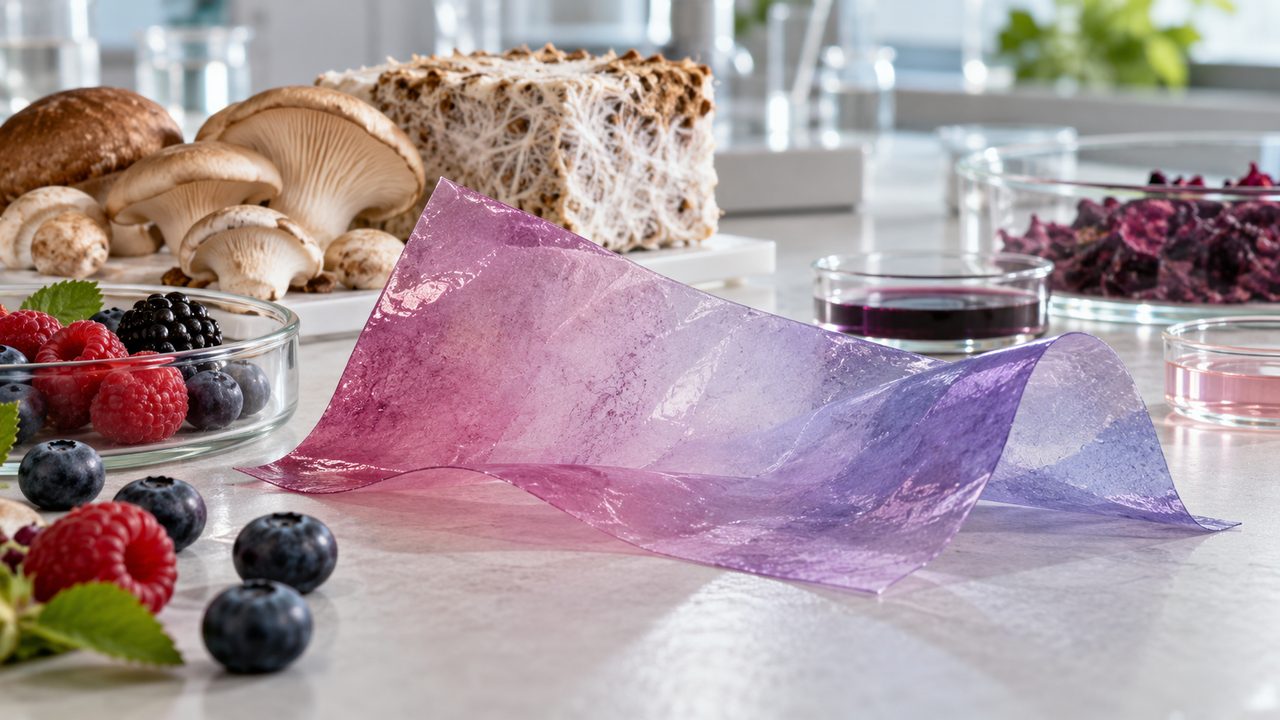
A study published in Nature Sustainability on 16 October 2026 describes a composite film made from collagen, Ganoderma lucidum mycelium and plant-derived anthocyanins. In the laboratory, the material reached a tensile strength of 63.55 MPa and changed colour with pH. The researchers see potential for active and intelligent packaging, not a product that is already market-ready.
Three natural components with different roles
Collagen forms a protein framework, fungal mycelium contributes a fibrous structure, and anthocyanins mediate contacts between dissimilar interfaces. According to the analyses, the components reorganised into consolidated pore walls and a lamellar structure. This allowed mechanical loads to travel more effectively through the material.
Anthocyanins are plant pigments whose colour can change with acidity. In intelligent packaging, such a shift could provide a clue about changes around food. It cannot replace a use-by date, a smell check or correct refrigeration.
Which properties were measured in the laboratory
The film provided UV shielding, showed antioxidant and antibacterial properties, and reduced oxygen and water-vapour transmission. The team also demonstrated an application for freshness indication and fresh-food preservation. This combination of barrier, activity and indication is the study's main novelty.
High tensile strength alone says little about whether packaging will tolerate folding, sealing, refrigeration, fat, acid and long storage in daily use. Reproducible manufacturing, end-of-life route, raw-material demand and cost matter as well. The publication does not yet answer those questions at industrial scale.
What the study explicitly does not prove
- No market authorisation: the material is a research system, not food packaging available to buy.
- No PFAS verification: the stated composition does not automatically establish tested PFAS-free status.
- Not a vegan film: collagen is an animal protein, even though mycelium and anthocyanins are other components.
- No compostability promise: bio-based does not automatically mean biodegradable or home-compostable.
People seeking to reduce packaging in daily life can find suitable dishes under recipes by meal and recipes by ingredient. Reusable containers help only when suitable for the food, undamaged and cleaned correctly.
Food contact brings additional hurdles
In the EU, materials must not release constituents into food at levels harmful to health or alter composition, taste or smell unacceptably. Active and intelligent materials face specific requirements because they are designed to interact with the packaging environment.
Before use, the film would therefore need measures including migration tests under intended time and temperature conditions, safety assessment of its constituents, labelling, traceability and good manufacturing practice. A promising laboratory result cannot replace that regulatory evidence.
Conclusion: a strong material idea, not yet a shopping claim
The study convincingly shows how small plant molecules can bind very different biopolymers into a strong, functional film. The combination of barrier performance and colour response is particularly interesting. It is not yet relevant to a purchase decision: safety, migration, durability, scale-up and disposal still need robust answers.
Sources
- Nature Sustainability: original biopolymer-film study, published 16 October 2026
- European Commission: legal framework for food-contact materials
- European Commission: consumer information on food-packaging safety
Author: Kochzauber editorial team. Updated: 17 October 2026. The film is a research prototype; this article makes no claim of market readiness or PFAS-free status.