Mushroom peptides enhance salty taste: new study shows promise and limits
Three peptides from beech mushrooms enhanced saltiness in sodium chloride solutions in a laboratory study. What this could mean for lower-salt foods – and what it does not yet prove.
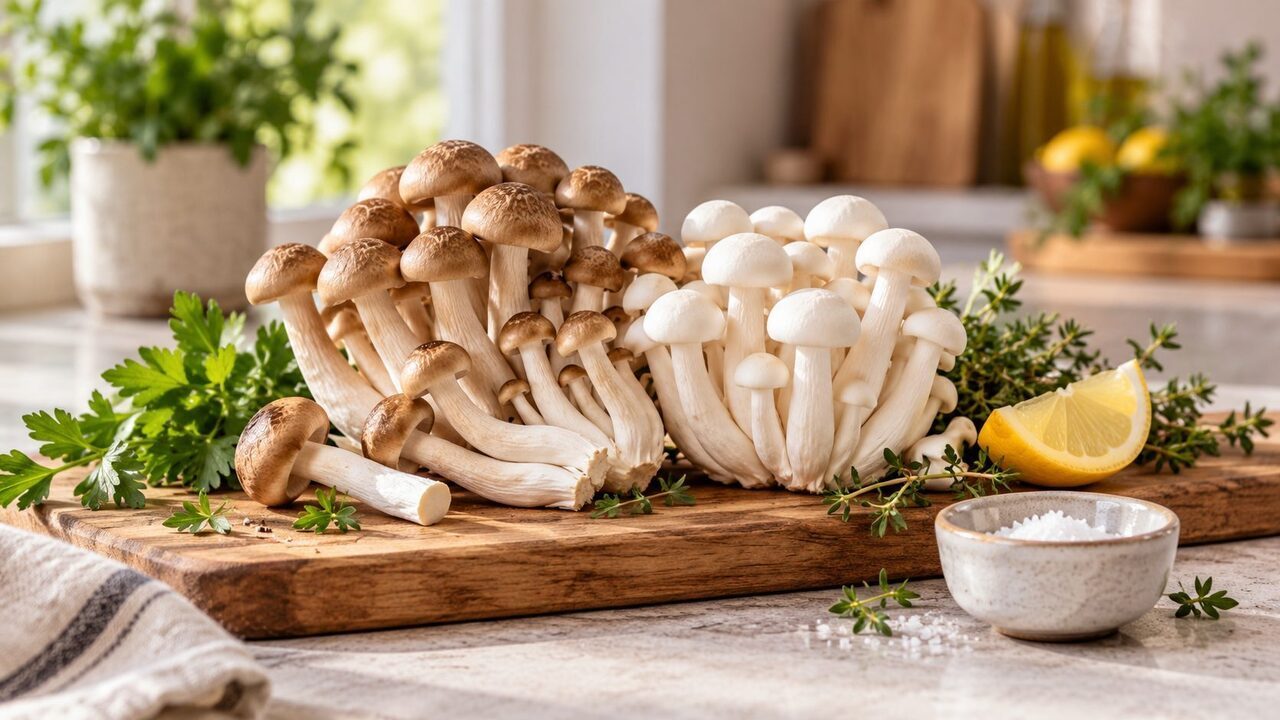
A study published on 2 October 2026 identified three short peptides from Hypsizygus marmoreus that enhanced or prolonged salty taste in sodium chloride solutions. This is an interesting route towards lower-salt foods. It is not yet evidence that a market-ready product can contain less sodium and taste equally good.
What the researchers found
The team combined sensory-guided selection, machine learning, bioinformatics, an electronic tongue and molecular simulations. The final candidates were ASHGEGF, GDDWT and LDDGF from the edible fungus Hypsizygus marmoreus, also known as beech mushroom or shimeji.
In sodium chloride solutions, the three candidates produced additive or synergistic effects: the salty sensation became more intense, lasted longer, or both. The electronic tongue supported the sensory findings as an additional laboratory measurement.
Why peptides matter for food formulation
Salt does more than add flavour. In processed foods it can also affect structure, shelf life and manufacturing. A taste enhancer could therefore replace only part of its role; safety, texture and stability must be tested separately before a genuine reformulation.
The simulations predicted hydrogen bonds between the peptides and a TMC4 model. Recurrent contact sites supported a possible explanation for the sensory effect. Binding in a model, however, does not demonstrate the mechanism in the human mouth.
What the study does not show
The researchers studied defined solutions and computer models, not complete soups, breads or ready meals. The paper does not establish long-term consumer acceptance, industrial production, storage stability, regulatory approval or a specific sodium reduction in a finished product.
An origin in an edible mushroom does not automatically make an isolated substance suitable for every use. Dose, purity, allergen management and labelling would all need assessment before application.
Clean label requires precise claims
A mushroom-derived peptide might fit a short or understandable recipe, but “natural” and “clean label” are not safety certifications. The exact ingredient, its function, its regulatory assessment and transparent labelling are what matter.
For shoppers, the nutrition declaration remains decisive. A product may taste strongly salty and still contain a great deal of sodium. Compare salt per 100 g or 100 ml between similar products.
Reducing salt gradually at home
- Reduce salt in small steps so that taste can adjust.
- Build depth with browning, herbs, spices, lemon or vinegar.
- Rinse heavily salted canned foods when the product and recipe allow it.
- Season deliberately near the end and taste before adding more.
The German Nutrition Society gives up to 6 g of salt per day as a guide; the World Health Organization recommends less than 5 g for adults. People using table salt should also consider iodine intake and, in Germany, preferably choose iodised salt unless medical advice says otherwise.
Conclusion: promising for development, not a kitchen additive yet
The three mushroom peptides offer a plausible research direction for lower-salt formulations. Real food matrices, safety assessments and consumer trials are still required before a dependable food application exists. For everyday cooking, gradual reduction and aromatic ingredients remain the stronger tools. Find ideas in our recipes by ingredient and recipes by meal.
Sources and update
- Kong et al., npj Science of Food: study of saltiness-enhancing peptides from Hypsizygus marmoreus, published on 2 October 2026.
- German Nutrition Society: questions and answers on salt and its intake guideline.
- World Health Organization: healthy-diet principles and recommendation on salt intake.
Author: Kochzauber editorial team. Information updated on 3 October 2026. The study examines an early research approach, not an approved consumer ingredient. The cover is an editorial symbolic image.