Lemon juice authenticity: FDA finds 7 violations among 195 samples
A new FDA analysis finds evidence of economically motivated adulteration in 7 of 195 lemon-juice samples. Here is what the figures do and do not show.
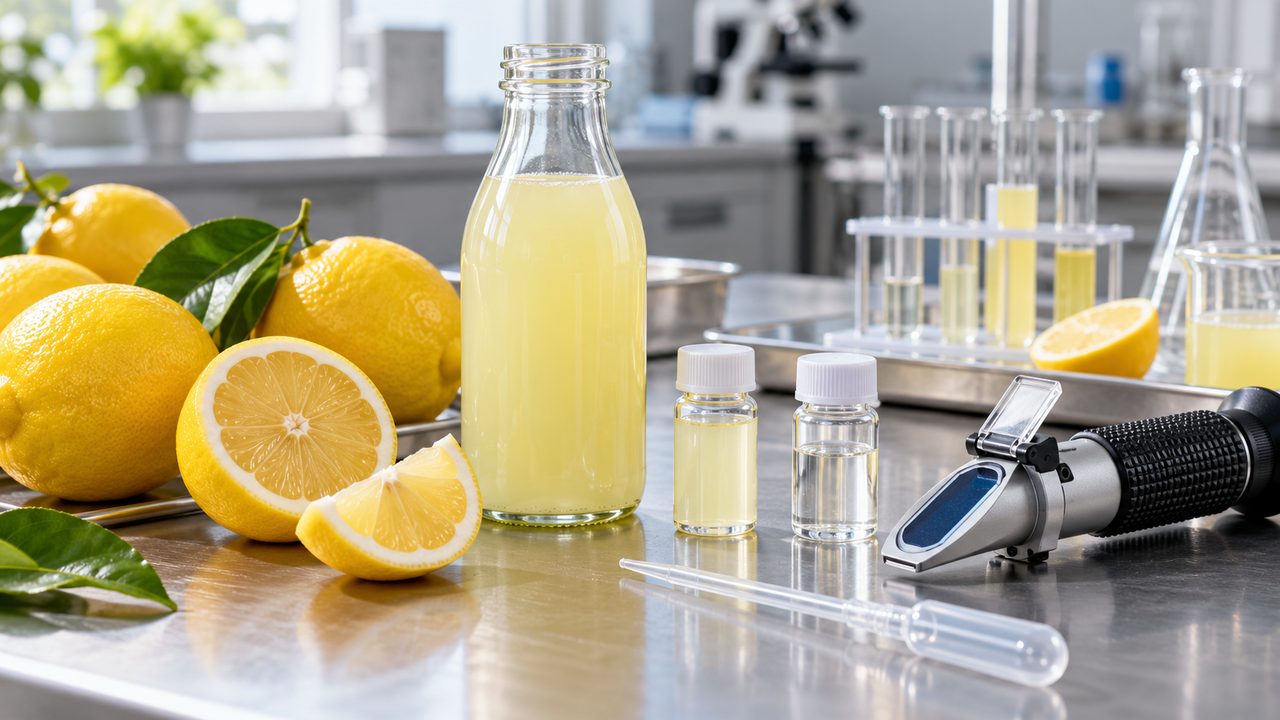
On 19 October 2026, the US Food and Drug Administration published results from lemon-juice authenticity sampling conducted from 2022 to 2025. It tested 195 US-made and imported samples for additions or dilution inconsistent with the legal standard for lemon juice. The work concerns the US market and is not a product warning for Germany.
7 imported samples failed and no domestic sample did
Of the 195 samples, 38 were produced in the US and 157 were imported. The FDA classified 7 imported samples and 0 domestic samples as violative. That equals 4.5 percent of imported samples and 3.6 percent of all samples tested. The associated shipments were refused entry at the US border.
The FDA specifically warns against comparing countries from its table because the assignment was not designed for that purpose. Nor can 195 risk-oriented samples establish a general fraud rate for lemon juice in world trade or German supermarkets.
Acid ratios, isotopes and Brix detect different tactics
Laboratories measured citric and isocitric acid. Their natural ratio can look abnormal when outside citric acid has been added. The FDA also used stable carbon isotope ratio analysis, or SCIRA, to check whether the citric acid was biologically more consistent with lemons or with other sources such as corn or sugar cane.
For juice reconstituted from concentrate, Brix was used as a measure of dissolved solids. Under the US standard, that product must contain at least 6 percent soluble solids and at least 4.5 percent titratable acidity, calculated as anhydrous citric acid. Combining the tests can reveal added acid, outside sweeteners or excess water.
What the sampling does not prove
The results do not mean that imported lemon juice is generally inauthentic. Imported samples were collected at ports before release, while US samples came from retail or manufacturers. The selection path and markets differ. The agency says lemon juice remains vulnerable to adulteration but that the practice does not appear widespread in these data.
The US definition and identity standard are also not identical to European juice law. In the EU, national authorities, the European Commission and the Agri-Food Fraud Network cooperate on cross-border suspicions. The FDA figures are therefore an example of laboratory control, not a verdict on individual European brands.
Shopping checklist: what the label can tell you
- Distinguish the product name: lemon juice, lemon juice from concentrate, nectar and a drink are not the same.
- Read the ingredient list; in pure juice, added sweeteners or other juices are not justified by a natural-looking design.
- Do not treat origin as proof of authenticity. Skilled adulteration cannot reliably be identified from colour or sour taste.
- Report unusual labelling, damaged packaging or strange contents to the retailer or food authority, and keep the pack and lot details.
In cooking, lemon juice is a versatile source of acidity but not proof of preservation or safety. Kochzauber offers ideas under recipes by ingredient and recipes by meal. The essential point is that product name, ingredient list and actual contents must agree.
Conclusion: few violations, useful combination of methods
The FDA found 7 violative imported samples among 195 samples overall. That is a concrete control signal, not evidence of a market-wide problem. The combination of measurements is especially useful: a single acidity result could more easily miss sophisticated dilution or an outside raw-material source.
For consumers, authenticity largely remains the responsibility of producers and authorities. Clear naming and traceability aid shopping, but confirming deliberate adulteration ultimately requires laboratory analysis.
Sources
- FDA: full sampling results on economically motivated adulteration of lemon juice
- FDA: agency update, 19 October 2026
- European Commission: EU Agri-Food Fraud Network
Author: Kochzauber editorial team. Updated: 20 October 2026. This US sampling cannot assess individual products sold in Germany.