Ice-cream wrap with 85% paper: what the new pilot shows
Tetra Pak is testing an ice-cream wrapper with up to 85% paper in Europe. That does not mean plastic-free, nor is it automatically proof of recyclability.
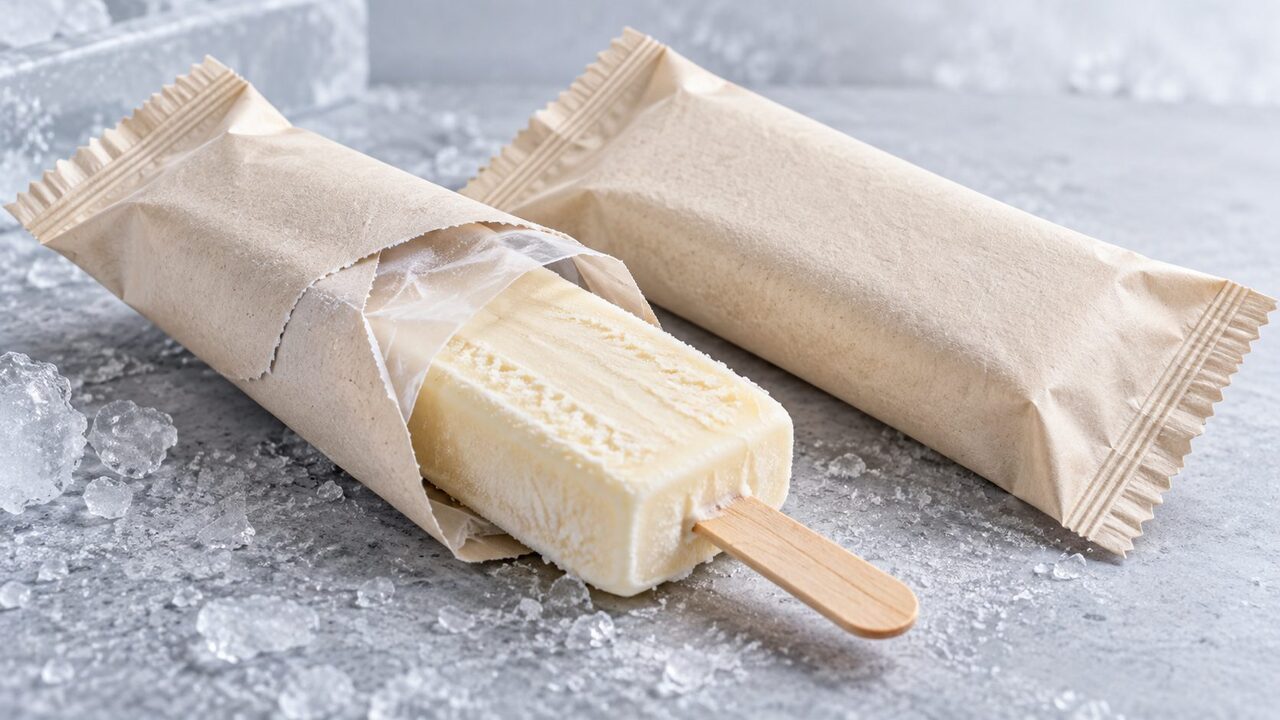
On 6 October 2026, Tetra Pak announced a new ice-cream wrapper made with up to 85% paper. It is being trialled with manufacturers in Europe ahead of a phased launch. For consumers, what the figure does not say matters most: the pack is not plastic-free, and the announcement does not call it PFAS-free.
What the manufacturer actually states
Tetra Pak says the wrapper contains up to 85% paper from FSC-certified forests and other controlled sources. The remaining materials are polymer, ink and lacquer. The multilayer construction is intended to protect ice cream through manufacturing, transport and frozen storage.
At 53 g/m², it is said to be up to 50% thinner than selected paper-based alternatives. This comparison comes from internal testing conducted during 2022–2026 and does not cover every wrapper on the market. A phased European launch is planned from Q4 2026.
A production pilot, not yet a mass-market result
According to the company, the solution is being validated with European ice-cream producers, including Triumf Glass in Sweden. Trials are intended to assess line performance, product protection and consumer feedback. Results on reject rates, shelf life or actual recycling rates have not yet been published.
The announcement is therefore a relevant development step, not an independent environmental comparison. Without a life-cycle assessment, lower material use alone cannot show which option has less overall impact. Spoiled product and manufacturing losses also belong in a complete balance.
Paper content is not the same as recyclability
A figure of up to 85% paper describes composition, not the disposal route. Polymer, ink, lacquer, adhesives and barriers may affect how a composite behaves in sorting and paper mills. Construction, local collection and each system’s acceptance criteria are decisive.
Consumers should therefore follow the instructions on the actual pack and local disposal rules. A natural-looking paper surface does not prove that the wrapper belongs in paper recycling, is compostable or consists entirely of renewable raw materials.
What about PFAS?
Since 12 August 2026, new EU limits apply to PFAS in food-contact packaging; further design-for-recycling requirements become relevant in stages from 2030. The manufacturer refers to applicable food-contact rules, but makes no explicit PFAS-free claim for the new wrapper.
PFAS-free, plastic-free, paper-based and recyclable are four different statements. Anyone assessing such a claim should ask about the test method, threshold, full material structure and actual disposal route—not only the largest share by weight.
Conclusion: an interesting material shift with evidence still due
The new wrapper shows how manufacturers aim to increase paper content even for demanding frozen products. Published data and real collection systems must show whether the pilot actually improves waste, climate impact or recycling. For homemade ideas, browse our ingredient guide and meal ideas.
Sources
- Tetra Pak: product announcement dated 6 October 2026
- Tetra Pak: technical product page for the ice-cream wrapper
- European Commission: new packaging rules and PFAS restriction
Author: Kochzauber editorial team. Updated: 7 October 2026. Manufacturer claims are identified; independent pilot data have not yet been published.