Fermented sorghum in Kleija: new study shows benefits and limits
Up to 12% Hulu-mur flakes improved several nutritional and functional measures in a new Kleija formulation study. What matters in the kitchen – and what remains uncertain.
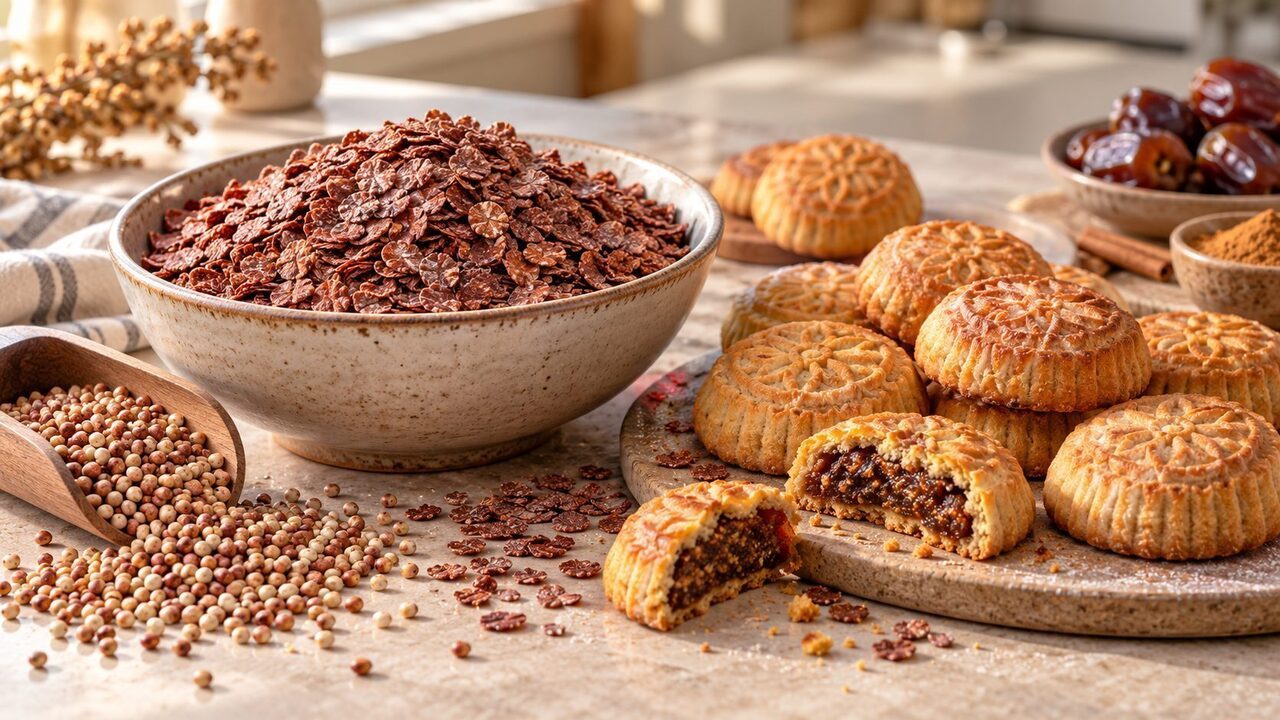
A study published on 3 October 2026 investigated how Sudanese Hulu-mur flakes perform in Kleija, a traditional Saudi pastry. Replacing 2 to 12% of the wheat flour with this fermented sorghum product changed the nutrient profile, water absorption and sensory properties. It is an interesting approach to plant-based formulation, but it does not demonstrate a health effect from eating the pastry.
What was tested
The researchers compared a control recipe with six versions in which 2, 4, 6, 8, 10 or 12% of the wheat flour was replaced by Hulu-mur flakes powder. Analyses used five independent production batches, while 50 people assessed all seven blinded samples on a nine-point scale in the sensory test.
Hulu-mur is a traditional Sudanese fermented sorghum product. In the experiment it added more fibre, plant protein and minerals to the recipe. Water binding also increased, so the dough with 12% replacement required more water than the control.
The main results at 12%
At the highest tested level, the study reported 2.42 times the total phenolic content, 2.33 times the flavonoid content and 1.54 times the antioxidant activity in the laboratory assay compared with the control. These measurements describe the pastry's chemical composition; they do not prove an effect in the human body.
The versions containing 8 to 12% Hulu-mur achieved high sensory acceptance according to the paper. That matters because alternative flours must work beyond laboratory tables: colour, taste, aroma and texture all influence whether a formulation is practical.
Why this is not yet a health pastry
The study assessed product composition and acceptance, not blood-glucose response, satiety or long-term health. It also did not test the bioavailability of the measured compounds in people. The authors therefore identify human studies and shelf-life testing as necessary next steps.
Kleija remains a pastry. Whether a particular version suits someone's diet better depends on its full ingredient list, portion size and nutrition declaration. More fibre or minerals do not make sugar, fat and energy irrelevant.
What home bakers can learn
- Start with small proportions of an alternative flour and adjust liquid gradually.
- Watch dough consistency and baking time instead of replacing wheat blindly one for one.
- For ready-made mixes, check the ingredient list, allergens and nutrition per 100 g.
- Do not equate fermented sorghum with sourdough: the product, microbes and process differ.
FAO presents sorghum as a cereal in its own right, with composition varying by variety and processing. WHO stresses variety, moderation and predominantly minimally processed foods as foundations of a healthy diet. One enriched recipe cannot replace that wider view.
Conclusion: a promising formulation that needs more testing
Hulu-mur flakes worked at up to 12% flour replacement in this Kleija study and the higher tested proportions were well accepted. The combination of traditional fermentation and useful dough functionality is particularly interesting. Evidence on shelf life, bioavailability and health outcomes is still missing. Find more ideas in our recipes by ingredient and recipes by meal.
Sources and update
- Ali and El-Anany, Foods: study of Hulu-mur flakes in Kleija, published on 3 October 2026.
- Food and Agriculture Organization of the United Nations: overview of sorghum and millet species.
- World Health Organization: principles of a healthy diet, updated on 26 January 2026.
Author: Kochzauber editorial team. Information updated on 4 October 2026. This article explains one formulation study and is not individual nutrition advice. The cover is an editorial symbolic image.