Food prices at the factory gate fell 4.1%: what shoppers may notice
New Destatis data show lower food producer prices while energy and selected ingredients cost more. For households, the exact basket still matters.
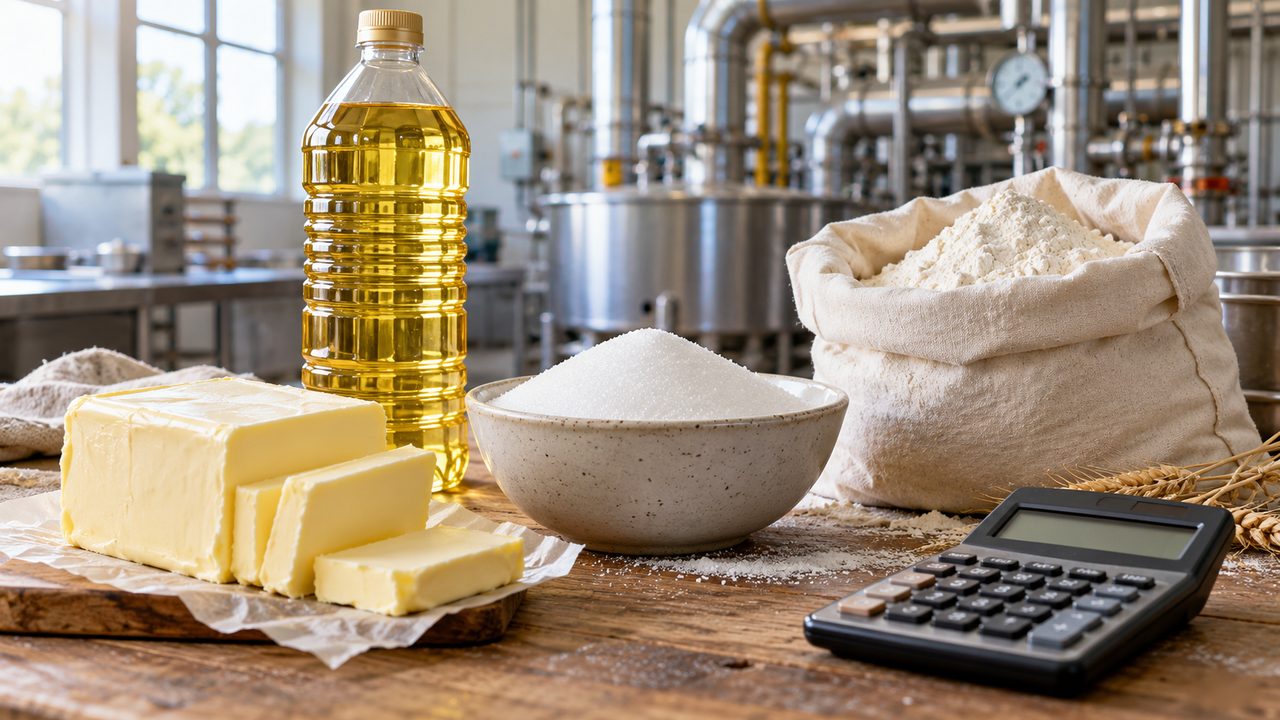
Germany's Federal Statistical Office published new producer-price data on 20 October 2026. Although the overall index in September 2026 was 6.7% above the same month a year earlier, food produced and sold in Germany was 4.1% cheaper at this stage overall. It is a useful market indicator, but not a promise about the checkout bill.
Energy drives the overall index, not food
The overall producer-price index rose 1.9% from August 2026. Energy was 14.9% more expensive year on year. Excluding energy, producer prices were 3.2% higher. These sharply different movements show why the headline figure alone says little about grocery shopping.
Within food, butter was 34.8%, pork 13.9% and beef 9.9% below September 2025 levels. Vegetable oils, by contrast, were 14.5% more expensive and sugar 4.1%. Animal feed also rose 8.8% and cereal flour 0.8%.
A factory-gate price is not a supermarket price
The producer-price index measures goods made in Germany and sold domestically at the first marketing stage. Retail margins, transport, refrigeration, packaging, contracts, taxes and promotions come later. Lower producer prices may therefore appear in individual retail prices after a delay, only partly or not at all.
The consumer-price statistics for September 2026 illustrate the difference: food cost 0.4% more on average than a year earlier. Eggs were 15.2% higher and fresh vegetables 12.0% higher. Butter was 29.5% cheaper for consumers. Both statistics are correct, but they answer different questions.
Four signals for planning the shop
- Watch butter prices and use promotions only for what you need; a lower annual comparison does not automatically justify stockpiling.
- Measure vegetable oil carefully and compare unit prices across bottle sizes instead of treating the producer figure as a uniform retail trend.
- Plan fresh vegetables seasonally and flexibly because their consumer price recently moved much more than the food average.
- Do not equate meat prices with factory-gate declines; unit price, cut, production standard and actual need still matter.
For a lower-cost weekly plan, compare the unit prices actually offered. Kochzauber's recipes by ingredient help use food already on hand first. Its recipes by meal make it easier to combine affordable options across several days.
What the figures cannot predict
The September data do not provide a reliable forecast of future retail prices. Energy can make processing and logistics more expensive, while long-term supply contracts can soften short-term swings. A lower factory-gate price for one raw material may also be outweighed by higher costs elsewhere.
A comparison with the same month a year earlier also does not reveal whether a product is inexpensive over the long term. For households, today's unit price where they shop is more informative than one percentage change at an earlier stage of the supply chain.
Conclusion
The new statistics present a mixed picture: food became cheaper overall at producer level, but vegetable oil and sugar rose while energy pushed up the overall index. Anyone trying to save should not assume a broad price drop, but track butter, oil, vegetables and meat separately and keep meal plans flexible.
Sources
- Destatis: producer prices in September 2026, published 20 October 2026
- Destatis: consumer prices in September 2026, published 13 October 2026
- Eurostat: Harmonised Index of Consumer Prices for food, updated 16 October 2026
Author: Kochzauber editorial team. Updated: 21 October 2026. Price movements may vary by region, retailer and product.