Food prices in September: why your receipt can differ from the inflation rate
Food in Germany was provisionally 0.4% more expensive in September 2026 than a year earlier. What the average shows, what it does not and how households can compare their spending.
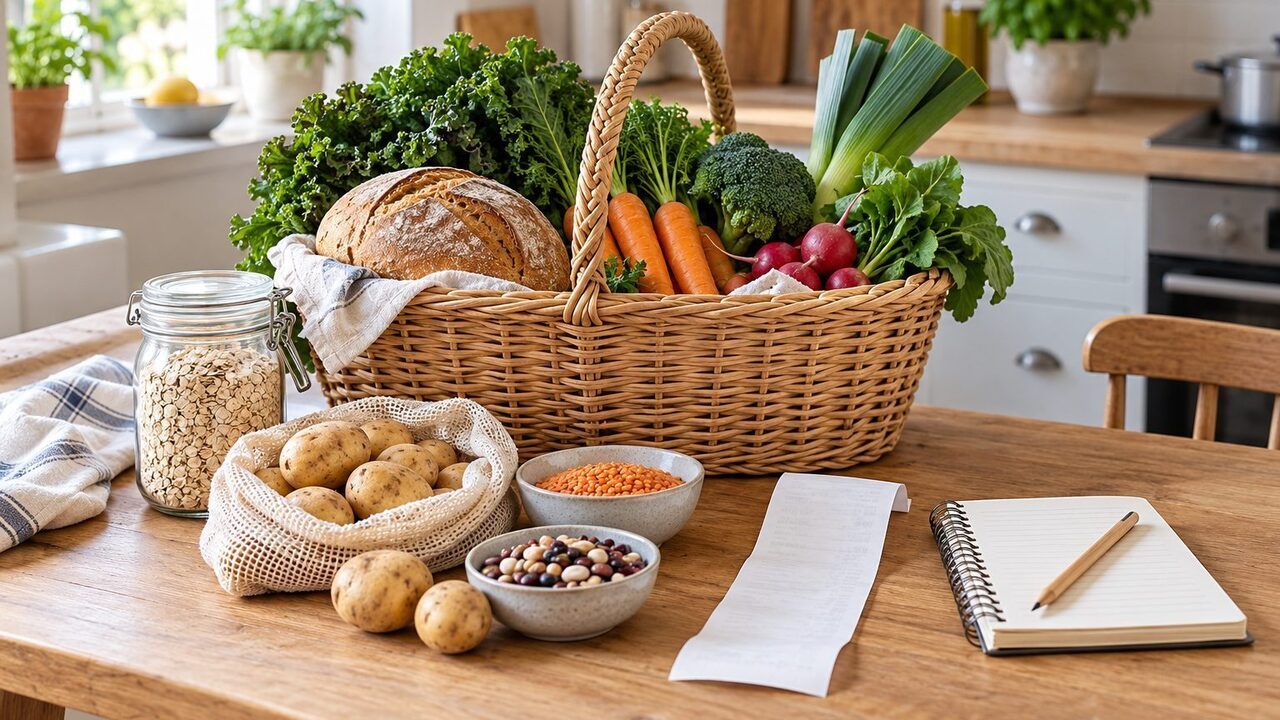
German consumer prices were provisionally 3.3% higher in September 2026 than a year earlier. Food prices rose by 0.4%. The gap illustrates why headline inflation and an individual shopping receipt measure different things. For everyday decisions, it is more useful to compare specific products, pack sizes and intended use.
What Destatis reported for September
Germany’s Federal Statistical Office published its provisional estimate on 30 September 2026. The overall consumer price index rose by 0.6% from August and by 3.3% from September 2025. Inflation excluding food and energy, often called core inflation, was 2.4%.
The flash estimate puts annual food-price inflation at 0.4%. The corresponding rate was 0.1% in August and 0.4% in both July and June. Energy was a much stronger driver in September, rising by 14.9% year on year.
Why 0.4% is not a shopping list
The food index combines many goods in a weighted average. Individual products may be considerably more expensive, cheaper or unchanged. Promotions, brand choice, retailer, region and pack size also alter the amount actually paid.
The figure cannot show how strongly one household is affected. A household buying more of a category with above-average increases experiences a different personal rate from one with another basket. The provisional release does not yet contain the complete detailed food breakdown.
Four useful comparisons in the shop
- Check the unit price: compare the price per kilogram or litre, not only the pack price.
- Watch the pack size: an unchanged shelf price may still mean a higher unit price when the contents shrink.
- Calculate the usable amount: a cheap large pack saves money only if it is eaten or frozen in time.
- Track your own basket: record the unit price of ten frequently purchased products and compare it each month.
A personal mini-basket does not replace official statistics, but it reveals changes that matter to an individual budget. Compare like with like by keeping quality, variety and pack format as consistent as possible.
Plan around the season without false promises
Seasonal produce can offer good value, but it is not automatically the cheapest option. Harvests, origin, storage, weather and promotions interact. Frozen vegetables or canned food may be economical alternatives when fresh produce would otherwise spoil.
Plan two or three interchangeable vegetable sides and decide in the shop according to unit price and condition. Pulses, potatoes, oats and seasonal vegetables often make flexible foundations, but the current shelf price remains decisive.
Energy prices also reach the kitchen
The sharp energy increase in the flash estimate does not prove that every food will soon become dearer. Energy can raise household costs directly and can affect processors, refrigeration or transport. The September figure alone cannot show which effects will pass into retail prices.
Using the right pan size, a lid and grouped oven cooking can save energy without compromising food safety. Cool leftovers promptly and keep them only for a safe period; economy is never a reason for risky storage.
How to read provisional figures
The September numbers are an initial estimate. Destatis is scheduled to publish final results with more detailed subgroups on 13 October 2026. Until then, neither an individual price story nor a temporary promotion should be treated as proof of a broad trend.
The Harmonised Index of Consumer Prices supports European comparisons and follows common rules. It is not identical to every national measure. Percentages also use different reference periods: 0.6% month on month and 3.3% year on year answer different questions.
Conclusion: understand the average, measure your basket
Food prices rose moderately on average in September’s flash estimate, while energy influenced headline inflation more strongly. Households still feel the products they actually buy. Unit prices, pack sizes and flexible planning therefore support better decisions. Browse our recipes by ingredient and recipes by meal for practical ideas.
Sources and update
- German Federal Statistical Office: provisional consumer price index for September 2026, release dated 30 September 2026.
- Federal Statistical Office: English version of the provisional September 2026 consumer price release.
- Eurostat: methodology and release system for Harmonised Indices of Consumer Prices.
Author: Kochzauber editorial team. Information updated on 2 October 2026. The figures are provisional; individual prices may differ. The cover is an editorial symbolic image.