Food packaging in later life: new study reframes ease of use
A survey of 385 older adults distinguishes essential features from attractive extras in bottled-food packaging. The findings support a practical shopping checklist.
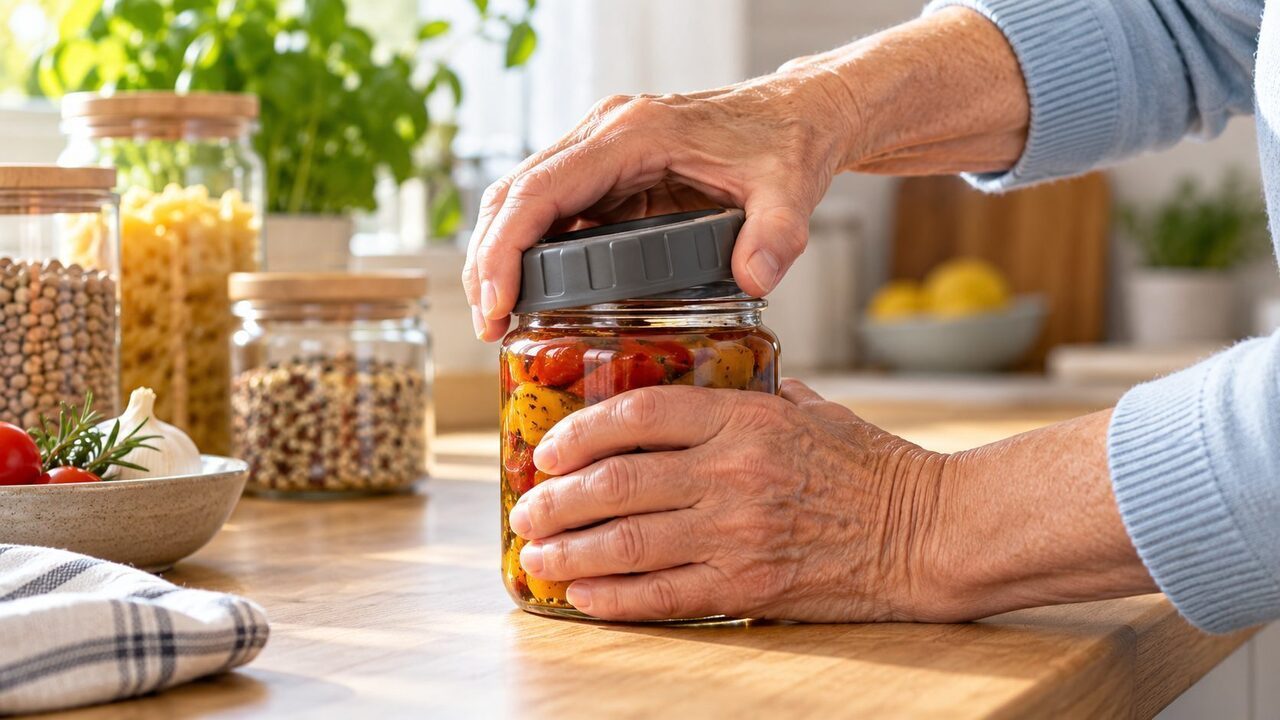
A study published on 2 October 2026 suggests that not every convenience feature on food packaging matters in the same way. In a survey of 385 older adults, basic operational and safety attributes were especially noticeable when absent, creating substantial dissatisfaction. Innovative extras were more likely to increase satisfaction without being missed as strongly when unavailable.
How the study worked
The researchers first used semi-structured interviews to collect common difficulties with bottled food products. A two-round Delphi consultation with experts then refined the attribute system. Finally, 385 older participants completed a Kano-model questionnaire.
The team identified 27 attributes across five dimensions: functionality, reliability, usability, proficiency and creativity. The Kano model does not simply ask whether people like a feature; it compares their responses when the feature is present and when it is absent.
An essential function is not the same as an extra
Basic operational and safety features were mainly classed as Must-be or One-dimensional attributes. Their absence sharply increases dissatisfaction, while better performance may raise ratings further. For manufacturers, this supports solving dependable opening, closing and handling before decorative innovation.
Innovation-related attributes appeared more often as Attractive features. They can pleasantly surprise users, but are not missed to the same degree. A conspicuous extra therefore cannot compensate for a lid that requires too much force or offers a poor grip.
What the study cannot generalise
The research examined bottled-food packaging and subjective ratings from a particular sample. It is not a measurement of every container or a worldwide product test. Needs can vary with grip strength, vision, joint mobility, pack size and contents.
Child resistance or tamper protection can also conflict with easy opening. Legal safety requirements take priority for dangerous goods. For foods, however, it remains sensible to test accessibility early in design with real user groups.
A practical shopping check
- Can the container be held securely with one hand without slipping?
- Is it clear where and in which direction it opens?
- Does the lid or tab provide enough area and texture to grip?
- Are the text, contrast and opening instructions easy to read?
- After opening, can the pack dispense cleanly and close reliably again?
- Is a smaller size available if weight or reach is becoming difficult?
International standard ISO 17480 addresses accessible packaging design with a focus on ease of opening and includes instrumented and user-based evaluation. ISO 22015 adds requirements and recommendations for handling and manipulation regardless of packaging material.
Conclusion: dependable first, clever second
The new study does not rank individual brands, but it offers a clear design logic: basic functions prevent frustration, while extras add appeal. People shopping for older relatives, or anyone with reduced strength or mobility, can deliberately check opening, grip, readability and reclosure. Find low-fuss meal ideas through our recipes by ingredient and recipes by meal.
Sources and update
- Jian and Mustafa, Scientific Reports: study of bottled-food packaging usability for older adults, published on 2 October 2026.
- ISO 17480:2015: accessible packaging design with a focus on ease of opening.
- ISO 22015:2019: accessible packaging design for handling and manipulation.
Author: Kochzauber editorial team. Information updated on 4 October 2026. The shopping checklist is an editorial interpretation, not an assessment of particular products or brands. The cover is an editorial symbolic image.