Cesium-137 imports: FDA assesses certification for shrimp and spices
The US FDA has reviewed Indonesia’s certification system for certain shrimp and spice exports on site. Two authorities and three laboratories largely met the requirements.
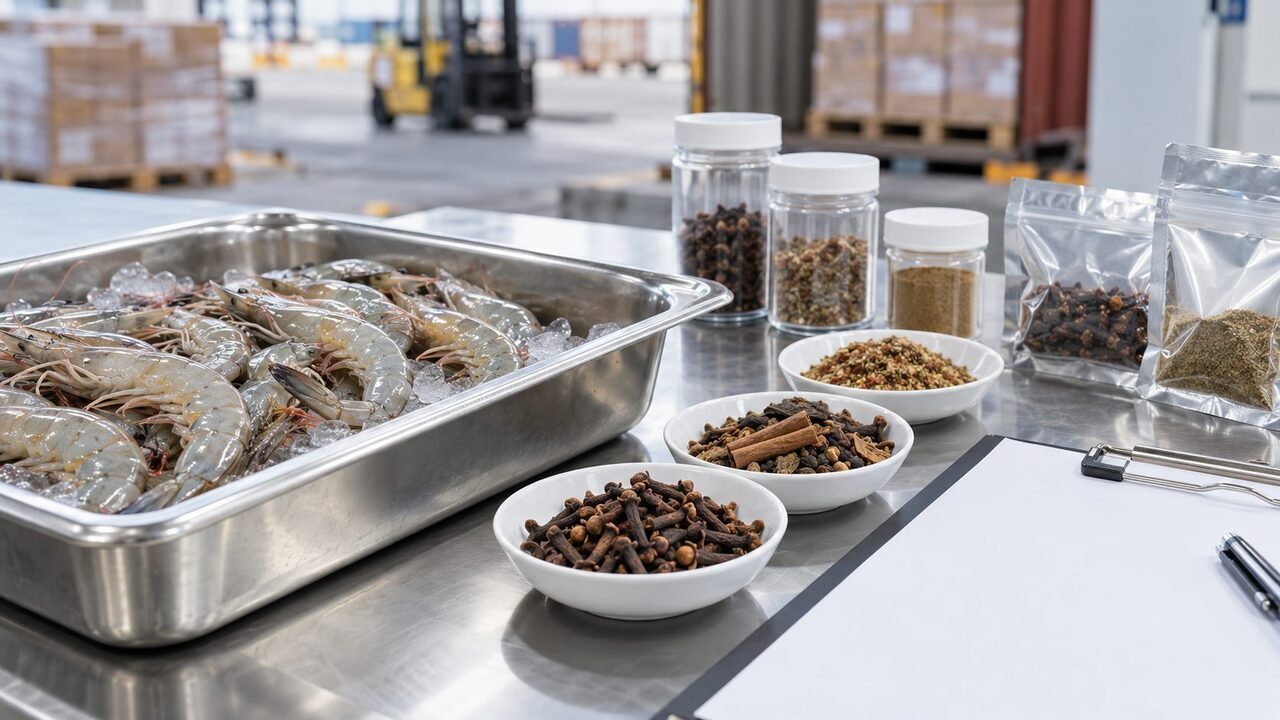
On 5 October 2026, FDA published an in-country assessment of cesium-137 certification for certain shrimp and spice imports from Indonesia. The agency says the system is functioning, but it remains a targeted US import measure rather than a general all-clear.
Why import certification was introduced
FDA detected cesium-137 in a sample of frozen shrimp in August 2025 and later in a clove sample from Indonesia. It then combined firm-specific detention under Import Alert 99-51 with broader certification under Import Alert 99-52.
Since 31 October 2025, certain shrimp from Java and Lampung Province on Sumatra, plus spices from those regions, require certification before US import. FDA says this was the first use of its import-certification authority under section 801(q) of US food law.
What FDA checked in May 2026
The team visited the responsible authorities, shrimp and spice processing establishments and 3 laboratories in May 2026. The Marine and Fisheries Quality Assurance Agency covers shrimp, while Indonesia’s Food and Drug Authority BPOM covers spices.
FDA found that both certifying entities substantially fulfilled their assigned responsibilities. Each had 1 item requiring correction and several opportunities for improvement. The agencies submitted revisions that FDA considered satisfactory, and all 3 laboratories visited met the applicable testing requirements.
How to understand the background numbers
In its continuing background update, FDA reports about 68 Bq/kg for the shrimp sample and 732.43 Bq/kg for a clove sample. The US derived intervention level for cesium-137 is 1200 Bq/kg. FDA says none of the products that tested positive or triggered an alert entered US commerce.
An intervention level is not a zero-risk boundary. FDA frames its precaution around possible long-term, repeated low-dose exposure combined with other radiation sources. The new report primarily assesses procedures, responsibilities and laboratory capacity; it is not a new exposure study.
Four points for accurate interpretation
- The measure covers specified products and regions and US imports, not all food from Indonesia.
- A substantially compliant certification programme cannot rule out individual future failures; FDA is continuing its oversight.
- Import Alert 99-51 targets firms with specific findings, whereas 99-52 requires pre-shipment certification for products from designated risk areas.
- Germany and the EU use their own alert, control and recall systems; the US report does not create a blanket purchase warning in Europe.
For a specific product, consumers should follow official recall notices, lot numbers and retailer instructions. Origin alone cannot determine the safety of an individual item, and consumer radiation meters do not replace accredited food analysis.
Conclusion: a functioning control with a narrow scope
The in-country review supports confidence in this specific US certification process: corrections were addressed and the laboratories visited met requirements. It does not remove the import controls. Cooks can browse our recipes by ingredient and meal ideas; official product notices remain decisive for safety questions.
Sources
- FDA: assessment announcement dated 5 October 2026
- FDA: full in-country report on certification implementation
- FDA Import Alert 99-52: product scope and certification requirements
Author: Kochzauber editorial team. Updated: 6 October 2026. This article describes a US import-control system and is not a warning against all Indonesian shrimp or spices.