El Niño and food prices: what makes sense now – and what does not
A new Oxford assessment warns of possible price pressure from harvest, energy and trade risks. Households benefit from a calm seasonal and pantry check, not panic buying.
An assessment published by the University of Oxford on 22 October 2026 warns that a very strong El Niño event, combined with high energy and fertiliser costs and disrupted trade routes, could put pressure on food prices. This is a risk scenario for the United Kingdom and global markets, not a specific forecast for German supermarket prices. Preparation therefore makes sense for households, but panic buying does not.
What is new in the report
The US climate service NOAA rates the ongoing event as very strong. The UK government assessment expects imports of affected goods to remain broadly available, while lower global yields could still raise consumer prices. Oxford stresses that several pressures may act together; the timing, product group and size of any price increase nevertheless remain unknown.
The comparison with earlier events also calls for caution. According to the UK government assessment, the El Niño of 2023 had little discernible impact on food prices there. Weather, harvests, energy, fertiliser, exchange rates, trade and business decisions jointly determine prices. A climate signal therefore cannot produce a reliable German grocery bill.
A calm pantry check in 4 steps
- Check cupboards, the fridge and freezer before shopping and plan foods that need using soon first.
- Compare unit prices per kilogram or litre; a large pack is not automatically cheaper.
- Buy only shelf-stable quantities that the household can realistically use and store correctly.
- Make a weekly plan with flexible staples to reduce expensive impulse purchases and leftovers.
Stay seasonally flexible in October
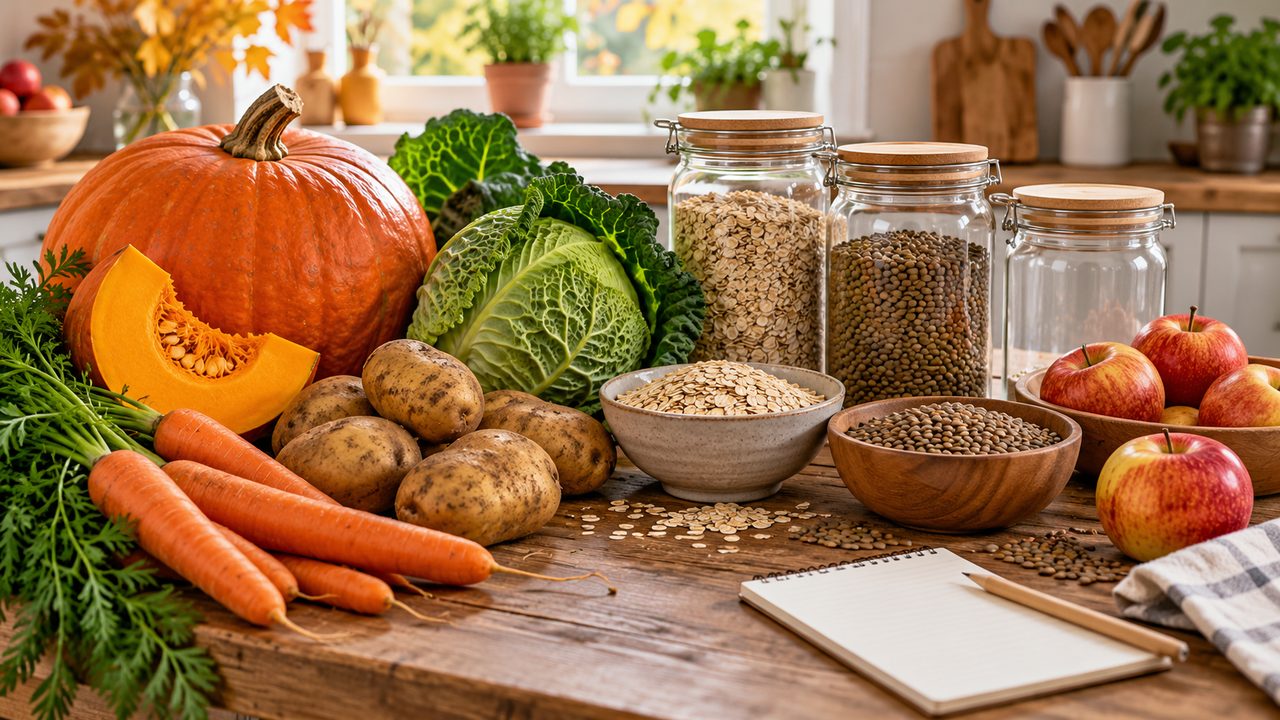
Pumpkin, cabbage, carrots, beetroot, leeks, potatoes and apples offer many interchangeable building blocks in autumn. Seasonal produce is often cheaper according to the German consumer advice service, but the local unit price is decisive. If one vegetable has become expensive, change the recipe or side dish instead of buying against a presumed future shortage.
Meals that use the same base in different ways are practical: roast vegetables, soup, stew, a pan dish or salad. Kochzauber’s recipes by ingredient help replace individual components; its recipes by meal make a leftover-friendly weekly plan easier.
What households should avoid
Panic buying ties up money, uses storage space and can create food waste. Fresh, chilled or delicate food in particular is unsuitable as a speculative stockpile. A headline about the United Kingdom is also no evidence that exactly the same products will rise by the same amount in Germany.
A small price log for frequently purchased goods is more useful. It reflects the household’s personal burden better than an average and shows which ingredient genuinely needs replacing. Discounted food is worthwhile only when quantity, shelf life and planned use fit together.
Conclusion: plan for resilience, not speculation
The new Oxford assessment identifies a plausible price risk, not a certain prediction. A measured pantry, seasonal alternatives, unit-price comparisons and a flexible meal plan are useful even if the feared rise never occurs. Buying large amounts on suspicion instead swaps an uncertain price risk for certain spending and possible spoilage.
Sources
- University of Oxford: assessment of possible El Niño food-price effects, 22 October 2026
- UK government: assessment of El Niño impacts on the United Kingdom
- German consumer advice service: rising food prices, causes and shopping guidance
Author: Kochzauber editorial team. Updated: 24 October 2026. This article describes risks and practical household preparation; it is not a price forecast or a call to stock beyond normal needs.