Dried beans at home: routine matters more than price
A new household study shows why low-cost dried beans often remain unused despite interest. Planning, practice and suitable shortcuts matter more than appeals.
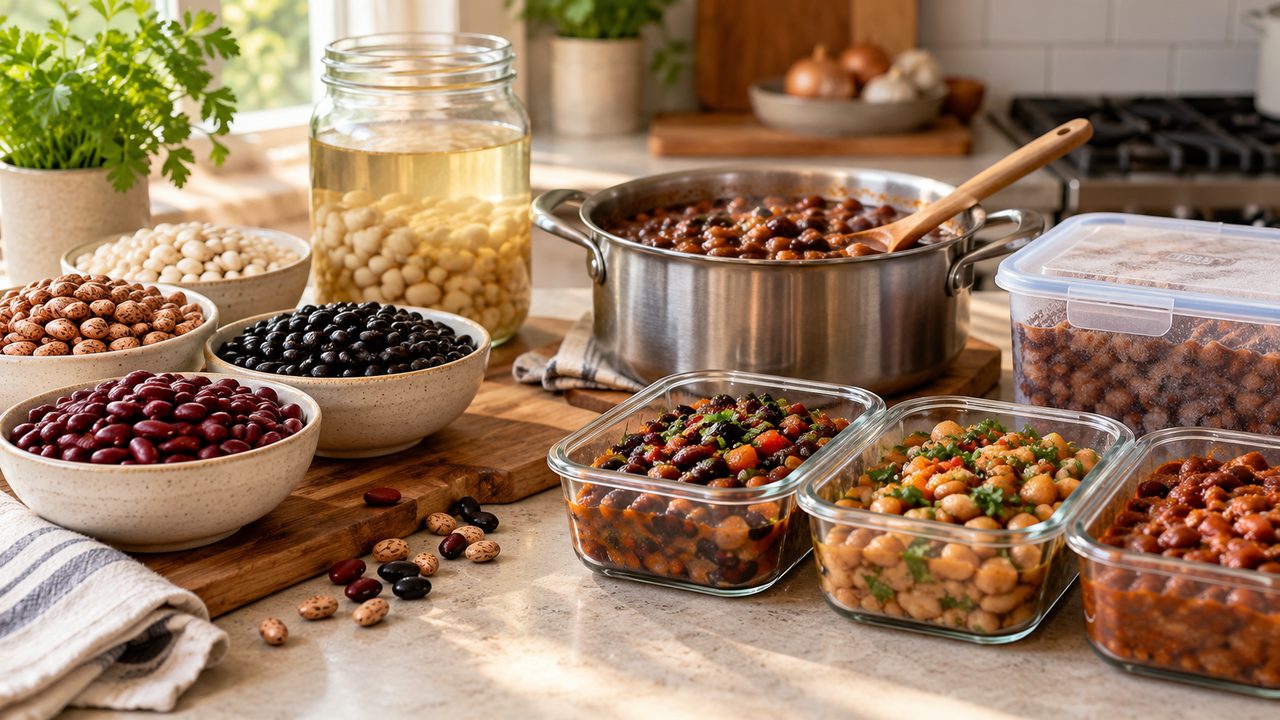
A qualitative study published on 22 October 2026 followed 10 households in England as they used locally grown dried beans. The families joined 3 group cooking sessions and received 2 home visits. Its central finding is that low prices and positive attitudes are not enough; learned routines, time, equipment and meals that suit the family make the difference.
What distinguished the households
The researchers classified households as novices, competent users or bean experts. Novices tended to blend beans into familiar dishes to manage selective eating. Confident cooks could adapt recipes but still experienced soaking and lengthy cooking as an extra burden.
Bean experts had established routines: buying staples in bulk, planning meals, sharing meals, batch cooking, freezing and using a pressure cooker. Observation over 6 to 8 weeks showed that cooking sessions can start new skills, but lasting use must fit the household's wider routine.
Cheap is not automatically convenient
The study offers an important counterpoint to simple money-saving advice. Even budget-conscious households sometimes rejected dried beans when the small price advantage did not compensate for the time required. Pre-cooked beans in jars or tins may therefore be the more practical choice despite a higher unit price and may prevent food waste.
That is not a failure of pantry cooking but a question of the complete calculation. People who can plan dried beans reliably and cook several portions at once may save money and time. Those who cook spontaneously or have limited storage may do better with a smaller pre-cooked quantity.
Making beans more likely to be eaten
- Start with familiar dishes such as soup, chilli, salad, spreads or a sauce containing partly mashed beans.
- Put a soaking and cooking day into the weekly plan and prepare several portions at once.
- Chill or freeze cooked beans in portions and label containers with contents and date.
- When time is short, deliberately choose pre-cooked beans instead of storing a cheap dry pack unused.
Kochzauber's recipes by ingredient help find dishes for beans, lentils and chickpeas. Its recipes by meal make it easier to spread one cooked batch across several different dishes.
Safe preparation remains essential
Dried beans must not be eaten raw or undercooked. Germany's Federal Centre for Nutrition recommends 8 to 12 hours of soaking and about 60 to 90 minutes of cooking, depending on the variety; the pack instructions remain decisive. Acid from tomatoes, vinegar or lemon should be added near the end because it can delay softening.
The beans in the study were special quicker-cooking varieties. Their timings cannot be transferred to every retail bean. A pressure cooker can shorten cooking but must be used according to its instructions; the beans still need to be completely cooked.
Limitations and conclusion
The study is small: all adult participants were women, the 10 households came through 2 schools in one city, and observation was time-limited. It does not prove an effect for every family. Its value is the concrete insight that new plant protein sources become routine only when skills, equipment, time and taste fit together.
Sources
- Frontiers in Sustainable Food Systems: household study of UK-grown dried beans, 22 October 2026
- University of Oxford: BeanMeals and locally adapted bean varieties
- German Federal Centre for Nutrition: buying, soaking and cooking pulses
Author: Kochzauber editorial team. Updated: 23 October 2026. The qualitative study is small and cannot represent every household.