Clove oil against stored-food pests: what a new laboratory study shows
A temperature-responsive carrier released clove oil against the sawtoothed grain beetle. The laboratory results are striking, but the system is not approved for kitchen cupboards.
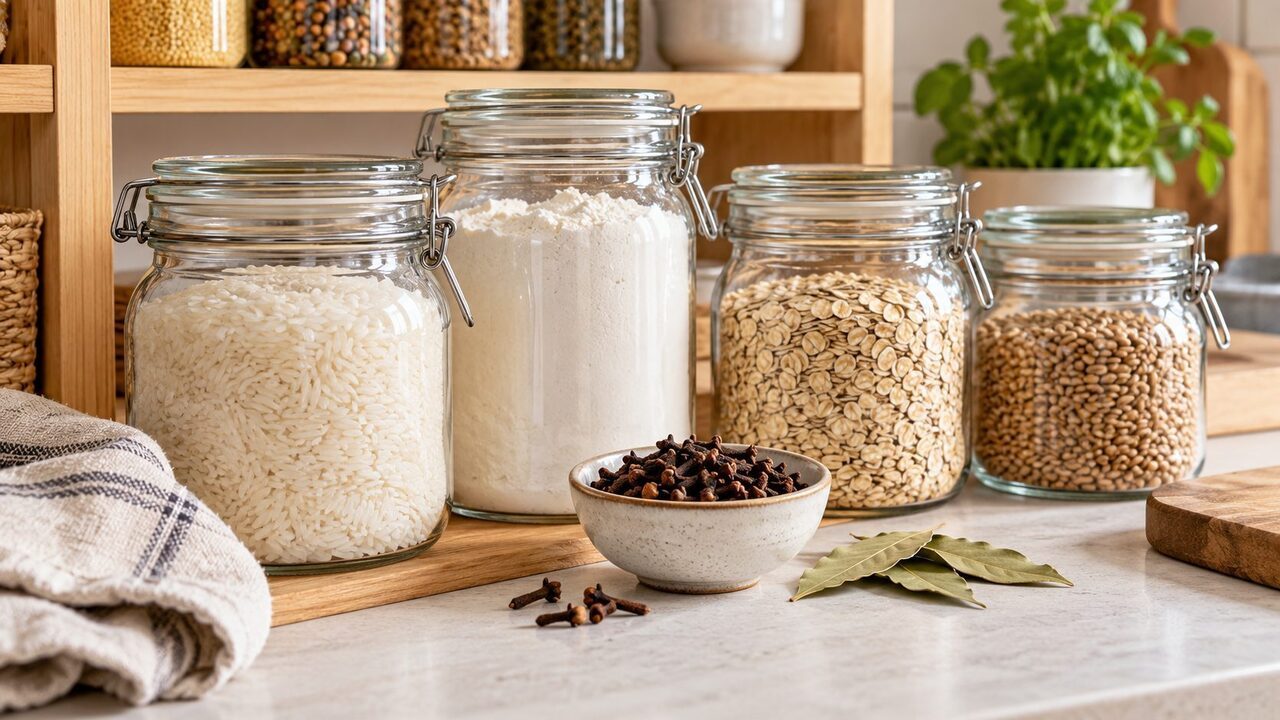
A laboratory study published on 3 October 2026 describes a temperature-responsive carrier that releases clove oil against the sawtoothed grain beetle Oryzaephilus surinamensis. The experimental system became markedly more effective at higher temperatures. This is interesting for future stored-food protection, but it is not an instruction to apply clove oil or nanocarriers to food at home.
How the experimental system worked
The researchers loaded clove oil into amine-functionalised diatom silica and covered the material with a heat-sensitive starch-based cap. Loading efficiency was approximately 37%. The aim was to release the volatile active substance in a controlled manner and more strongly when warm.
The system was tested against the sawtoothed grain beetle, a stored-product pest. The team measured its action in the air of a closed laboratory setup and identified acetylcholinesterase inhibition as the primary mode of action.
What the figures show
At 500 mg per litre of air, the formulation produced 100% mortality in the experiment. At 40 °C, 31.25 mg per litre of air also produced 100% after six hours. The median lethal concentration fell from 124.71 mg per litre at 20 °C to 35.62 mg per litre at 30 °C.
These figures apply to the tested insect species, the specific material, defined temperatures and laboratory conditions. They do not show what residues might reach food, whether smell or flavour would change, or whether the system would be safe and effective in homes, warehouses or retail.
Why higher temperature is not automatically practical
Faster release with heat fits the responsive-carrier concept. In real food stores, however, high temperatures are a problem in themselves: they can reduce quality and, together with moisture, create favourable conditions for other pests or spoilage.
Before any use, residue analyses, migration and toxicology data, efficacy across life stages, and clear authorisation and application rules would be needed. The word “biofumigant” does not automatically mean non-toxic, food-safe or approved for domestic use.
What helps in a pantry today
- Keep dry foods cool, dry and preferably dark.
- Move flour, rice, grains, nuts and pet food into tightly closing containers after opening.
- Inspect cupboards regularly and remove crumbs and flour dust thoroughly.
- Discard infested foods and examine neighbouring packs carefully.
- Do not add essential oils, insecticides or experimental carriers to food on your own initiative.
Germany's Federal Centre for Nutrition recommends suitable storage locations and containers. If moths or beetles are found, affected food should be discarded. These measures are more dependable for households than an experimental delivery system.
Conclusion: an interesting release mechanism, not a home remedy
The laboratory work shows that a heat-sensitive carrier can regulate clove oil activity against Oryzaephilus surinamensis. The clear temperature response is technologically novel, but it cannot replace safety assessment or authorisation. For kitchens, sealed containers, cool storage and prompt disposal remain the sensible steps. Find pantry-friendly ideas in our recipes by ingredient and recipes by meal.
Sources and update
- Dhali et al., Scientific Reports: temperature-responsive clove-oil formulation against stored-product pests, published on 3 October 2026.
- German Federal Centre for Nutrition: storing food correctly and protecting supplies from heat, air, light, moisture and pests.
- German Federal Centre for Nutrition: guidance on moths, beetles and other stored-food pests.
Author: Kochzauber editorial team. Information updated on 4 October 2026. The tested system is a laboratory prototype, not a recommendation for use on food. The cover is an editorial symbolic image.