Artichokes: how harvest time changes inulin, yield and browning
A new field study found clear differences between early- and late-harvested artichokes. At the shop, however, visible freshness matters more than a guessed harvest date.
A study published on 27 October 2026 compared 54 artichoke plants in Western Australia. Early heads weighed an average 248.3 g, versus 178.5 g for late heads. Late harvests nevertheless reached 61.56 g fructans per kg fresh weight and an edible yield of 54.9 %, compared with 36.1 % for early harvests. This is useful information for breeding and production, but not a label shoppers can read in a store.
What the study examined
The researchers harvested 18 flower heads on each of 25 September, 22 October and 21 November 2023. In total, samples came from 54 genetically uncharacterised plants in three fields. They measured size, edible yield, fructans including inulin types, phenolics, colour and enzymatic browning after cutting.
The trial site was in the Southern Hemisphere, so its early-to-late spring season cannot simply be mapped onto German calendar months. Variety, weather and cultivation also affect quality. The paper therefore does not answer a blanket question such as whether early or late artichokes are always better; it reveals a trade-off between head size, yield and composition.
The main differences
Early artichokes had larger heads and an average 8.67 g total phenolics per kg edible portion. Late heads were smaller but provided a higher edible yield and more fructans. Inulin concentration correlated positively with mean daily solar radiation, while phenolic concentration correlated negatively.
In this trial, more phenolics were also associated with stronger and faster browning after cutting. That matters mainly for processing and variety selection. A brown cut surface does not automatically mean spoilage: enzymes react with phenolic compounds once damaged tissue meets oxygen. Smell, firmness and visible mould still require separate judgement.
What actually helps when shopping
- Choose firm, heavy heads with tightly closed bracts; avoid brown pressure marks and dried-out stems.
- Check season and origin on the price label. The EU calendar lists artichokes in different seasons by climate zone, so imported and regional produce do not follow one rhythm.
- Buy only what you need. The German Federal Centre for Nutrition recommends refrigerating artichokes wrapped in a damp cloth.
- Find suitable dishes through the recipes by ingredient and recipes by meal.
Limiting browning in the kitchen
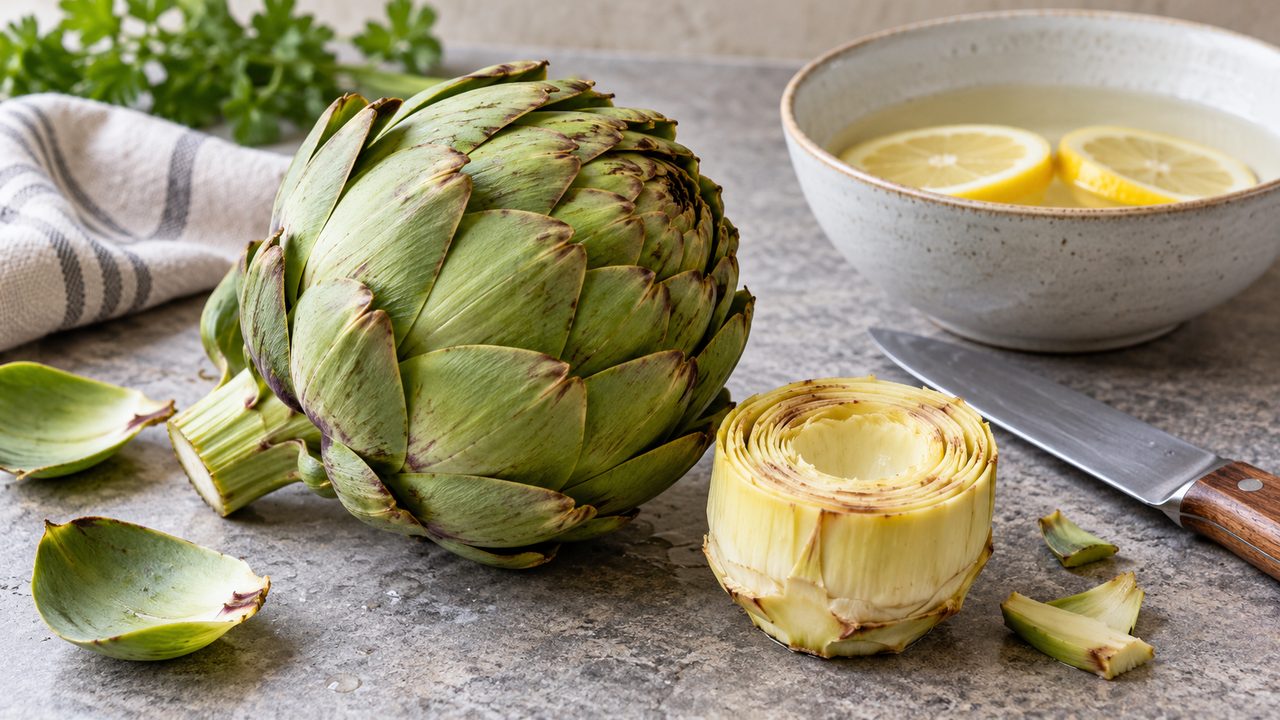
Moisten cut surfaces with lemon juice after trimming, or place prepared pieces in lemon water. This slows the visible colour change but does not replace cold storage. Cut whole artichokes as close as practical to cooking.
The German Federal Centre for Nutrition gives 30 to 45 minutes as a cooking time for whole artichokes in salted water with lemon juice. Size and the intended preparation alter the duration. More of a young small head may be tender; with large heads, tough outer bracts and the fibrous choke must be removed carefully.
Conclusion: interpret the study, buy for freshness
The new work shows that harvest timing can shift raw-material quality substantially: early heads were larger and richer in phenolics, while late ones delivered more edible material and fructans. Households cannot reliably infer harvest timing from this. Seasonal price, traceable origin, a firm head and prompt chilled handling remain more useful.
Sources
- Food Science & Nutrition: study of harvest time, inulin and phenolics in artichokes, DOI 10.1002/fsn3.72490
- German Federal Centre for Nutrition: choosing, storing and preparing artichokes
- European Commission: seasonal fruit and vegetable calendar for EU climate zones
Author: Kochzauber editorial team. Updated: 28 October 2026. This article interprets a field study and does not promise a particular nutrient amount in an individual purchased artichoke.