African yam bean: germination improves a protein concentrate in the lab
A new study tests germination of African yam bean as a processing step for plant protein concentrate. The results are promising, but they do not yet describe a finished consumer product.
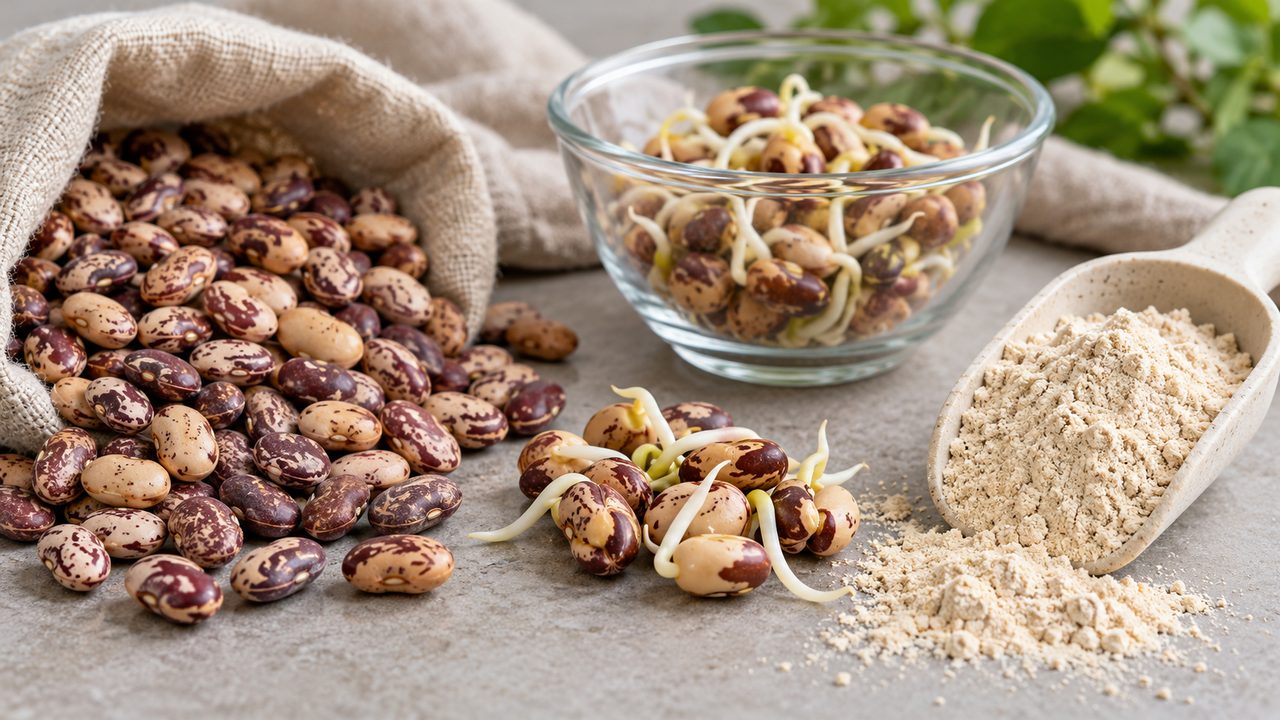
A laboratory study published on 26 October 2026 germinated African yam beans for 0, 24, 48 or 72 h and made protein concentrates from them. Protein yield rose from 20.72 % to 23.34 %, while protein content increased from 65.10 g/100 g to 67.88 g/100 g. In-vitro protein digestibility increased from 69.63 % to 79.20 %. This describes a controlled process, not the result of sprouting whole beans in a home kitchen.
Why this bean is attracting attention
African yam bean is known scientifically as Sphenostylis stenocarpa. It produces edible seeds and, in some forms, tubers. The FAO includes it in a compendium of forgotten foods; the International Institute of Tropical Agriculture describes it as a nutritious, climate-resilient but underused indigenous legume.
Underused does not mean newly discovered. The plant belongs to regional food cultures in Africa but is rarely traded outside its growing areas. Protein-ingredient research could create additional markets. Whether products become economically, sensorially and environmentally convincing also depends on seed systems, cultivation, processing, supply chains and local value creation.
What germination changed in the concentrate
The study reports protein solubility of 63.29–78.56 %, emulsifying capacity of 42.10–56.23 % and emulsion stability of 46.75–70.65 %. Such functions matter in drinks, doughs, sauces and plant-based alternatives because protein is not only a nutrient there; it also builds structure.
Water absorption also rose from 2.51 g/g to 3.12 g/g, while oil absorption increased from 1.22 g/g to 1.83 g/g. The team additionally observed altered protein structures and higher readings in several antioxidant tests. Those are laboratory parameters and do not demonstrate a health benefit after eating.
What the study does not establish
The researchers examined an isolated concentrate under defined conditions, not a market-ready food or human diets. In-vitro digestibility simulates digestion in the laboratory; it is not the same as clinically measured uptake in the body. Taste, allergenicity, long-term safety, cost and behaviour in actual recipes all need separate testing.
The authors varied germination time, not every possible variety, location or industrial process. An older evaluation of 93 accessions found substantial differences in hardness, cooking time, protein and antinutritional compounds. Raw-material selection therefore remains as important as germination.
What households can take from it
- Buy African yam beans only from a reliable food supplier and follow the seller’s preparation directions.
- Do not confuse dried beans with the tested protein concentrate; prolonged soaking, germinating, cooking and industrial protein separation are different steps.
- Raw sprouts from many seeds carry a microbiological risk. This paper is not an instruction to eat home-grown sprouts raw.
- Plan established pulse dishes through the recipes by ingredient and recipes by meal until clearly labelled products become available.
Conclusion: a candidate, not yet a kitchen standard
In this study, germinated African yam beans produced a more functional protein concentrate with higher yield, higher in-vitro digestibility and better water, oil and emulsion properties. That makes the underused legume a serious research candidate. A consumer recommendation must wait for finished products, standardised processes and data from real foods.
Sources
- Journal of Food Science: study of germinated African yam bean protein concentrate, DOI 10.1111/1750-3841.71588
- FAO: Compendium of Forgotten Foods with an African yam bean profile
- International Institute of Tropical Agriculture: conservation and potential of underused African legumes
- Journal of Food Quality: comparison of 93 African yam bean accessions, DOI 10.1155/2022/8386258
Author: Kochzauber editorial team. Updated: 28 October 2026. This article interprets laboratory findings and is not a guide to sprouting or eating raw beans.